Europe Analysis
Which NATO Country Would Russia Attack First?
Several Western intelligence services now warn less of a Russian invasion than of a small, deniable test of NATO's promise to defend every ally. That changes which country could come first.

In short
- In August 2026, the Wall Street Journal and CNN reported that US intelligence sees a limited Russian attack on a NATO member as possible, aimed at testing allied unity rather than taking land. The Journal put the window between autumn 2026 and 2029.
- On 24 September 2026, Denmark's military intelligence service rated the risk of a limited Russian attack on a NATO country bordering Russia as "low but growing", and judged a full invasion highly unlikely.
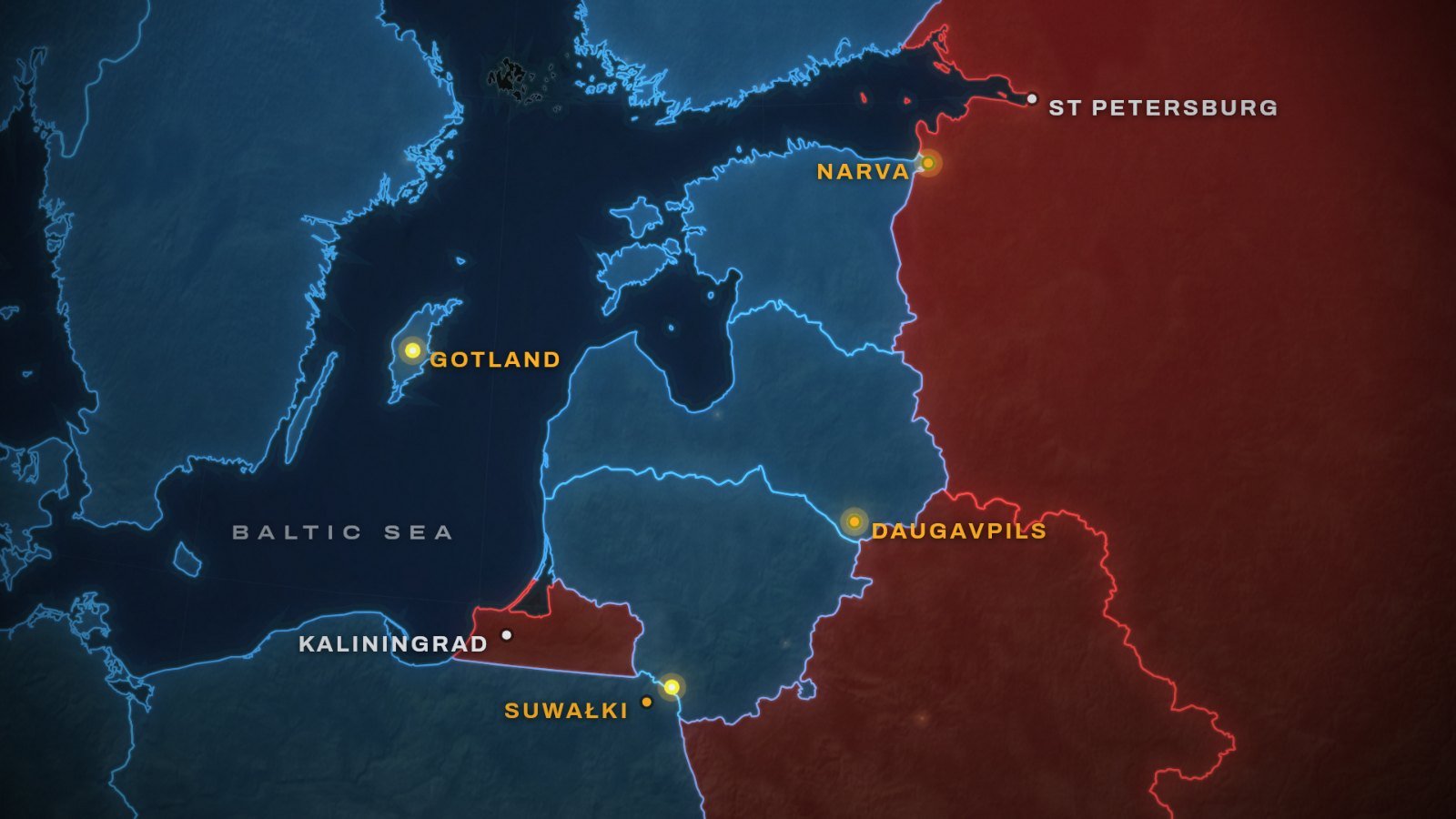
- Places named in published scenarios and warnings include Estonia's border city of Narva, Latvia's border with Belarus, the Suwałki Gap and small islands in the Baltic Sea.
- On 14 October 2026, in Tallinn, NATO's secretary general, Mark Rutte, said the alliance sees "no imminent threat" to its territory.
- Moscow denies any plan to attack: Vladimir Putin said on 1 October 2026 that Russia has no intention of attacking anyone, and the Kremlin calls such reports "scare stories".
In this analysis 7 sections
- 01Will Russia attack NATO? What intelligence services say they fear
- 02Why would Russia test NATO instead of invading?
- 03Which country would Russia attack first? The places on the map
- 04How does Moscow see the warnings?
- 05Is an attack imminent? The case against alarm
- 06What to watch next
- 07Frequently asked questions
On 18 October 2026, people in northern and central Lithuania took shelter for about an hour. A suspected drone had exploded over the north of the country, damaging a car but hurting no one. NATO jets scrambled but could not see it through cloud. Lithuania’s defence minister said it had probably come from Poland, which said it was checking. Ukraine expressed regret and suggested Russian jamming may have pushed a drone off course.
Nobody has yet shown who sent it. Whoever did, incidents like this keep one question alive: will Russia attack NATO, and if so, which country would come first? This analysis looks at the fears, the places named, Moscow’s view and the case against alarm.
Will Russia attack NATO? What intelligence services say they fear
US intelligence had long judged that Vladimir Putin would not attack a NATO country while his army was fighting in Ukraine. Earlier in 2026, that view changed, the Wall Street Journal and CNN reported in August.
CNN, citing three sources, reported that US intelligence now sees a limited Russian attack on a NATO member as possible. The Journal put the window between autumn 2026 and 2029. The options run from cyberattacks and sabotage to a small ground incursion, which officials saw as the least likely for now. The aim, they said, would be to test allied unity and America’s commitment, not to take land. One source quoted by CNN named the Baltic states or Poland as the likeliest targets.
On 17 September, Poland’s prime minister, Donald Tusk, told parliament that intelligence pointed to Russian plans for drone and missile strikes on countries that back Ukraine. Russia would call them accidents, he said, so that allies hesitate over Article 5. He also said “there is nothing to suggest an invasion”.
On 20 September, the head of Czech counter-intelligence, Michal Koudelka, told the Guardian that a Russian move could come within months, not years. Czech Prime Minister Andrej Babiš later said his government had received no such information. On 24 September, Denmark’s military intelligence service published its annual threat assessment. It rated the risk of a limited Russian attack on one or more NATO countries bordering Russia as “low but growing”.
| When (2026) | Who | What they said |
|---|---|---|
| 6 to 7 August | US intelligence, per the Wall Street Journal and CNN | A limited attack to test NATO is possible from autumn 2026 to 2029 |
| 17 September | Donald Tusk, Polish prime minister | Russia may stage “accidental” drone and missile strikes |
| 20 September | Michal Koudelka, head of Czech counter-intelligence | A Russian move could come within months |
| 24 September | Danish Defence Intelligence Service | A “low but growing” risk of a limited attack; an invasion highly unlikely |
| 1 October | Vladimir Putin | Russia has “no intention of attacking anyone” |
| 14 October | Mark Rutte, NATO secretary general | “No imminent threat” to NATO territory |
Why would Russia test NATO instead of invading?
Under Article 5 of the North Atlantic Treaty, an armed attack on one member counts as an attack on all. Yet each ally then takes “such action as it deems necessary, including the use of armed force”. So every capital decides for itself how to respond.
That leaves room for doubt, and doubt is what a test would aim at. When his service published its report, Denmark’s intelligence chief put the point plainly:
The aim is not to take over the country, but to divide NATO.
Thomas Ahrenkiel, head of the Danish Defence Intelligence Service, 24 September 2026 (as reported in English)
The Danish report also sketched how such a move might look. Russia could strike infrastructure that helps Ukraine with drones or missiles. It could stage a false-flag attack with Ukrainian-made drones. Or it could send a small force into a border area, perhaps claiming to protect Russian minorities.
If the warnings are right, the first target would not be the place where Russia could take the most ground. It would be the place where a small, murky incident would most embarrass NATO. On that logic, three things would make a place attractive: a pretext Moscow could use, doubt over who is to blame, and distance from allied help.
Which country would Russia attack first? The places on the map
Published scenarios and official warnings keep returning to a few places, most of them around the Baltic Sea. None is a forecast. Each shows a different way a test could work.
| Place | Country | Why it comes up | Latest sign (2026) |
|---|---|---|---|
| Narva | Estonia | Border city where most people speak Russian; ISW scenario | FSB night restrictions opposite the city, 16 to 26 September |
| Daugavpils and the eastern border | Latvia | Borders Belarus and Russia; large Russian-speaking population | Masked men cross from Belarus, 5 to 6 October |
| Suwałki Gap | Lithuania, Poland | The only land link to the Baltic states, about 65 km wide | Up to 100 Lithuanian soldiers ordered to the Kaliningrad border, 7 October |
| Small Baltic islands | Sweden, Denmark | Little military value, but a political effect | Warning by Sweden’s armed forces chief, April |
| Svalbard | Norway | Treaty limits on military use; a Russian mining town | A Norwegian court orders a Russian ship held, 31 August |
| Sulina, Black Sea | Romania | Suspected drone strikes on ships near the Danube’s mouth | F-16s shoot down two drones, 17 October |
Narva, Estonia
Narva sits on the river that forms Estonia’s border with Russia, facing the Russian town of Ivangorod. At the 2021 census, it had about 53,900 people, and about 96% named Russian as their first language.
In September, the Institute for the Study of War (ISW), an American think tank, published a scenario for a limited incursion there. In it, Russian operatives inside the city seize public buildings and declare a “Narva People’s Republic”. Meanwhile, drone units fire from inside Russia to keep Estonian and allied forces away. ISW stressed that this is not a forecast, and it saw no large Russian build-up near the Baltic states.
From 16 to 26 September, Russia’s FSB security service barred people from moving at night outside towns and villages within 5 km of the border opposite Narva. The FSB cited border offences and fish stocks. Estonia said it saw no change in the threat. Some Estonian analysts doubt that a test could stay small. Merili Arjakas, of Tallinn’s International Centre for Defence and Security, argued that Moscow could not count on an operation in Estonia staying local.
Latvia’s eastern border
On the night of 5 to 6 October, masked men on the Belarusian side pushed about 20 migrants toward Latvia, and Latvian soldiers stopped them. Hours later, masked men crossed into Latvia, damaged an electrical panel and took two surveillance cameras. They went back to Belarus before border guards arrived. Latvia’s army told LETA, a news agency, that some escorts appeared to carry handguns.
Who sent them is disputed. Latvia’s border guard chief warned against blaming Belarus’s state bodies too soon and suggested organised smugglers. On 13 October, Belarus’s leader, Alexander Lukashenko, denied any Belarusian role and claimed the incident was staged to win EU money.
In Latvia’s south-east lies Daugavpils, the country’s second-largest city, close to the border with Belarus. Ethnic Russians made up more than 48% of its people in 2019, according to CEPA, a Washington think tank. However, CEPA argues that local protest votes reflect distance from the capital, not disloyalty.
Lithuania, Poland and the Suwałki Gap
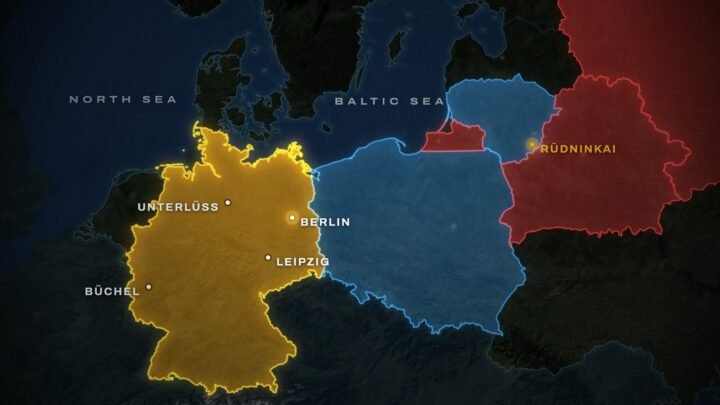
The Suwałki Gap, about 65 km wide, is the only land route between the Baltic states and the rest of NATO. It runs between Belarus and Russia’s Kaliningrad exclave. On 7 October, Lithuania ordered up to 100 soldiers to help guard its border with Kaliningrad. It cited the Latvian incident and talk of Russian mobilisation, though the border itself stayed calm.
Poland, meanwhile, is building what its leaders call Europe’s biggest army: more than 220,000 soldiers by its own count.
The Baltic Sea islands
In April 2026, the head of Sweden’s armed forces, Michael Claesson, spoke to The Times about the islands. As Swiss media reported the interview, he warned that Russia might target small, uninhabited islands rather than Gotland or Denmark’s Bornholm. What would matter, he said, is the political effect, not their military value: a minimal provocation, then a wait to see what happens politically. Gotland, about 300 km from Kaliningrad, gives Sweden a central position in the Baltic, which is one reason Sweden’s NATO entry mattered.
Svalbard and the Black Sea
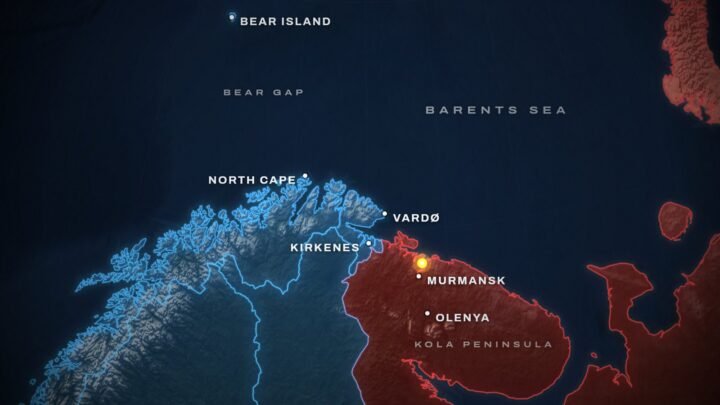
In the Arctic, Svalbard is Norwegian, but a 1920 treaty bans naval bases and fortifications there, and Russia runs a mining town at Barentsburg. Norway and Russia read the treaty’s limits differently. On the logic of a test, that legal grey zone matters more than the islands’ size.
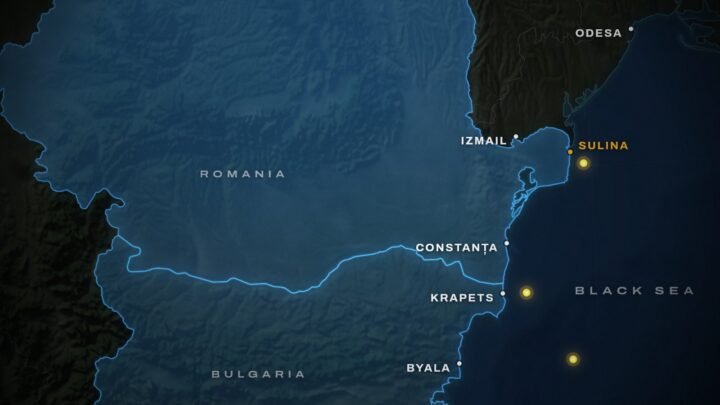
In the Black Sea, attacks on shipping have come close to a NATO coast. On 14 October, a tanker caught fire inside Romanian waters off Sulina after a suspected drone strike. The next day, another tanker was hit just outside those waters. Seven of its 12 crew were still missing at the last count, and Romania said it was investigating. An unnamed NATO military source told Reuters the drones were “of Russian origin”, while Romania’s president declined to name Russia. On 17 October, Romanian F-16s shot down two drones over Romanian waters.
How does Moscow see the warnings?
Russia rejects the whole premise. At the Valdai Club on 1 October, Putin said Russia has “no intention of attacking anyone, not in 2029, not in 2030, not in 2050”. If Russia faces aggression, he added, it will respond. On 27 August, the Kremlin’s spokesman, Dmitry Peskov, called reports of a planned attack on NATO “scare stories” that “have nothing to do with reality”. Russia, he added, faces “a very aggressive policy” from European countries.
In Moscow’s view, NATO’s growth toward Russia’s borders is the real threat. Russia’s 2014 military doctrine lists that expansion first among the main external military risks. The roots of the quarrel run through Russia’s objection to Ukraine joining NATO.
On 30 September, Reuters reported a Russian note warning NATO that Moscow could use its full arsenal if the alliance tried to cut off Kaliningrad. Moscow says NATO is preparing a blockade of the region, and NATO denies any such plan.
In short, Moscow casts itself as the side under pressure, and NATO as the side that invents threats.
Is an attack imminent? The case against alarm
Even those who warn of a test do not expect an invasion soon. On 14 October, on a visit to Estonia, NATO’s secretary general, Mark Rutte, said the alliance sees “no imminent threat” to its territory. NATO would respond, he added, if it saw a Russian build-up.
Latvia’s security service agrees. Its director, Normunds Mežviets, told the Guardian his service sees no sign of an imminent attack. Russia’s resources, he said, remain limited by the war in Ukraine. Denmark’s report, for all its warnings, judged a full invasion highly unlikely and saw no sign that Russia is preparing one.
The ground tells a similar story. Finland’s army commander says Russia’s new bases near Finland’s border could hold about 80,000 troops. Yet he put the number there at about 20,000 in June. In March, Lithuania’s intelligence services judged that Russia could be ready for a limited conflict in the Baltic Sea region within 3 to 5 years after a temporary ceasefire in Ukraine. If the war goes on, they put it at 6 to 10 years.
Even so, Russia is not standing still. On 28 September, Putin raised the ceiling for his armed forces to 1,550,500 servicemen. Moreover, several of the starkest warnings reached the public as press reports of classified assessments, which outsiders cannot check. Both views can hold at once: officials see no invasion coming soon, yet several warn a smaller test is possible.
What to watch next
- NATO’s Black Sea talks. Ambassadors are due to discuss the ship attacks on 20 October, at Romania’s request.
- The Lithuanian drone inquiry. Lithuania’s defence minister has proposed a joint inquiry with Poland into where the 18 October drone came from.
- America’s forces in Europe. Options for the Pentagon’s review of its troops in Europe are due on 6 November. America’s commitment is exactly what US intelligence says a test would probe.
- The winter. Tusk called late autumn and winter the most critical moment of the war so far. Watch whether incidents on NATO’s border grow in number or in boldness.
If the warnings are right, a first test would aim less at NATO’s borders than at its nerve. Read more analysis on Europe.
Frequently asked questions
Will Russia attack NATO?
No one knows. US and European intelligence services say a limited, deniable Russian test of NATO is possible in the coming months or years, not a full invasion. NATO’s secretary general, Mark Rutte, said on 14 October 2026 that he sees no imminent threat to NATO territory. Russia says it has no intention of attacking anyone.
Which country will Russia attack next?
No government has named a single target. Published scenarios and warnings mention the Baltic states above all: Estonia’s border city of Narva, Latvia’s border with Belarus and the Suwałki Gap between Poland and Lithuania. One source quoted by CNN pointed to the Baltic states or Poland. These are fears that officials describe, not forecasts.
Will Russia attack Estonia?
Narva, an Estonian border city where most people speak Russian, features in a September 2026 scenario by the Institute for the Study of War. ISW stressed that it was not a forecast, and it saw no large Russian build-up near the Baltic states. In Tallinn on 14 October, NATO’s secretary general said he sees no imminent threat.
What happens if Russia attacks a NATO country?
Article 5 of the North Atlantic Treaty treats an armed attack on one member as an attack on all. Each ally then takes the action it deems necessary, which can include armed force. NATO has invoked Article 5 only once, after the attacks on the United States on 11 September 2001.
What if Russia attacked the Baltic states?
All three are NATO members, so Article 5 would apply. Much Western concern centres on the Suwałki Gap, the land link through which allied help would travel. RAND war games published in 2016 found Russian forces could reach the outskirts of Tallinn or Riga within 60 hours, against NATO’s forces of that time. NATO has added troops since.
Sources
- NATO jets scramble as drone explodes in Lithuanian airspace
- Lithuanians forced to take shelter after suspected drone enters airspace (Reuters)
- US intel assesses Putin could launch attack aimed at testing NATO unity (CNN)
- U.S. intelligence agencies: Russia's Putin could test NATO
- US intel warns Russia could launch attack on NATO countries by 2029, WSJ reports
- US intelligence: Putin is considering a limited attack on one NATO country by 2029
- Tusk: intelligence sees Russian plan for drone strikes on Poland, allies
- Russia planning 'accidental' strikes on eastern NATO states, warns Poland
Show all 57 sources
- Poland's prime minister says Russia is preparing 'accidental' drone and missile strikes on NATO countries that support Ukraine (Reuters)
- Poland's prime minister warns of Russian 'accidental' attacks on Ukraine's allies
- Czech intelligence chief warns Russia could test NATO 'within months'
- BIS chief Koudelka in the Guardian: a Russian attack could come within months (in Czech)
- Babiš rejected Koudelka's warning that Russia could attack within months: the BIS gave the government no such information (in Czech)
- European spy chiefs warn Russia could launch attack on NATO
- Denmark expects Russia to escalate hybrid warfare in coming months, intelligence service says (Reuters)
- Danish intelligence highlights Russian aggression in Baltic, deniable UAV tactics
- Denmark warns of a growing risk that Russia will launch a military attack against NATO countries
- The North Atlantic Treaty
- Collective defence and Article 5
- Estonia, Russia and a possible NATO conflict: the ISW Narva scenario
- ISW warns Russia could try and seize Estonian city in a test of Article 5
- Russia imposes temporary movement restrictions on other side of Estonian border
- Russia imposes restrictions near Estonian border (citing ERR)
- Narva linn: population and language (Statistics Estonia, 2021 census)
- Is Narva next in Putin's sights?
- Latvian officials say armed masked men threatened troops while trying to push 20 migrants across from Belarus, then crossed into Latvia themselves and stole surveillance cameras
- Armed, masked intruders enter Latvia from Belarus and carry out sabotage
- Lukashenko commented on the incident involving armed people from Belarus entering Latvia
- Lukashenko on the Latvian border incident
- Lukashenko calls the armed group's entry into Latvia a staged event (in Russian)
- Lukashenko denies Belarus breached Latvian border as experts claim intelligence operation
- Why Latvia must engage its Russian minority
- Lithuania to deploy troops to guard border with Kaliningrad region
- Lithuania deploys troops to the Kaliningrad border (citing LRT)
- Lithuania deploys army to Kaliningrad border after Belarus-Latvia breach
- Sweden's army chief warns: will Putin soon attack these tiny Baltic Sea islands?
- Two ships ablaze in Romanian Black Sea waters, 8 sailors missing (Reuters)
- Five crew members from Wine Trader rescued, seven others remain missing
- Two ships ablaze off Romania's Black Sea coast, drone attacks blamed
- Drone strike on ship in Romanian waters raises fear that war in Ukraine is spreading (AP)
- Romanian F-16 fighter jets shoot down two drones over Romanian territorial waters (Reuters)
- Romanian F-16s shoot down two drones over Black Sea, authorities say
- Black Sea ship attacks to be discussed in special NATO council session
- Putin says all weapons on agenda if Russia's Kaliningrad attacked
- Russia dismisses as 'scare stories' US reports about attacking NATO
- Kremlin denies NATO attack plans after CIA chief's Moscow visit
- Kremlin dismisses US media 'scare stories' on CIA chief's Moscow visit
- The Military Doctrine of the Russian Federation (translation)
- Russia warns NATO of possible nuclear response if Kaliningrad is cut off
- NATO Secretary General meets Estonian leaders and visits Ämari Air Base
- 'No imminent threat' to NATO territory from Russia, NATO chief Rutte insists
- Rutte in Tallinn: no imminent threat against NATO territory
- National Threat Assessment 2026
- Finnish Military Intelligence Review 2026 has been published
- Presidential decree No. 700 on the size of the armed forces
- Reinforcing Deterrence on NATO's Eastern Flank: Wargaming the Defense of the Baltics
- Pentagon weighs pulling nearly a third of US forces from Europe
Facts as of 19 October 2026. Spotted a mistake? Tell us, and we will correct it.