Europe Analysis Episode 33
Why Germany Is Building Europe’s Strongest Army
Germany now spends more on defence than any other European NATO member, and its chancellor has promised Europe's strongest conventional army. The money has arrived. The soldiers, the speed and the trust have not.
In short
- Germany spends more on defence than any other European NATO member: about €108 billion in 2026, special fund included, with €139.6 billion planned for 2027.
- Chancellor Friedrich Merz has promised the money for 'the strongest conventional army in Europe'; for now that is a goal, not a fact.
- The armed forces had about 186,400 soldiers at the end of August 2026, against a goal of 260,000 plus 200,000 reservists by 2035.
- Berlin says it is rearming because cheap Russian gas and an unconditional American shield both broke within four years; Moscow points to history.
- A reserve bill, read in parliament on 15 October 2026, would let the armed forces call former soldiers back even if they or their employers say no.
In this analysis 8 sections
- 01Germany army size: how big is the Bundeswehr in 2026?
- 02How did Germany's army end up with broomsticks?
- 03Why is Germany rearming now?
- 04Germany's defence budget: what does the money buy?
- 05Germany army recruitment: why soldiers, not money, are the bottleneck
- 06How do Moscow, Paris and Warsaw see a stronger Germany?
- 07What to watch next
- 08Frequently asked questions
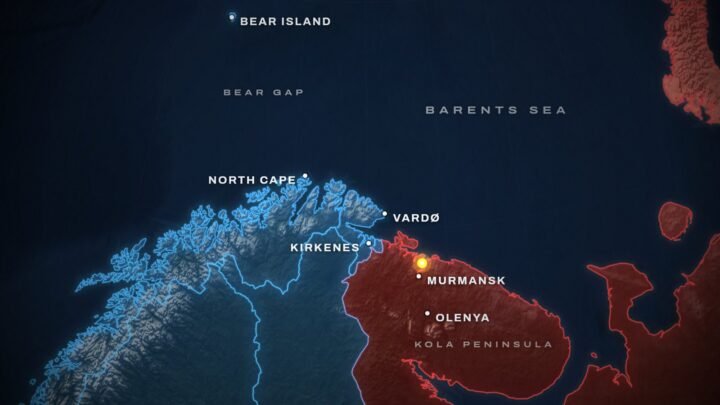
In September 2014, German soldiers training in Norway for NATO’s rapid-reaction force fixed broomsticks, painted black, to their Boxer armoured vehicles. The broomsticks stood in for machine guns the unit didn’t have. Twelve years later, Germany spends more on defence than any other European member of NATO.
Chancellor Friedrich Merz has promised Germany’s army all the money it needs to become Europe’s strongest conventional army. On 15 October 2026, his defence minister asked parliament for the power to call former soldiers back, even if they or their employers say no. So why is the country of “never again” rearming, and can money alone build that army?
Germany army size: how big is the Bundeswehr in 2026?
At the end of August 2026, the Bundeswehr, Germany’s armed forces, had about 186,400 active soldiers, by the defence ministry’s count. That was just above the bottom of the legal target range for 2026, 186,000 to 190,000.
On 13 October, Defence Minister Boris Pistorius told employers that the Bundeswehr was the largest in more than a decade. German defence media reported that he put the figure above 190,000. Official figures are due in mid-November. The goal is 260,000 active soldiers plus 200,000 reservists by 2035.
Is it Europe’s strongest army?
Not yet: “strongest” is Berlin’s goal for Germany’s army, not a fact. Poland counts about 220,000 soldiers, part-time territorial troops included, and about 180,000 full-time, roughly level with Germany. Poland’s build-up is the subject of why Poland is building Europe’s biggest army. France and Britain also have nuclear weapons. Germany has none of its own.
Money is a different story. SIPRI ranks Germany fourth in the world for military spending in 2025, at $114 billion, behind only the United States, China and Russia. For 2026, NATO estimates €124.7 billion, or 2.69% of GDP, second in the alliance after the US. As a share of the economy, however, Poland and the Baltic states spend more.
| Germany’s armed forces | Figure | As of |
|---|---|---|
| Active soldiers | about 186,400 | 31 August 2026 |
| Goal | 260,000 + 200,000 reservists | 2035 |
| Two Plus Four Treaty cap | 370,000 | 1990 |
| Defence budget, special fund included | about €86bn (2025), €108bn (2026), €139.6bn planned (2027) | October 2026 |
| NATO’s estimate of 2026 spending | €124.7bn, 2.69% of GDP | July 2026 |
| US troops in Germany | about 36,000, about 5,000 ordered out | May 2026 |
| Poland’s soldiers, for comparison | about 220,000 (about 180,000 full-time) | August 2026 |
How did Germany’s army end up with broomsticks?
An army built never to fight alone
On 12 November 1955, Defence Minister Theodor Blank stood in a vehicle hall at a barracks in Bonn. There he handed appointment papers to the first 101 volunteers of West Germany’s new armed forces.
The new force’s soldiers were to be “citizens in uniform”, in an army under parliament’s control. From the start, Bonn tied its army, air force and navy into NATO. West Germany rearmed, but its forces were never meant to fight alone.
By the late 1980s, the Bundeswehr’s planned peacetime strength stood at about 495,000 soldiers. Then the Two Plus Four Treaty of 1990, which cleared the way for reunification, capped united Germany’s forces at 370,000.
The peace dividend
After the Cold War, peace looked permanent. The forces shrank to about 350,000 soldiers in 1995 and about 255,000 by 2011. That year, after about 55 years, Germany suspended conscription. By 2016, career and temporary soldiers numbered only about 166,500.
Berlin also bet on “change through trade”: the idea that business ties with Russia would make war too costly. Before 2022, by the government’s own count, Russia supplied more than half of Germany’s gas imports.
Meanwhile, the army ran down. That is where the broomsticks came from, although the ministry said those Boxers were command vehicles, never meant to carry the gun. Still, in 2018, Der Spiegel reported that only 4 of the air force’s 128 Eurofighters were fit for real missions. That July, at a NATO meeting, Donald Trump said: “Germany, as far as I’m concerned, is captive to Russia.”
On 24 February 2022, Russia launched its full-scale invasion of Ukraine. That day, the head of Germany’s army posted on LinkedIn:
The army I am allowed to lead stands more or less bare.
Lieutenant General Alfons Mais, 24 February 2022 (translated)
Why is Germany rearming now?
Berlin’s answer is that two pillars of its post-war model broke within four years. One was cheap Russian gas. The other was an American shield it never had to question.
The first pillar: Russian gas
The first broke with the invasion. Three days later, Chancellor Olaf Scholz told parliament: “We are living through a watershed era.” In German, it is one word: Zeitenwende. He announced a €100 billion special fund for the armed forces, and parliament wrote it into the constitution in June 2022.
In October 2023, Pistorius said Germany had to become “kriegstüchtig”, or war-ready. In June 2024, he set the date: 2029.
The second pillar: the American shield
Then Donald Trump’s return to the White House brought new doubts about NATO. In February 2025, his defence secretary, Pete Hegseth, put it plainly: “Safeguarding European security must be an imperative for European members of NATO.”
In March 2025, the Bundestag freed defence spending above 1% of GDP from the debt brake, Germany’s constitutional limit on borrowing. The vote was 512 to 206. Two months later, Merz promised all the money the Bundeswehr needs to become “the strongest conventional army in Europe” (translated).
On 1 May 2026, the Pentagon ordered about 5,000 of the roughly 36,000 American troops in Germany to leave within 6 to 12 months. For Berlin, security can no longer be bought from Moscow, or borrowed from Washington.
Germany’s defence budget: what does the money buy?
The defence budget, special fund included, rose from about €86 billion in 2025 to about €108 billion in 2026. For 2027, the government plans €139.6 billion: €109.7 billion in the core budget plus €29.9 billion from the special fund. In early October, parliament’s budget committee passed the core defence budget unchanged, the Bundestag reported. By 2029, Berlin aims to spend 3.5% of GDP on defence, on NATO’s measure.
A brigade near Belarus
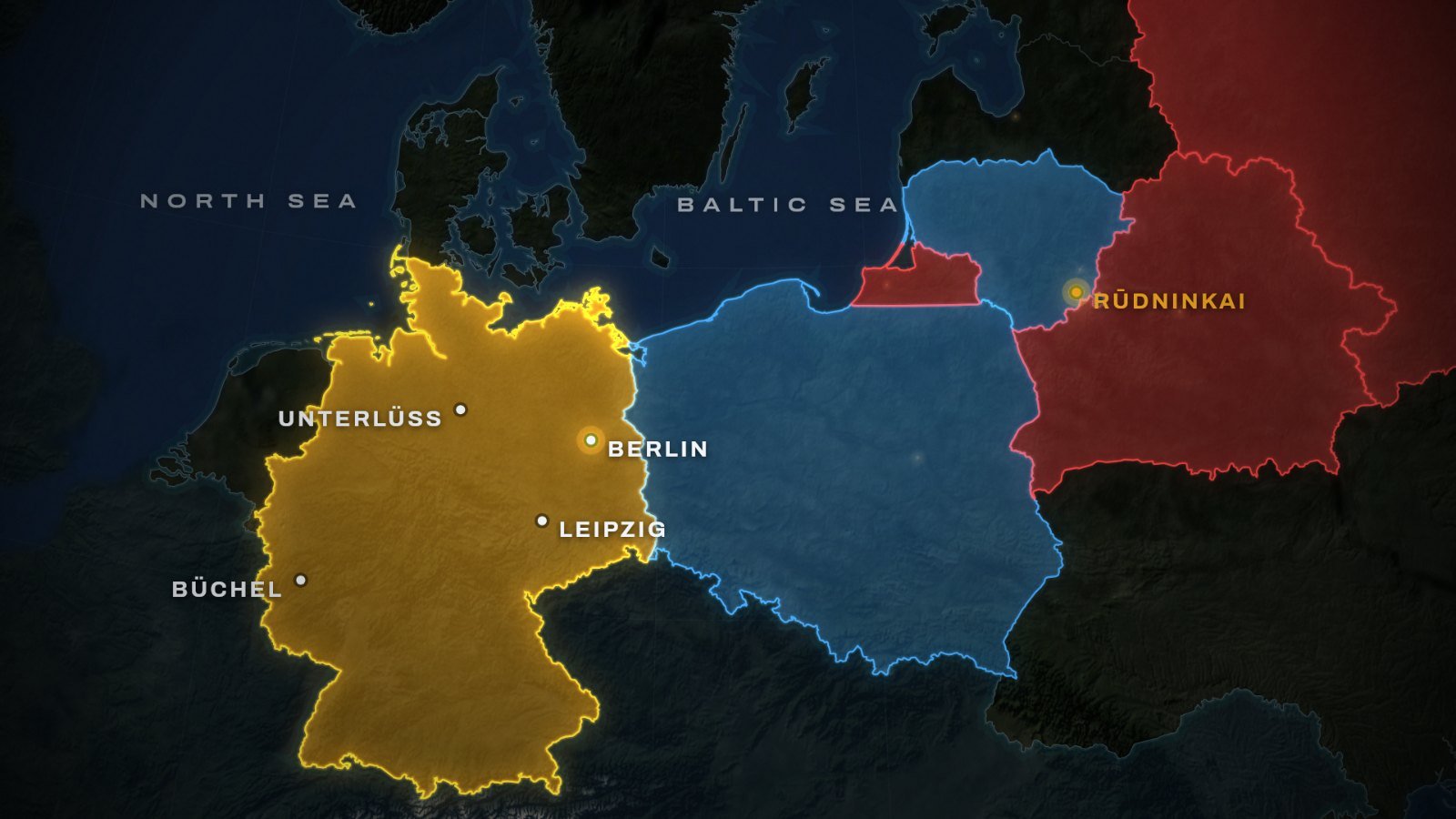
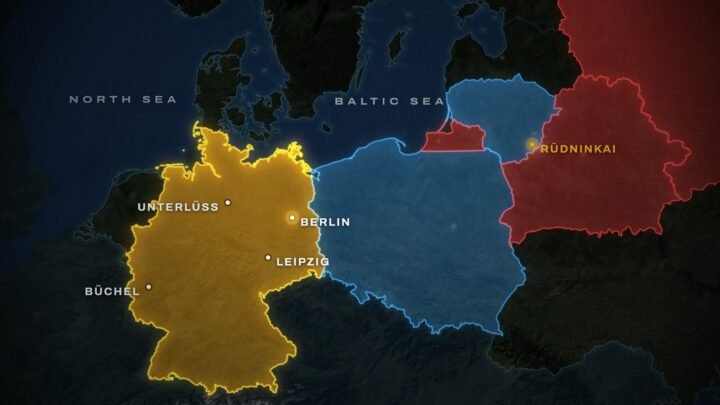
In Lithuania, Germany has set up Panzerbrigade 45, the first German brigade based abroad for good since the Second World War. By the end of 2027, it should have 4,800 soldiers, mostly at a new base at Rūdninkai, near the border with Belarus. That is the same corner of NATO as the Suwałki Gap, the narrow land link between Poland and Lithuania.
At home, a classified war plan, Operationsplan Deutschland, would make Germany NATO’s crossroads in a war. Up to 800,000 allied troops could reportedly cross the country on their way east.
The hardware on order
- Air defence: Arrow 3, Patriot and IRIS-T. On 14 October, the budget committee approved two Patriot fire units to replace those sent to Ukraine. It also approved interceptor drones that catch drones in nets, to guard bases.
- Ships: eight MEKO frigates, replacing the cancelled F126 programme.
- Aircraft and tanks: 35 F-35 fighters, the first handed over in September 2026, and 123 Leopard 2A8 tanks from 2027.
- Drones: a new drone regiment with a reach of 500 km, fully ready by 2029.
- Shells: a new Rheinmetall factory at Unterlüß, opened in August 2025.
Germany army recruitment: why soldiers, not money, are the bottleneck
Money is no longer Germany’s bottleneck. People are.
Under the new military service, nearly 300,000 letters had gone out to young Germans by June 2026. Only about 530 people had signed up, according to the defence ministry. Even the Lithuania brigade was only about 80% filled by volunteers, by one count. So in September, Berlin announced that it would order several hundred soldiers there.
In March, Henning Otte, parliament’s commissioner for the armed forces, called the structures “too top-heavy, too complicated and largely ineffective” (translated). By his count, 21.6% of soldiers are officers and only 29.3% are enlisted ranks. And in a spring 2026 survey for the Bundeswehr, only 35% of Germans said they would take up arms to defend the country.
The reserve bill
That is why the government wants a stronger reserve. On 15 October, the Bundestag held its first reading of the Reserve Strengthening Act. It would end the reserve’s “double voluntariness”: the armed forces could call up former soldiers even if they or their employers say no. The aim is at least 200,000 reservists within a decade. Critics call it conscription through the back door, and employers had already rejected compulsory reserve exercises.
Full conscription would need a new vote in parliament. Three parties voted against the 2025 military service law, each for its own reasons: the Alternative for Germany (AfD), the Greens and the Left. The far-right AfD, itself split over the draft, now leads the national polls, at 26% to 30% in October.
How do Moscow, Paris and Warsaw see a stronger Germany?
Moscow points to history
In May 2025, Russia’s foreign minister, Sergei Lavrov, said the plans reminded many of the last century. Back then, he said, Germany twice became the leading military power, and that caused great trouble.
On 1 October 2026, at the Valdai forum, Vladimir Putin said Russia would attack no one, “neither in 2029, nor in 2030, nor in 2050”. But he added that Russia would answer aggression. Moscow’s wider case against NATO is the subject of why Russia doesn’t want Ukraine in NATO.
Berlin points to a shadow war
Berlin points to its own soil instead. A leaked report by the federal crime police (BKA) counts more than 165 suspected sabotage cases and 1,068 suspicious drones from January to August 2026.
In August, a drone carrying explosives turned up at Leipzig/Halle airport. Berlin blamed Russia and closed Russia’s consulate in Bonn; Moscow denies any role. Then Dmitry Medvedev, deputy head of Russia’s Security Council, wrote that all of Germany’s arms plants working for Ukraine deserved a direct strike, “and quite possibly, some other places in Berlin as well”.
On 12 October, German police arrested two Turkish men near Stuttgart over an arson attack on a Starlink station in Poland. Poland’s intelligence coordinator, Tomasz Siemoniak, has “no doubt” Russian intelligence is behind it. German officials have not confirmed a link.
Paris and Warsaw
The unease isn’t only in Moscow. In January 2026, French officials described “a general unease” about Germany’s growing military power, Bloomberg reported. France’s top general has warned that France could fall behind.
France keeps what Germany lacks: the bomb. In March 2026, the two countries agreed on a nuclear steering group, though France keeps the final say. On 13 October, three German Tornados of the Büchel wing joined Steadfast Noon, NATO’s yearly nuclear exercise. Widely published reports say Büchel stores American nuclear bombs; Germany and NATO don’t confirm it.
Warsaw’s worry has often run the other way. In 2011, speaking about the euro crisis, Poland’s foreign minister, Radosław Sikorski, said: “I fear German power less than I am beginning to fear German inactivity.”
Three paths from here
In the first, the money works. Volunteers come or the reserve law fills the gap, and Germany becomes the backbone of Europe’s conventional defence. In the second, the money arrives without the soldiers, and Berlin brings back conscription after a political fight. In the third, America leaves faster than expected, and Germany ends up leading Europe’s defence. That is where Europe’s old fear of a strong Germany could return.
Germany has been here before, in a way. In 1955, it rearmed under suspicion, but inside NATO, and America anchored the arrangement. This time, America is the one stepping back.
What to watch next
- The budget vote. The Bundestag’s final vote on the 2027 budget, with €139.6 billion for defence, is planned for 27 November.
- America’s review. The Pentagon’s options for US forces in Europe are due to Hegseth by 6 November, Reuters reported. They could show whether the cut in Germany stops at 5,000.
- The reserve bill. Whether parliament passes it, and whether the debate turns to full conscription.
- The headcount. October’s official figures, due in mid-November, will test the 190,000 claim. Even then, the Germany army would need about 70,000 more soldiers to reach its goal.
Read more analysis on Europe.
Frequently asked questions
How big is the German army in 2026?
By the defence ministry’s count, Germany’s armed forces had about 186,400 active soldiers at the end of August 2026. In October, Defence Minister Boris Pistorius put the figure above 190,000, German defence media reported. The goal is 260,000 active soldiers plus 200,000 reservists by 2035.
Where does Germany’s army rank in the world?
By money, near the top. SIPRI ranked Germany fourth in the world for military spending in 2025, behind the United States, China and Russia. NATO puts Germany’s 2026 spending second in the alliance. By soldiers, Germany is roughly level with Poland’s full-time force, and it has no nuclear weapons.
Why is Germany rearming?
Berlin says two pillars of its post-war model broke within four years. Russia’s full-scale invasion of Ukraine in 2022 ended the bet on cheap Russian gas. Then Donald Trump’s return raised doubts about the American shield. Moscow points to history; Berlin points to sabotage and drones it blames on Russia.
Is Germany bringing back conscription?
Not yet. Germany suspended conscription in 2011, and its new military service still relies on volunteers. Bringing back the draft would need a new vote in parliament. A reserve bill, read in October 2026, would let the armed forces call former soldiers back even if they or their employers object.
How many US troops are in Germany?
About 36,000 American troops were in Germany when the Pentagon, on 1 May 2026, ordered about 5,000 of them to leave within 6 to 12 months. A wider review of US forces in Europe is due to deliver options to Pete Hegseth by 6 November 2026, Reuters reported.
Does Germany have nuclear weapons?
No. Germany has no nuclear weapons of its own, while France and Britain do. German jets take part in NATO’s nuclear exercises, and widely published reports say American nuclear bombs are kept at Büchel air base. Germany and NATO don’t confirm that.
Watch the video
Why Germany Is Building Europe’s Strongest Army
The video loads from YouTube in privacy-enhanced mode, only when you press play.
Sources
- German soldiers used broomsticks instead of guns during NATO exercise
- Global military spending surges and reaches record high (SIPRI)
- Budget committee passes the 2027 departmental budgets (hib 839/2026)
- First reading of the Reserve Strengthening Act
- Speech by Defence Minister Boris Pistorius on the Reserve Strengthening Act
- Merz's first government statement
- Germany's Merz vows to build Europe's strongest conventional army (AP)
- US to withdraw 5,000 troops from Germany in next 6-12 months (AP)
Show all 79 sources
- Germany to deploy remaining soldiers to Lithuania after volunteer shortfall
- Bundeswehr weiter auf gesetzlich festgelegtem Aufwuchspfad
- Pistorius beim Deutschen Arbeitgebertag
- Bundeswehr-Personalstärke laut Pistorius im Oktober 2026 über 190.000
- Bundeswehr laut Pistorius erstmals wieder über 190.000 Soldaten
- Germany unveils military strategy but sticks to troop target (Reuters)
- Polish army grows to around 220,000 soldiers
- NATO members' defence spending, 2026 estimates
- Five NATO members seen to spend over 3.5% of GDP on core defence this year, alliance estimates show (Reuters)
- Defence spending: who is doing what (July 2026)
- Die Gründung der Bundeswehr
- Spurensuche in Bonn: die Ernennung der ersten 100 Soldaten
- The defence amendment to the Basic Law, 1956
- Die Bundeswehr in der NATO
- The Cold War
- Treaty on the Final Settlement with Respect to Germany (Two Plus Four Treaty)
- Bundestag paper 20/5518
- Wie funktioniert die Wehrpflicht?
- Die Bundeswehr wächst weiter mit den Aufgaben
- Factbox: What happens if Russia turns off the gas to Germany? (Reuters)
- German Luftwaffe only has four operation-ready Eurofighter jets: report
- NATO summit: Trump says Germany is 'captive to Russia'
- Fed-up German army chief laments his service stands 'bare' after years of fiscal neglect
- Zeitenwende: policy statement by Chancellor Olaf Scholz, 27 February 2022
- Bundestag beschließt Grundgesetzänderung zu Sondervermögen Bundeswehr (epd)
- 'Kriegstüchtig': Pistorius and the debate
- Berlin: we must be able to face a war by 2029
- Germany's election and doubts about NATO (RFE/RL)
- European NATO countries must provide overwhelming aid to Ukraine, US SecDef says
- Hegseth at the Ukraine Defense Contact Group (DoD News)
- Lockerung der Schuldenbremse: the Bundestag vote
- Verteidigungsetat: 62,43 Milliarden Euro 2025
- Bundeshaushalt 2027 mit 543,3 Milliarden Euro Ausgaben
- Brigade Litauen: Aufstellungsappell in Vilnius
- Panzerbrigade 45 commissioned in Lithuania
- Lithuanian brigade stood up
- Lithuania military base for German brigade
- Operationsplan Deutschland
- NATO exercise: Germany as a hub
- Haushaltsausschuss billigt vier Rüstungsvorhaben
- German lawmakers approve funds for eight-ship fleet of sub-hunting frigates
- Germany receives first F-35 jet from US as NATO boosts military spending
- KNDS secures Leopard 2A8 orders
- Pistorius announces a drone regiment
- Rheinmetall opens mega plant as Berlin rearms (AP)
- Neuer Wehrdienst erfolgreich gestartet
- Kurzmeldungen (hib), new military service figures
- Wehrbeauftragter: Strukturen der Bundeswehr nicht effektiv
- Studie: deutsche Verteidigung und Wehrdienst
- Employers protest against compulsory reserve plans
- Roll-call vote on the military service law
- The AfD and conscription
- Neue Umfrage (Forsa)
- INSA-Umfrage: AfD bei 30 Prozent
- Russia's Lavrov calls German army build-up plan very worrying (AFP)
- Putin says Russia will attack no one, neither in 2029, nor in 2030, nor in 2050
- Hybride Bedrohungen: BKA meldet 165 Sabotagefälle im Jahr 2026
- Germany blames Russia for months-old attempted drone attack in Leipzig (AP)
- Russia calls Germany's Leipzig drone attack claims false and an unprecedented escalation (Reuters)
- Medvedev threatens strikes on German arms plants
- Medwedew: Deutschland verdient direkte Angriffe (dpa)
- Poland says two Turks arrested over Russia-linked Starlink station fire
- Starlink arson in Poland: arrests in Nürtingen
- Germany pours resources into a historic rearmament, rekindles old fears in France (Bloomberg)
- L'Allemagne veut la première armée d'Europe, Paris s'inquiète
- Franco-German initiative to complement NATO's deterrence
- France, Germany create panel to advance shared nuclear deterrence plans
- NATO launches nuclear deterrence drill as tensions rise globally
- NATO-Übung Steadfast Noon: Bundeswehr verlegt Tornados
- Radek Sikorski: truthteller in action
- Pentagon's NATO review preparing troop options for Hegseth by November 6 (Reuters)
Facts as of 22 October 2026. Spotted a mistake? Tell us, and we will correct it.