Europe Analysis
Svalbard: Why Norway’s Arctic Islands Matter to Russia and NATO
A 1920 treaty makes Svalbard Norwegian but open to the citizens of dozens of countries, and it limits military use. That is why a Russian mining town and NATO's northern sea lanes meet on these Arctic islands.

In short
- The Svalbard Treaty, signed in 1920 and in force since 1925, recognises Norway's full and absolute sovereignty, while citizens of every party share equal rights to fish, hunt, mine and trade there.
- Article 9 of the treaty bans naval bases and fortifications and any use of the islands for warlike purposes; Norway and Russia read those limits differently.
- On 1 January 2026, 392 people lived in Russia's settlements of Barentsburg and Pyramiden, and 2,512 in Longyearbyen and Ny-Ålesund.
- The Bear Gap, about 650 km of sea between Norway's North Cape and Svalbard, is one of the main routes for Russian ships and submarines leaving their Arctic bases.
- In September 2026, Norway seized a Russian ship in Barentsburg under a court order won by Ukraine's Naftogaz, and Moscow accused Norway of piracy.
In this analysis 9 sections
- 01Where is Svalbard, and who lives there?
- 02What does the Svalbard Treaty say?
- 03Why is Russia in Svalbard?
- 04Why does the Bear Gap matter to NATO and Russia?
- 05Is Svalbard demilitarised?
- 06What happened to Svalbard's undersea cable?
- 07Why is China interested in Svalbard?
- 08What to watch next
- 09Frequently asked questions
On 2 September 2026, Norway’s governor of Svalbard seized a Russian ship at the quay in Barentsburg. The order came from a Norwegian court, at the request of Ukraine’s state energy company, Naftogaz. Moscow accused Norway of “piracy”. Yet Barentsburg itself is a Russian coal-mining town, run by a Russian state company, on Norwegian soil.
So why do Norway’s Arctic islands matter to Russia and NATO? The answer is a mix of law and geography. A treaty from 1920 makes Svalbard Norwegian, but it gives dozens of countries a stake in the islands and limits their military use. Meanwhile, the islands sit beside the sea route that Russia’s Northern Fleet takes to reach the Atlantic.
Where is Svalbard, and who lives there?
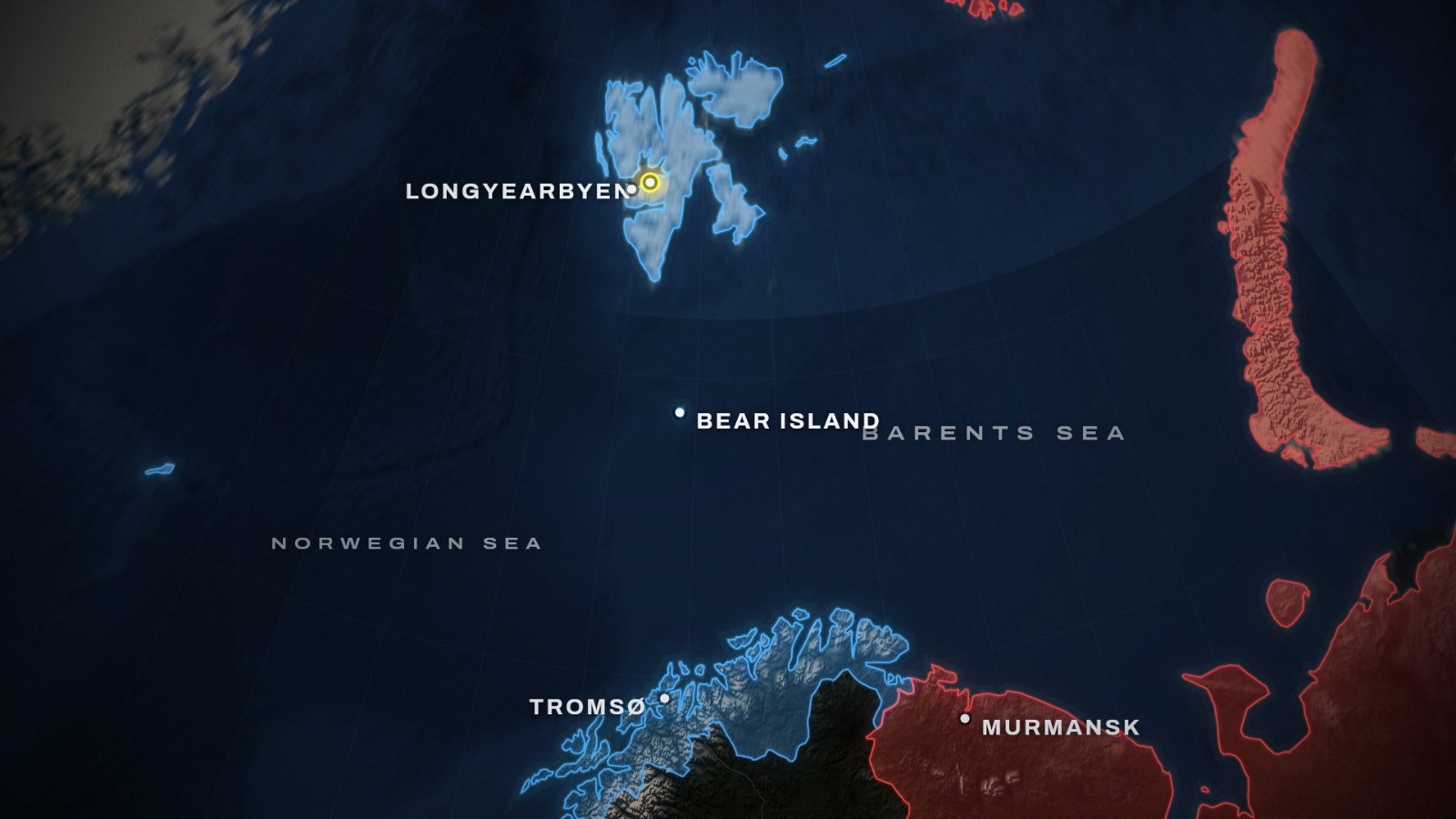
Svalbard is an archipelago in the Arctic Ocean, far north of mainland Norway. Its main town, Longyearbyen, lies about 1,310 kilometres from the North Pole and about 960 kilometres from Tromsø.
On 1 January 2026, according to Statistics Norway, 2,512 people lived in Longyearbyen and the research village of Ny-Ålesund. Another 392 lived in the Russian settlements of Barentsburg and Pyramiden. The residents held 66 different citizenships.
The Russian figure moves. A year earlier, Barentsburg and Pyramiden had only 297 residents, the lowest number since the statistics began in 2013.
Norway runs the islands through its governor, whose office also checks ships and carries out court orders. Norway’s Immigration Act does not apply on Svalbard, so nobody needs a visa or a residence permit to live there.
| Svalbard at a glance | Figure | Note |
|---|---|---|
| Longyearbyen to the North Pole | about 1,310 km | straight line |
| Longyearbyen to Tromsø | about 960 km | straight line |
| Barentsburg to Longyearbyen | about 36 km | straight line |
| Bear Island to Norway’s North Cape | about 425 km | inside the Bear Gap |
| The Bear Gap, North Cape to Svalbard | about 650 km | Al Jazeera, June 2026 |
| Treaty signed / in force | 9 February 1920 / 14 August 1925 | signed in Paris |
| Parties to the treaty | at least 40 states | all Arctic Council members |
| Residents of Longyearbyen and Ny-Ålesund | 2,512 | 1 January 2026 |
| Residents of Barentsburg and Pyramiden | 392 | 1 January 2026 |
| Norway’s fisheries protection zone | 200 nautical miles, since 1977 | Russia does not recognise it |
What does the Svalbard Treaty say?
Nine states signed the Svalbard Treaty in Paris on 9 February 1920. It came into force on 14 August 1925, once all the signatories had ratified it. Its first article recognises Norway’s “full and absolute sovereignty” over the archipelago.
That sovereignty comes with conditions. Citizens and companies of every party share equal rights to fish, hunt, mine and run businesses on the islands and in their territorial waters.
The treaty limits military use, too. Under Article 9, Norway may not create or allow a naval base, and it may not build fortifications. Nor may anyone use the islands for “warlike purposes”.
More states joined later. The Soviet Union recognised Norway’s sovereignty in an exchange of notes in 1924, and it joined the treaty in 1935. Russia now holds its place. The legal scholars Robin Churchill and Geir Ulfstein count 40 parties, including every member of the Arctic Council, China and Japan.
Where Norway and Russia read the treaty differently
The treaty is short, and its silences cause disputes. The first is about the sea. In 1977, Norway set up a 200-nautical-mile fisheries protection zone around Svalbard, rather than a full economic zone. Norway says that, as the coastal state, it may regulate fishing there and enforce its rules.
Russia does not recognise the zone. Moscow says Norway has no right to act against Russian vessels there, and calls the zone an unjustified extension of Norway’s rights under the treaty. Since the late 1990s, the Norwegian Coast Guard has tried several times to arrest Russian trawlers. Even so, the Fridtjof Nansen Institute, a Norwegian research centre, finds that the two sides quickly agreed to disagree, as long as Russian fishermen kept their access.
The seabed is the second dispute. Norway claims exclusive rights over the continental shelf around Svalbard, and other parties contest that claim. In January 2017, the Norwegian Coast Guard arrested the Senator, a Latvian-owned ship that was setting 2,600 crab traps in the zone.
In February 2019, all 11 judges of Norway’s Supreme Court ruled that the snow crab is a sedentary species of the seabed. So Norway alone manages it. But the court left the bigger question open. It did not decide whether the treaty’s equal rights reach beyond the territorial sea.
Why is Russia in Svalbard?
Russia’s presence rests on the treaty’s equal economic rights. Trust Arktikugol, a Russian state-owned company set up in 1931, mines coal at Barentsburg. Barentsburg’s is now the only Russian mine still working on the islands.
The coal does not pay. According to Polarjournal, Arktikugol’s mining has always lost money, and the company depends on state subsidies. Those subsidies fell from $28 million in 2009 to $8 million in 2017, the Barents Observer reported, and by then tourism earned more than coal. In 2023, Russia planned to cut output from about 120,000 tonnes a year to 40,000 tonnes by 2032.
So why stay? Norway’s military intelligence service gave one answer in February 2026. It judged that Moscow sees a continued Russian presence on Svalbard as strategically necessary. It also warned that both Russia and China want a bigger presence, and that the Kremlin may want Barentsburg to rely less on Norwegian supply and transport.
For 2026, the Russian passenger and cargo ship Professor Molchanov had 10 voyages planned from Murmansk to Barentsburg. The route lets Russians reach Svalbard without passing through Oslo or Tromsø, where they would need a Norwegian visa. The governor’s office said it would check identities and cargo, and called that monitoring a high priority.
The town also gives Russia a voice, through a consul general in Barentsburg. Moscow’s case is that Norway keeps stretching its rights under the treaty. Norway’s case, set out in its 2024 white paper on Svalbard, is that the treaty gives no unlimited freedom of action, and that all activity there remains subject to Norwegian rules.
Why does the Bear Gap matter to NATO and Russia?
Look south from Svalbard. Between Norway’s North Cape and the southern tip of Svalbard lies the Bear Gap, about 650 kilometres of open sea. Bear Island sits inside it, about 425 kilometres from the North Cape. Here, the shallow Barents Sea meets the deeper Norwegian Sea.
The gap is one of the main routes for Russian ships and submarines leaving their Arctic bases, Al Jazeera reported in June 2026. Russia’s Northern Fleet has its home on the Kola Peninsula, next to Finland’s border. To reach the open Atlantic, its submarines must then also pass the GIUK gap between Greenland, Iceland and Britain. So the Bear Gap is the first gate on that route, a military cousin of the chokepoints that control world trade.
Analysts describe a Russian “bastion” strategy. Kristian Åtland, a researcher at the Norwegian Defence Research Establishment (FFI), told Al Jazeera that Moscow sees the Bear Gap as central to it. In his view, Russia wants control of the gap to protect its ballistic-missile submarines in the Barents Sea. That control could also make it harder for NATO to track those submarines.
Russia does not control the gap today; Norway and its allies dominate those waters. But the Northern Fleet trains close by. In February 2022, Russia announced its largest-ever warning zone in the Norwegian part of the Barents Sea. In August 2023, its missile warnings covered areas both north and south of Bear Island, further west than before.
That is why Svalbard’s military status matters. In a crisis, both sides would care about the waters around Bear Island.
Is Svalbard demilitarised?
Not fully. The treaty restricts military use of Svalbard, but the islands are not a demilitarised zone. Article 9 sets two limits. It bans naval bases and fortifications, and it bans any use of the islands for warlike purposes.
Norway and Russia read those limits differently. Norway does not see port visits by military ships, or flights by military aircraft, as a breach of the treaty. Russia reads the ban on warlike purposes more strictly, and it links Article 9 to NATO’s collective defence.
Moscow has protested before. A Norwegian historian told High North News that Russia made similar accusations in the past, when Norway’s armed forces were on the islands and when NATO visited. On 14 March 2025, according to Reuters, Russia’s foreign ministry summoned Norway’s ambassador and accused Norway of militarising Svalbard. It asked Norway to drop any activity that undermines the legal basis of the islands’ regime.
Norway rejected the charge. Its foreign ministry said Norwegian authorities act in line with the Svalbard Treaty, and added a reminder.
“Svalbard is part of Norway and part of NATO.”
Mathias Rongved, spokesperson for Norway’s Ministry of Foreign Affairs, March 2025
According to GIS Reports, the Russian charge seemed to answer calls by some Norwegian politicians for a stronger military presence. The Norwegian government, however, denied any plan to militarise the islands.
Each side has its own logic. For Norway, Svalbard is sovereign territory inside NATO. For Russia, the islands sit beside its key route to the Atlantic, so allied activity there looks like a threat to its submarines.
What happened to Svalbard’s undersea cable?
Svalbard links to the mainland through two submarine fibre-optic cables. On 7 January 2022, one of them failed. That also cut the backup line for the Svalbard Satellite Station, which heise online calls the world’s largest satellite ground station.
Police first saw human activity as the likely cause. Later, the Norwegian broadcaster NRK reported that a Russian trawler had crossed the cable more than 140 times, including several dozen times before it broke. The crew denied any role. Police found no evidence that the damage was deliberate, and they closed the case without charges.
In 2024, NRK showed police images that experts said pointed to crushing damage. The case still matters, because it raised the question now asked across the Baltic Sea: how can a state protect its seabed in peacetime?
Why is China interested in Svalbard?
China is a party to the treaty, so its citizens share the same rights as everyone else’s. On 28 July 2004, China opened the Yellow River Station at Ny-Ålesund, its first Arctic research station. Then, in January 2018, a Chinese policy paper called China a “near-Arctic state”.
Norway keeps a close eye on that interest. Kings Bay, the state company that owns most buildings in Ny-Ålesund, asked China to remove two stone lions from the station’s entrance and keep a lower profile, according to High North News.
Land is the sharper issue. In July 2024, Norway’s government stopped the sale of Søre Fagerfjord, the last privately owned land on Svalbard, priced at €300 million. The sellers’ lawyer, Per Kyllingstad, said that month that he had received “concrete signs of interest” from Chinese buyers. Trade and Industry Minister Cecilie Myrseth said the owners were open to selling to buyers who could challenge Norwegian law on Svalbard.
Any sale now needs state approval under Norway’s national security law. Some legal experts say that blocking a sale could breach the treaty’s equal rights, and the owners can go to court.
What to watch next
First, the Professor Molchanov case. A district court in Nord-Troms and Senja ordered the ship held on 31 August 2026. Naftogaz wants it sold towards a 2023 arbitration award of about $4.2 billion over assets it lost in Crimea after 2014. On 8 September, Norway sent the 69 Russians on board home via Kirkenes. In September, Russia said it would appeal, and the court put any sale on hold so that Russia could contest the seizure. Norway says it is only enforcing a court ruling.
Second, Russia’s supply line. Watch whether Moscow keeps its ships running from Murmansk to Barentsburg, and how closely the governor checks them. Norway’s intelligence service expects Russia to make Barentsburg less dependent on Norwegian links.
Third, military activity around the Bear Gap. Russian missile warnings, exercises and allied patrols near Bear Island will test how each side reads Article 9. If past patterns hold, Norwegian military visits to the islands will bring new Russian protests.
Last, fish, crab and land. Watch for new arrests in the fisheries zone, any court case on the treaty’s reach beyond territorial waters, and whether the owners of Søre Fagerfjord take Norway to court. For more analysis on Europe, see our regional page.
Frequently asked questions
Is Svalbard part of Norway?
Yes. The Svalbard Treaty, signed in 1920 and in force since 1925, recognises Norway’s “full and absolute sovereignty” over the archipelago. Norway’s governor runs the islands, and Norwegian rules apply. However, citizens of every party to the treaty share equal rights to fish, hunt, mine and do business there, and the treaty limits military use.
What is the Svalbard Treaty?
The Svalbard Treaty is an agreement signed in Paris on 9 February 1920 and in force since 14 August 1925. It gives Norway sovereignty over Svalbard and grants citizens of all parties equal economic rights there. It also bans naval bases, fortifications and any use for warlike purposes. At least 40 states are parties, including Russia and China.
Why does Russia have a town on Svalbard?
Under the treaty’s equal economic rights, Russia’s state company Trust Arktikugol runs the coal-mining town of Barentsburg. The mine has long relied on state subsidies, but the town gives Russia a permanent presence and a consul general on the islands. On 1 January 2026, 392 people lived in Barentsburg and Pyramiden, Russia’s two settlements.
Is Svalbard demilitarised?
Not fully. Article 9 of the treaty bans naval bases and fortifications, and any use of the islands for warlike purposes. Norway does not see port visits by military ships or military flights as a breach. Russia reads the article more strictly and has protested before, for example in March 2025, when it accused Norway of militarising Svalbard.
What is the population of Svalbard?
On 1 January 2026, about 2,900 people lived on Svalbard, according to Statistics Norway. Of these, 2,512 lived in Longyearbyen and Ny-Ålesund, and 392 in the Russian settlements of Barentsburg and Pyramiden. Residents held 66 different citizenships. People move often: just under 80% of those living there at the start of 2025 were still there a year later.
Sources
- Treaty concerning the Archipelago of Spitsbergen (the Svalbard Treaty)
- Report No. 9 to the Storting (1999–2000): Svalbard
- Meld. St. 32 (2015–2016) Svalbard, chapter 3: Framework under international law
- Meld. St. 26 (2023–2024) Svalbard
- Sovereignty, governance and infrastructure: analysis of Svalbard's white paper 2023–2024
- The Svalbard Treaty: a viable 100-year-old or one foot in the grave?
- The Svalbard Treaty and its parties (R. Churchill and G. Ulfstein, case exhibit CL-0026)
- Population of Svalbard
Show all 47 sources
- Svalbard population on 1 January 2026 (notice)
- New population statistics for Spitsbergen
- Russia to slash Barentsburg coal mining by two thirds
- Tourism outdoes coal in Svalbard settlement
- Russia wants to discuss Svalbard Fisheries Protection Zone
- Svalbards fiskerivernsone: hvordan Russland og Norge håndterer en arktisk tvist
- Analysis of the Svalbard Fisheries Protection Zone
- Research article on fisheries enforcement in the Svalbard zone
- Norway has full supremacy over Svalbard snow crabs, Supreme Court rules
- HR-2019-282-S (the Senator case), English translation
- The snow crab dispute in Svalbard
- Could Russia hit northern Europe if it gained control of Arctic's Bear Gap?
- Russia's Northern Fleet issues missile NOTAM for Bear Gap
- Largest ever Russian NOTAM warning in the Norwegian sector of the Barents Sea
- Russia accuses Norway of militarizing Svalbard Arctic islands
- Russia accuses Norway of militarising Svalbard
- Russia accuses Norway of increased military presence on Svalbard
- Russia voices concern over militarization of Svalbard to Norway's envoy: Foreign Ministry
- Russia's growing interest in Svalbard
- Research article on the Svalbard Treaty and military activity
- After failure of important submarine cable to Spitsbergen: photos show damage
- Svalbard cable damage caused by external influences but probably not intentional, say police
- Human activity behind Svalbard cable disruption
- Chinese Arctic and Antarctic Administration (CAA), China
- China's first Arctic research station, Yellow River Station, completed
- China asked to remove lion statues in Svalbard
- China's Arctic policy (white paper briefing)
- Norway blocks unique Arctic land sale to prevent Chinese acquisition in Svalbard (AFP)
- Norway calls off sale of last private land in Arctic Svalbard
- Norway says Russia, China seek to up presence on Svalbard (AFP)
- Governor gives high priority to monitoring Russia's Svalbard voyages
- Norway seizes Russian ship, sparking anger in Moscow, to compensate Ukrainian energy firm (Reuters)
- Norway seizes Russian ship to enforce $4.2 billion claim by Ukrainian energy firm (Reuters)
- Norway returns 69 Russians stranded in Arctic after ship arrest (Reuters)
- Norway repatriates 69 Russians from ship seized in Arctic (AFP)
- Stranded Russians return home after Norway seizes Arctic cruise ship
- Russian ship arrested in Svalbard: 'We are not a party', says the governor of Svalbard
- Russia demands immediate release of vessel seized by Norway over Naftogaz's $4.2 billion claim
- Norvège: l'ukrainien Naftogaz demande la vente forcée d'un navire russe saisi dans l'Arctique (AFP)
Facts as of 16 October 2026. Spotted a mistake? Tell us, and we will correct it.