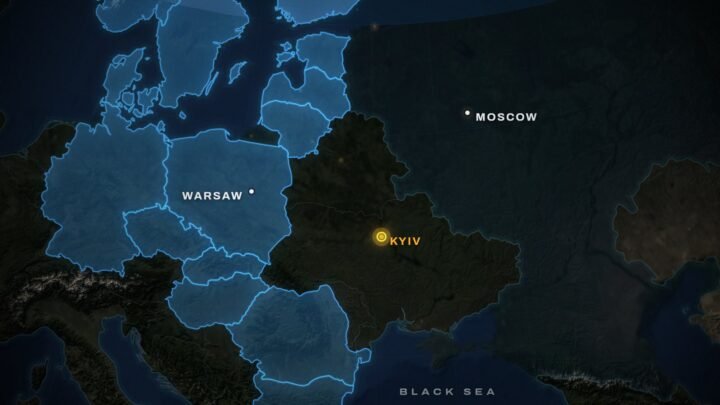
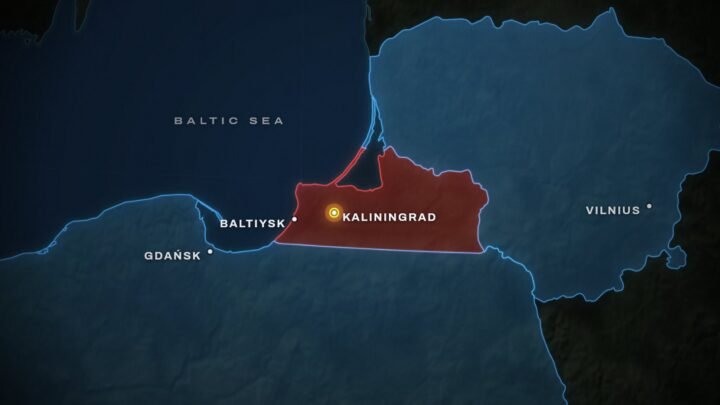
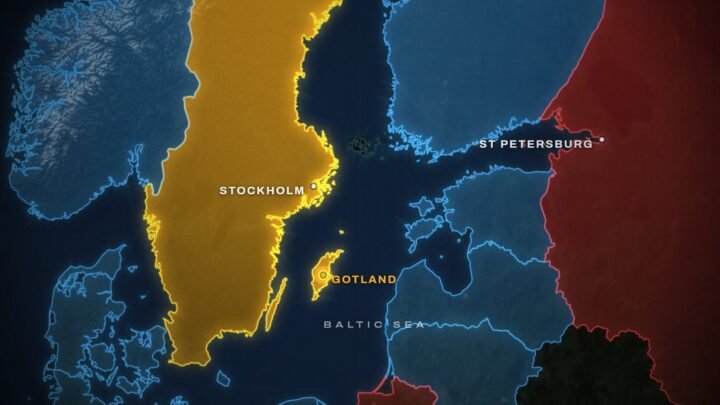
Europe Analysis Episode 24
Why Russia Is Massing Troops on Finland’s Border
Russia is building barracks, depots and headquarters along its 1,340 km border with Finland, NATO's newest frontier. The soldiers to fill them are mostly still in Ukraine.
In short
- Finland's 1,340 km border with Russia is the longest that any EU or NATO country shares with Russia.
- Russia re-created its Leningrad Military District in 2024 and is building new bases, including a garrison at Novaya Vilga, less than 200 km from Finland.
- Finland's army commander says the new bases could hold about 80,000 troops, against about 20,000 near the border in June 2026.
- Finnish military intelligence said in January 2026 that Russia's strength near Finland had not yet significantly changed, with many units still in Ukraine.
- Finland has kept every border crossing closed since December 2023 and finished a 200 km fence in September 2026.
In this analysis 8 sections
- 01Why does the Russia Finland border matter so much?
- 02Why is Finland so ready to defend itself?
- 03What is Russia building near Finland?
- 04Are Russian troops on Finland's border now?
- 05How is Finland answering the build-up?
- 06How does Moscow see Finland in NATO?
- 07What to watch next
- 08Frequently asked questions
In November 2025, Russia began clearing a forest at Novaya Vilga, in Russian Karelia. By spring 2026, barracks were rising there, less than 200 kilometres from Finland. It is one of several new or busier military sites along the Russia Finland border, which became NATO’s newest frontier with Russia in 2023.
So why is Russia building up on this border, and how big could it get? Today, Russia is massing bases, headquarters and depots, with room for about 80,000 troops by the Finnish army’s estimate. But most of the soldiers meant to fill them are still in Ukraine. Finland’s defence ministry expects them only after that war quiets down.
Why does the Russia Finland border matter so much?
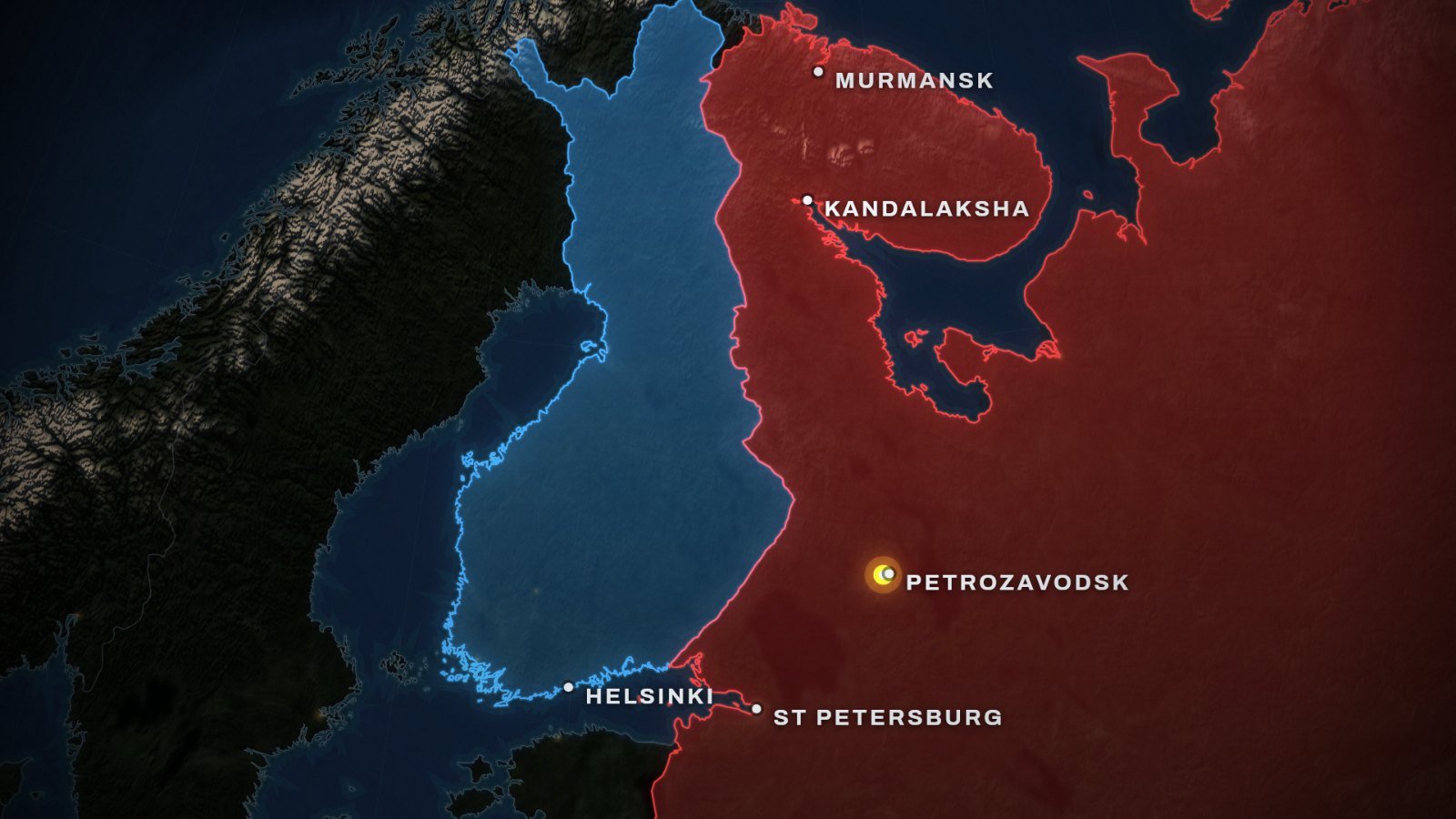
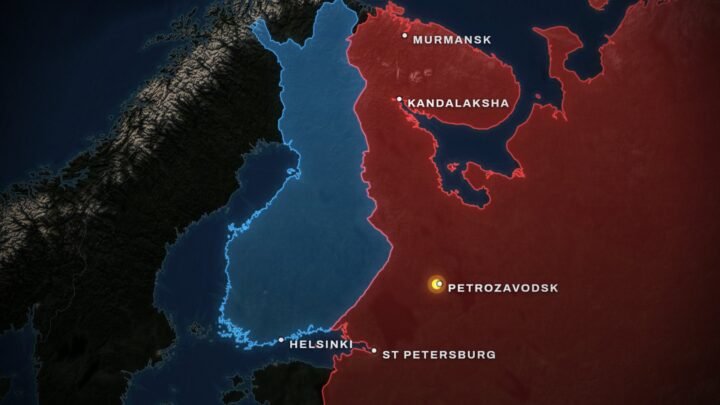
Finland’s border with Russia runs for 1,340 kilometres, from the Gulf of Finland to the Arctic. It is the longest border that any EU or NATO country shares with Russia.
On 4 April 2023, Finland joined NATO as its 31st member. That day, NATO’s land border with Russia more than doubled, to about 2,500 kilometres.
Now look at what sits just behind the line. The centre of St Petersburg is about 150 kilometres from the border. Further north, the Kola Peninsula is home to Russia’s Northern Fleet and most of its nuclear submarines. The Foreign Policy Research Institute estimated in July 2026 that Kola holds about two-thirds of Russia’s sea-based nuclear forces.
Murmansk is only about 165 kilometres from the border, and the railway to Murmansk runs through Karelia, behind this frontier. Submarines leaving Kola for the Atlantic must also pass the waters between Greenland, Iceland and Britain, one reason Washington cares so much about Greenland.
| The border in numbers | Figure | As of |
|---|---|---|
| Length of the Finland–Russia border | 1,340 km | 2026 |
| NATO’s land border with Russia after Finland joined | about 2,500 km | 4 April 2023 |
| St Petersburg (city centre) to the border | about 150 km | straight line |
| Murmansk to the border | about 165 km | straight line |
| Novaya Vilga, the new garrison, to the border | less than 200 km | June 2026 |
| Kamenka / Alakurtti to the border | about 60 km / 40–50 km | May 2025 |
| Russian troops near the border | about 20,000 | June 2026 |
| What the new bases could hold | about 80,000 | June 2026 |
| Finland’s wartime strength | about 280,000 troops | 2026 |
| Finland’s new border fence | 200 km, about €356 million | September 2026 |
Moscow noticed the change at once. Eight months after Finland joined, Vladimir Putin spoke about the border.
“There were no problems, but now there will be.”
Vladimir Putin, 17 December 2023
Why is Finland so ready to defend itself?
Finland has met this neighbour on the battlefield before. On 30 November 1939, the Soviet Union attacked Finland, and the Winter War began. It ended on 13 March 1940.
About 25,000 Finns were killed. Finland gave up about a tenth of its land, and more than 400,000 people were forced from their homes. War returned from 1941 to 1944, in the Continuation War.
For decades afterwards, Finland kept a careful neutrality next to its giant neighbour. The West had a word for it: Finlandization. After joining the EU in 1995, Finland described itself as militarily non-aligned.
Then opinion turned fast. In autumn 2021, only 26% of Finns backed joining NATO. A Yle poll taken on 23–25 February 2022, as Russia invaded Ukraine, found 53% in favour. By May 2022, support had reached 76%.
Finland and Sweden handed in their applications together on 18 May 2022. Finland joined less than a year later, while Sweden had to wait until March 2024; the reasons for Sweden’s longer road say a lot about NATO politics. In just over a year, Finland went from staying out of military alliances to joining one.
What is Russia building near Finland?
Moscow’s answer started on paper. A Kremlin decree of 26 February 2024 re-created the Leningrad Military District, in force from 1 March 2024. It covers Karelia, Murmansk and St Petersburg, among other regions.
The same year, a new 44th Army Corps formed in Karelia, planned at about 15,000 troops. In March 2024, Putin spelled out the plan: “We didn’t have troops there, now they will be there.”
Then the building began along the border:
- Kamenka, about 60 km from the border: in May 2025, satellite images reported by the New York Times showed tents for about 2,000 soldiers.
- Alakurtti, 40 to 50 km away: the same reporting showed new buildings going up.
- Novaya Vilga, near Petrozavodsk and less than 200 km away: forest cleared from November 2025, barracks rising by spring 2026. Finland’s public broadcaster, Yle, says it could become the first entirely new Russian garrison there since Soviet times.
How big is Novaya Vilga? One analyst, the former Finnish intelligence officer Marko Eklund, estimates it could hold 4,000 to 6,000 troops. No other estimate has been published.
On 10 June 2026, NRK, SVT, DR and Delfi published a joint satellite investigation. It found 16 of 19 watched sites busier than a year before; Eklund chose the sites.
Put together, Finland’s army commander, Lieutenant General Pasi Välimäki, says these bases could one day hold about 80,000 troops. In June 2026, he put the number near the border at about 20,000. That is room for four times the 20,000 there in June.
Are Russian troops on Finland’s border now?
Not in the numbers the bases are built for. This is the part the headlines often skip: the war in Ukraine has been draining this border, not filling it.
In June 2024, a Finnish intelligence source told Yle that, on average, about 80% of the troops and equipment at bases near Finland had gone to Ukraine. As of February 2026, the new 44th Army Corps was also mostly in Ukraine.
The Finnish Military Intelligence Review of January 2026 says Russia’s strength near Finland “has not yet significantly changed”. It calls an immediate military threat in 2026 unlikely. In May 2025, NATO officials told the New York Times they saw nothing like the build-up before the invasion of Ukraine.
So the real question is timing. In early 2025, Finnish military intelligence said Russia’s forces in the district could grow from about 30,000 to about 80,000 within a few years, but not while the war in Ukraine continues. Finland’s defence ministry expects the build-up to come after the fighting quiets down. In short: barracks now, soldiers later.
Pressure short of war
What Finland reports today is pressure of another kind. In four months of 2023, more than 1,300 asylum seekers arrived from Russia. Finland says Moscow steered them to its border; Moscow denies it.
Every crossing has been closed since 15 December 2023. A government decision of 4 June 2026 keeps them closed until further notice.
Finland also reports frequent GPS interference, in its skies and near its eastern border. It suspects Russia; Moscow denies it. On 20 August 2026, Finland says, a Russian Il-20 reconnaissance plane entered its airspace for about three minutes. The case is under investigation.
Undersea cables in the Gulf of Finland were damaged on 25 December 2024. In October 2025, a Finnish court threw out the case over the tanker Eagle S, saying it lacked jurisdiction. An appeals court revived the case in August 2026. The crew deny the charges, and the ruling is not final.
How is Finland answering the build-up?
Finland calls its answer defence against a build-up it reads as long-term preparation. The answer has four parts.
A fence and a border law
On 7 September 2026, Finland finished 200 kilometres of fence. It stands 4.5 metres high, with cameras and sensors, covers about 15% of the border and cost about €356 million.
A Border Security Act, in force since 22 July 2024, allows push-backs at the border. It runs out on 31 December 2026, so the government proposed in September 2026 to keep it until 2028.
A whole country
In wartime, Finland can field about 280,000 troops. It has about 870,000 reservists, and from 1 January 2026 the reservist age limit rose to 65.
Its roughly 50,500 shelters have room for about 4.8 million people, according to a government count published in 2023. In an autumn 2025 survey, 78% of Finns said they should defend themselves with arms, even if the outcome looked uncertain. Finland also left the Ottawa treaty that bans anti-personnel landmines, with effect from 10 January 2026.
Allies on Finnish soil
NATO opened a land command in Mikkeli in October 2025. From 6 June 2026, NATO’s Forward Land Forces Finland began operations, led by Sweden: a staff element sits in Rovaniemi, while the battalion is based in Boden, in northern Sweden.
A defence agreement gives American forces access to 15 shared sites in Finland. They are not American bases. Finland’s first F-35A fighters landed on 18 September 2026; 64 are on order, with a first operational capability planned for early 2028.
The nuclear question
Since 1 July 2026, Finnish law allows nuclear weapons to be brought into, moved through and held in Finland for its defence. Making, acquiring and detonating them remain banned.
Helsinki says the change lets it make full use of NATO’s deterrence. President Alexander Stubb said in March 2026 that Finland will not host nuclear weapons in peacetime. Then, on 14 September 2026, Finland joined France’s nuclear deterrence initiative.
How does Moscow see Finland in NATO?
Turn the map around and look from Moscow. Russia’s 2014 military doctrine lists the main external military dangers. First on that list is NATO’s expansion toward Russia’s borders.
With Finland in, NATO now lines another 1,340 kilometres of Russia’s frontier. Behind that line sit St Petersburg and the nuclear forces Moscow must protect on Kola. Moscow calls its build-up a response to NATO at its door, the same logic behind its objection to Ukraine joining NATO.
Moscow also objects to each Finnish step in its own terms. In December 2023, Russia’s foreign ministry said the US–Finland defence agreement would not go unanswered. In its view, American access threatens Russia’s security.
On Finland’s nuclear plans, Kremlin spokesman Dmitry Peskov said on 6 March 2026: “If Finland threatens us, we take appropriate measures.” He also accused Helsinki of stoking tension.
After Finland joined France’s initiative, Russia’s foreign ministry told the state news agency TASS that it viewed the step “unequivocally negatively”. Moscow said its military planning would take that into account.
Helsinki calls the same steps defence. That is the trap: to each side, the other’s defence looks like a threat. Still, President Stubb told the German newspaper Bild in August 2026 that he sees “neither evidence nor facts” for a Russian attack on NATO by 2029.
What to watch next
First, the war in Ukraine. If the fighting stops, watch whether Russian units head north to the new bases. That is the timing Finland’s defence ministry expects.
Second, Novaya Vilga, and the first units to move into its barracks. Third, a vote in Finland’s parliament on keeping the border push-back law until 2028, before it lapses at the end of 2026.
Fourth, Finland’s F-35s, due to reach a first operational capability in 2028. Last, in September 2026, Danish intelligence called one risk low, but growing: a limited Russian attack on a neighbouring NATO country. For another pressure point on NATO’s eastern flank, see the Suwałki Gap.
Meanwhile, both sides keep building: Russia its bases, Finland its defences. For more analysis on Europe, see our regional page.
Frequently asked questions
Does Finland border Russia?
Yes. Finland’s border with Russia runs for 1,340 kilometres, from the Gulf of Finland in the south to the Arctic in the north. It is the longest border any EU or NATO country shares with Russia. The centre of St Petersburg lies about 150 kilometres from it, and Murmansk about 165 kilometres.
Is the Russia Finland border open?
No. Finland closed every crossing on its border with Russia on 15 December 2023, after more than 1,300 asylum seekers arrived from Russia in four months. Finland says Moscow steered them there; Moscow denies it. A government decision of 4 June 2026 keeps the crossings closed until further notice.
Are there Russian troops on the Finland border now?
Some, but not many more than before. Finnish military intelligence said in January 2026 that Russia’s strength near Finland had not yet significantly changed, while many units were fighting in Ukraine. Finland’s army commander put the number near the border at about 20,000 in June 2026; the new bases could hold about 80,000.
When did Finland join NATO?
Finland joined NATO on 4 April 2023, as the alliance’s 31st member. It had applied on 18 May 2022, together with Sweden, after Russia’s full-scale invasion of Ukraine. Finland’s accession more than doubled NATO’s land border with Russia, to about 2,500 kilometres. Sweden followed on 7 March 2024.
Why did Finland build a fence on its Russian border?
Finland presents the fence as part of its border defence, alongside the closure of every crossing since December 2023. Finished on 7 September 2026, the fence runs for 200 kilometres and stands 4.5 metres high, with cameras and sensors. It cost about €356 million and covers about 15% of the border.
Watch the video
Why Russia Is Massing Troops on Finland’s Border
The video loads from YouTube in privacy-enhanced mode, only when you press play.
Sources
- Finland joins NATO
- Finland and Sweden submit applications to join NATO
- Finnish Military Intelligence Review 2026 has been published
- Finland's eastern border to remain closed until further notice
- Russia building new infrastructure for major troop deployments along NATO's northern flank
- Joint investigation maps Russia's military buildup along its NATO border
- Russia is building a new military base near the border with Finland (citing Yle)
- Yle: Russia is building a new military base near the border with Finland; it could house up to 6,000 soldiers
Show all 53 sources
- Russia beefs up forces near Finland's border (The New York Times)
- Russia ramps up military pressure on Finland's border
- Leningrad Military District re-created by decree
- Russia's armed forces are expanding: the example of the 44th Army Corps
- The Finns discovered that Russia was rebuilding an abandoned garrison in Petrozavodsk
- Yle: about 80% of Russian troops and equipment near Finland sent to Ukraine
- Kola and Karelia likely to get tens of thousands of new soldiers
- Putin: 'There were no problems, now there will be'
- Putin threatens Finland border troop redeployment
- A crown jewel in peril: Russia's Arctic aggression masks nuclear vulnerability
- The GIUK gap: a new age of A2/AD in contested strategic maritime spaces
- Winter War began 80 years ago today
- Treaty of Moscow (1940)
- Finlandization and Ukraine
- Russia's invasion of Ukraine shifted the opinion of a majority of Finns in favour of NATO membership
- Finnish support for NATO membership jumps to 76% in latest poll
- Interference affecting mobile communications and satellite navigation services continues in Finland
- Finland suspects Russian plane of violating its airspace, defence ministry says
- Finnish court declines jurisdiction over tanker undersea cable case
- Finland appeals court revives case against Eagle S
- Finland completes work on 200km fence along border with Russia
- Parliament approves Border Security Act by 168–29 vote
- Finland moves to extend border security law through 2028
- Finland to raise reservist age limit to 65 years as of 2026
- Finland has civil defence shelters for about 4.8 million people
- Finland counted its bomb shelters and found 50,500 of them (Reuters)
- Will to defend survey
- Finland's withdrawal from the Ottawa Convention to take effect
- NATO's Multi Corps Land Component Command Northwest: official inauguration in Mikkeli
- NATO Forward Land Forces Finland to start operations on 6 June
- NATO's Forward Land Forces in Finland
- Defence Cooperation Agreement with the United States
- Finland and Lockheed Martin celebrate historic arrival of first Finnish F-35
- Arrival of Finland's first F-35A fighters opens new era for Finnish Air Force
- Act 590/2026 (amendment of the Nuclear Energy Act)
- Finland to lift full ban on hosting nuclear arms, government says (Reuters)
- Finnish president rules out peacetime nuclear weapons as law debate grows
- Finland joins France's forward nuclear deterrence initiative
- Russia identifies NATO as its biggest threat
- Russia says it will respond if Finland hosts nuclear weapons, accuses Helsinki of stoking tension (Reuters)
- Grushko on Finland and the French nuclear deterrent
- Russia's Foreign Ministry says US-Finland defense cooperation deal will not go unanswered
- Finland's Stubb tells German newspaper Russia unlikely to risk attack on NATO (Reuters)
- Denmark expects Russia to escalate hybrid warfare in coming months, intelligence service says (Reuters)
- Sweden joins NATO as 32nd Alliance member
Facts as of 8 October 2026. Spotted a mistake? Tell us, and we will correct it.