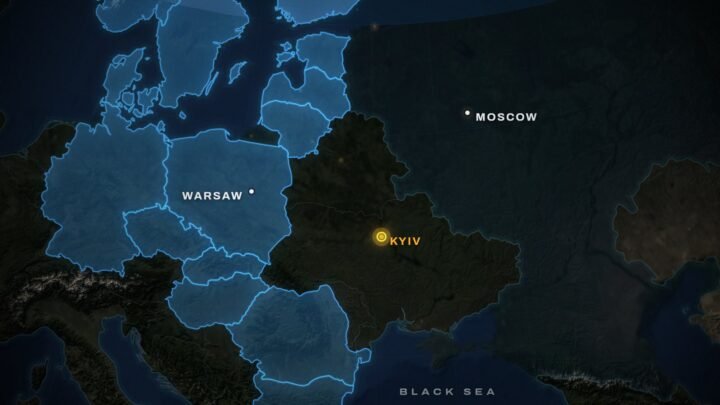
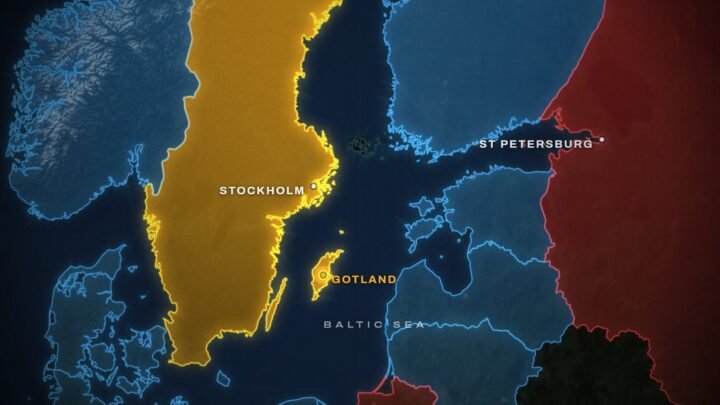
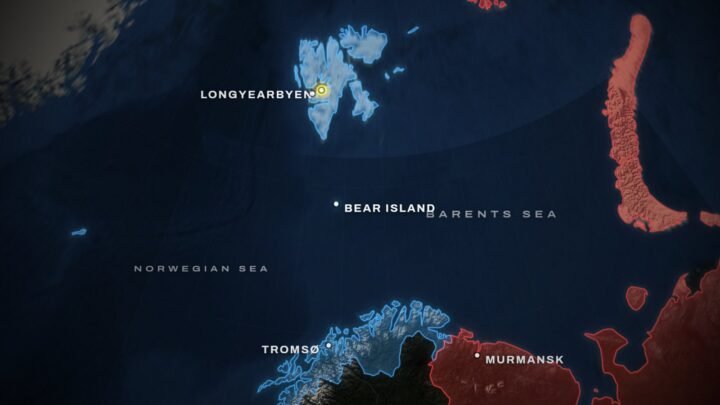
Europe Analysis
Why Does Russia Own Kaliningrad?
Until 1945, Kaliningrad was the German city of Königsberg, founded by crusading knights almost 700 years earlier. Here is how it became Russian, why it is cut off from the rest of Russia, and why it now sits at the centre of Moscow's warnings to NATO.

In short
- Kaliningrad was the German city of Königsberg until Soviet forces took it in April 1945; at Potsdam, the Allies agreed in principle to its transfer to the Soviet Union.
- Moscow renamed the city in 1946, expelled its German population and settled the region with Soviet citizens.
- It became an exclave in 1991, when Lithuania and Latvia regained their independence; in 1990, Germany had committed to make no territorial claims.
- The region hosts the headquarters of Russia's Baltic Fleet and, since 2018, nuclear-capable Iskander-M missiles.
- On 30 September 2026, Moscow warned NATO it could use its full arsenal if the region were cut off; NATO says it has no plan to blockade it.
In this analysis 8 sections
- 01Why does Russia own Kaliningrad? The short answer
- 02From Königsberg to Kaliningrad: seven centuries in brief
- 03Why is Kaliningrad separate from Russia?
- 04Why is Kaliningrad so important to Russia?
- 05How does Kaliningrad stay connected to Russia?
- 06What Russia says, and what NATO says
- 07What to watch next
- 08Frequently asked questions
On 30 September 2026, Russia sent NATO members a diplomatic note. In it, Reuters and Al Jazeera reported, Moscow said it was ready to use its entire arsenal, nuclear weapons included, if the alliance tried to cut off Kaliningrad. NATO says it has no plan to blockade the region.
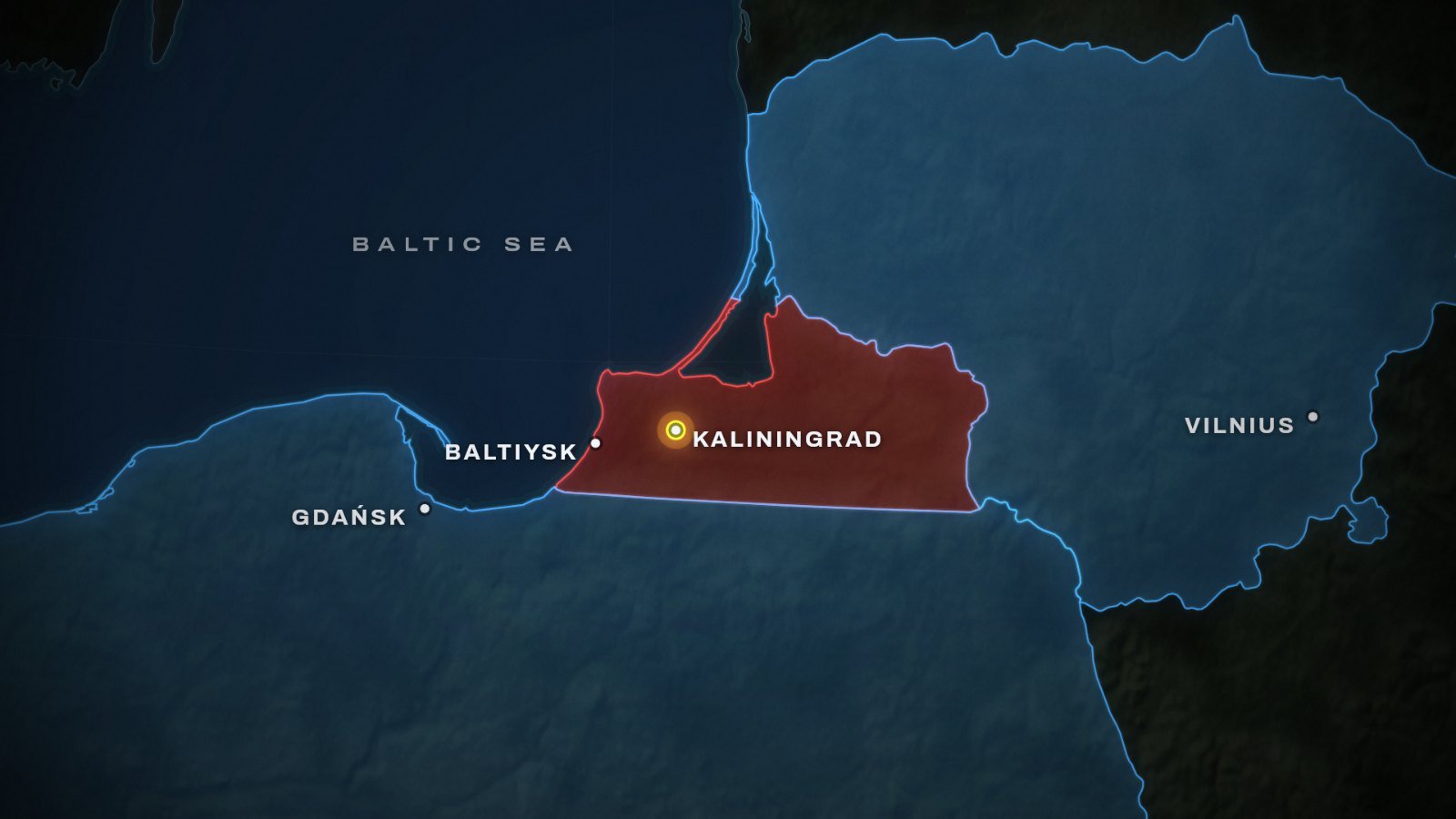
Kaliningrad is a piece of Russia on the Baltic coast, wedged between Poland and Lithuania, about 1,090 km west of Moscow in a straight line. Until 1945 it was the German city of Königsberg, founded by crusading knights almost 700 years earlier. So why does Russia own Kaliningrad, why is it cut off from the rest of the country, and why has it become, in Reuters’ words, a potential flashpoint with NATO?
Why does Russia own Kaliningrad? The short answer
Three moments explain it.
- 1945: conquest and Potsdam. Soviet forces took Königsberg in April 1945. That August, at Potsdam, the Allies accepted “in principle” a Soviet proposal for the “ultimate transfer” of the city and the area next to it to the Soviet Union, pending a peace settlement, in the words of the Potsdam Protocol.
- The late 1940s: a Soviet region in fact. Moscow gave it a new name and a new administration, expelled the German population and brought in Soviet settlers.
- 1990 to 1991: borders confirmed, then cut off. In the 1990 treaty on German unification, Germany committed to make no territorial claims. A year later, the Soviet Union broke up. Russia kept Kaliningrad, but Lithuania’s independence left it as an exclave.
So Russia holds the region by wartime conquest, by an Allied decision that no later treaty reversed, and by the border settlements of the 1990s.
| Kaliningrad in dates and numbers | |
|---|---|
| 1255 | The Teutonic Knights found Königsberg |
| 9 April 1945 | The German garrison is ordered to stop resisting |
| 1–2 August 1945 | Potsdam: transfer to the Soviet Union agreed in principle |
| 4 July 1946 | Königsberg becomes Kaliningrad |
| 12 September 1990 | The Two Plus Four treaty on German unification is signed in Moscow |
| 1991 | The region becomes an exclave |
| 1997 and 2003 | The Lithuania-Russia border treaty is signed, then ratified by Russia |
| 2018 | Iskander-M missiles based in the region permanently |
| Population | about 1 million (1,029,966 at the October 2021 census) |
| Area | about 15,100 square kilometres |
| Distance to Moscow | about 1,090 km in a straight line (our calculation) |
From Königsberg to Kaliningrad: seven centuries in brief
The Teutonic Knights, a German crusading order, founded Königsberg in 1255 on the site of an Old Prussian settlement. It later became the capital of the Order’s state, then of the Duchy of Prussia and of the province of East Prussia. In 1544, Albert, Duke of Prussia, founded its university, the Albertina. The philosopher Immanuel Kant studied and taught there, and twice served as its rector.
The Second World War ended German Königsberg. British air raids in August 1944 and the Soviet assault of April 1945 wrecked the old city. The Soviet attack began on 6 April, and on 9 April the garrison’s command ordered its troops to stop resisting.
Then came the paperwork of victory. On 7 April 1946, a decree of the Supreme Soviet created the Königsberg region inside Soviet Russia. On 4 July 1946, Moscow renamed the city and the region Kaliningrad, after the Soviet official Mikhail Kalinin, who had died weeks earlier.
The people changed too. A mass migration from Russia and other Soviet regions began in August 1946. By 1948, about 400,000 settlers had arrived, according to a Wilson Center study. Meanwhile, Soviet authorities expelled the surviving German residents to Germany in the late 1940s.
Why is Kaliningrad separate from Russia?
Because the Soviet Union broke up around it. Until 1991, Lithuania and Latvia were Soviet republics, so Kaliningrad was joined to the rest of the USSR by land. Lithuania declared its independence restored on 11 March 1990, and Moscow recognised it in September 1991. From then on, as Britannica puts it, the region was “a true exclave completely separated” from the rest of Russia.
Today, Kaliningrad borders Poland to the south and Lithuania to the north and east, with the Baltic Sea to the west. Belarus, Russia’s closest ally, lies about 65 km away across the Suwałki Gap, a strip of the Polish-Lithuanian border.
The treaties that settled it
First, Germany. In the Two Plus Four treaty on German unification, signed in Moscow on 12 September 1990, Germany committed to make no territorial claims. Then Lithuania. Boris Yeltsin and Algirdas Brazauskas signed a Russian-Lithuanian land and sea border agreement in Moscow on 24 October 1997. Lithuania ratified it in 1999. Russia’s Duma followed on 21 May 2003, by 268 votes to 138.
Next, the EU had to manage the gap. In November 2002, Brussels and Moscow agreed on a “facilitated transit document”. Since 1 July 2003, Russians crossing Lithuania between Kaliningrad and the rest of Russia have used it. Under EU rules adopted in April 2003, frequent travellers by land get a multiple-entry document for €5. Train passengers get a free version, valid for one return trip.
Poland moved in the opposite direction. It ran a visa-free local border traffic scheme with the region from 2012. But on 4 July 2016, before NATO’s Warsaw summit, Poland suspended it. It was still suspended in February 2022, when a Polish security spokesman called that “the only possible solution”.
Why is Kaliningrad so important to Russia?
The fleet
Kaliningrad hosts the headquarters of Russia’s Baltic Fleet. Its main base is at Baltiysk, which Paolo Pizzolo, writing in US Naval Institute Proceedings, calls the region’s main strategic asset. When the Soviet Union broke up, the fleet lost its bases in Estonia, Latvia and Lithuania, according to GlobalSecurity.org. That made Kaliningrad, which analysts describe as the fleet’s only ice-free outlet to the Baltic Sea, even more important.
The missiles
In February 2018, Vladimir Shamanov, head of the Duma’s defence committee, confirmed that Iskander-M missiles were now in Kaliningrad for good. “We deployed them, so now what?” he said. The missiles are nuclear-capable, and most reports give their range as up to 500 km. Kremlin spokesman Dmitry Peskov declined to confirm the move, calling the placement of weapons “exclusively a sovereign issue for the Russian Federation”.
On our calculation, Kaliningrad city is about 280 km from Warsaw, 310 km from Vilnius and 525 km from Berlin. Reuters describes the region as a platform for air defence, missile and naval forces that can reach deep into northern and central Europe.
The weakness
But the same geography is a weakness. Reuters notes that the region’s boxed-in location makes supply lines hard to keep open, and reinforcing it in wartime difficult. In mid-August 2026, dozens of NATO aircraft took part in an unannounced operation near the region, a Western military source told Reuters. The source said it showed NATO could cut Kaliningrad’s radio, radar and air-defence links in a conflict.
How does Kaliningrad stay connected to Russia?
Kaliningrad has three lifelines to the rest of Russia.
- Land. Trains and lorries cross Lithuania, under the transit rules agreed with the EU.
- Sea. Ferries and cargo ships link Baltiysk with mainland Russian ports such as Ust-Luga and St Petersburg. In April 2022, Russia’s energy ministry said it was considering the ferry route to keep fuel supplies steady.
- Air. In February 2022, Lithuania closed its airspace to Russian airlines. Flights to Kaliningrad now detour over the Baltic Sea.
The land route became a crisis in June 2022. From 18 June, Lithuania stopped goods under EU sanctions, such as steel and other ferrous metals, from crossing its territory by rail. The Lithuanian foreign ministry said it was applying EU rules, with no unilateral or additional restrictions.
Moscow saw it differently. Russia called the ban illegal under a 2002 transit agreement, although Meduza noted that this accord dealt mainly with passengers. Russia’s foreign ministry called the measures “openly hostile”. The regional governor, Anton Alikhanov, estimated that the sanctions covered 40 to 50% of goods arriving from mainland Russia.
In July 2022, the European Commission issued guidance. Russian operators could not move sanctioned goods by road, but no similar ban applied to rail, only “specific and proportionate” checks. Rail transit of sanctioned goods resumed in late July, within limits.
What Russia says, and what NATO says
Moscow’s view
In its own words, Russia is defending Kaliningrad as Russian territory. Its note of 30 September 2026 said it had information that NATO was preparing an air and naval blockade of the region. According to Reuters, which saw the note, it warned that Russia would be ready to use its full arsenal, nuclear weapons included, to defend it. Putin later said the letter did not mention nuclear weapons, only the use of all means.
On 1 October, at the Valdai forum, Vladimir Putin said a direct attack on Kaliningrad would put the use of all weapons on the agenda. He also said Russia was not threatening anyone and had no plans to attack in 2029, 2030 or 2050.
Moscow also points to what Western officials say. In May 2026, Lithuania’s foreign minister, Kęstutis Budrys, told a Swiss newspaper that NATO could penetrate Kaliningrad and, if needed, destroy its air defences and missile bases. Kremlin spokesman Dmitry Peskov said such comments “verge on insanity”, Reuters reported. Budrys later said he wanted to counter Moscow’s inflated picture of Kaliningrad’s strength.
NATO’s view
NATO calls itself a defensive alliance. In its written reply, it said none of its activities or exercises posed a risk to any part of Russia, and it urged Moscow to end the war in Ukraine. Secretary General Mark Rutte also answered in public. Speaking at a Euronews summit in Brussels, he told Moscow to stop its nuclear threats, which he called unhelpful.
Rutte added that he did not see nuclear use against the Baltic states as a real risk, because Putin knows he can never defeat NATO. On 10 October, Admiral Giuseppe Cavo Dragone, who chairs NATO’s Military Committee, told La Repubblica that NATO has no plan to blockade Kaliningrad, according to Russia’s state news agency TASS.
So each side describes the same region in opposite terms. To Moscow, Kaliningrad is Russian land under threat of siege. To its neighbours, it is a missile base aimed at their capitals. Moscow’s wider objection to NATO’s growth is the subject of why Russia doesn’t want Ukraine in NATO. Meanwhile, Finland’s and Sweden’s entry into NATO has left Kaliningrad almost surrounded by the alliance on the Baltic.
What to watch next
- Transit through Lithuania. Any new sanctions, checks or closures on the rail line would test the 2022 compromise. Analysts quoted by Reuters list anything Moscow sees as a blockade attempt among the possible triggers of a direct confrontation.
- New deployments. Reuters’ analysts also name major new missile deployments as a risk. Watch Kaliningrad and Belarus.
- Words and drills. NATO aircraft have already rehearsed near the region, Reuters reports. Watch whether Moscow’s blockade warnings fade or grow.
- The war in Ukraine. It frames everything else, including Poland’s rapid army build-up next door.
For more on the Baltic and NATO’s eastern flank, read more analysis on Europe.
Frequently asked questions
Why does Russia still own Kaliningrad?
Russia still owns Kaliningrad because the Soviet Union took it in 1945 and the result was never reversed. At Potsdam, the Allies agreed in principle to transfer Königsberg to the USSR. In 1990, Germany committed to make no territorial claims. When the Soviet Union broke up, Russia kept the region, and Lithuania signed a border treaty with Russia in 1997.
Why is Kaliningrad separate from Russia?
Kaliningrad is separate because Lithuania and Latvia, once Soviet republics, regained independence in 1990 and 1991. That left the region as an exclave between Poland and Lithuania, with no land border with the rest of Russia. It lies about 1,090 km from Moscow in a straight line, and Belarus is about 65 km to the east.
Why is Kaliningrad so important to Russia?
It hosts the headquarters of Russia’s Baltic Fleet, whose main base, Baltiysk, analysts describe as Russia’s only ice-free naval outlet to the Baltic Sea. Since 2018, it has also housed nuclear-capable Iskander-M missiles with a reported range of up to 500 km, enough to reach Warsaw, Vilnius and Riga.
Will Kaliningrad separate from Russia?
There is no sign of it. A small Baltic Republican Party, which wanted an autonomous “Baltic Republic”, lost its registration in the 2000s under a new Russian law on parties. Moscow, for its part, treats the region as Russian land like any other: in October 2026, Putin said a direct attack on it would put the use of all weapons on the agenda.
What was Kaliningrad called before?
Until July 1946, it was Königsberg. The Teutonic Knights founded the city in 1255, and it later served as the capital of Prussia and then of East Prussia. Moscow renamed it Kaliningrad after the Soviet official Mikhail Kalinin. The city’s main university, which traces its roots to the one where Immanuel Kant taught, now carries his name.
How many people live in Kaliningrad?
About 1 million people live in the Kaliningrad region, according to Reuters. The October 2021 Russian census counted 1,029,966. Its population was almost entirely replaced after 1945: Soviet authorities expelled the Germans, and about 400,000 Soviet settlers had arrived by 1948, according to a Wilson Center study.
Sources
- Explainer: Why Russia's Kaliningrad is a potential flashpoint with NATO (Reuters)
- Russia issues nuclear warning to NATO as tensions rise in the Baltic (Reuters)
- Russia warns NATO of possible nuclear response if Kaliningrad is cut off
- Moscow sends nuclear warning to NATO as tensions rise in the Baltic
- 'Putin will never be able to defeat NATO': Rutte on Russia's nuclear threats regarding Kaliningrad
- Russia threatens with nuclear weapons if NATO blocks Kaliningrad
- Putin says all weapons on agenda if Russia's Kaliningrad attacked
- Putin warns about using all weapons to defend Kaliningrad (AP)
Show all 45 sources
- NATO has no plans to blockade Kaliningrad, Military Committee chair says
- Lithuanian FM says NATO has means to neutralise Kaliningrad air defences
- Kremlin says Lithuanian minister's comments about attacking Russian exclave 'verge on insanity' (Reuters)
- Lithuanian FM says Kaliningrad remarks aimed at countering Russian narrative
- The Strategic Relevance of Kaliningrad
- Baltic Fleet
- The end of 'hide and seek': Russian Iskanders permanently in Kaliningrad
- #PutinAtWar: Iskanders to stay
- Russia permanently stationing Iskander missiles in Kaliningrad
- Protocol of the Proceedings of the Berlin (Potsdam) Conference
- Königsberg under international law (Potsdam wording reproduced)
- Konigsberg (Kaliningrad) region formed in the RSFSR
- Building a Soviet city: the transformation of Königsberg
- Kaliningrad
- Kaliningrad (oblast, Russia)
- Russia: Kaliningrad Oblast (2021 census and 2025 estimate, from Rosstat)
- RAF bomb Koenigsberg (Ops 216)
- History of the university
- Today we mark a day of military glory: the 81st anniversary of the capture of Königsberg
- The Treaty on the Final Settlement with respect to Germany
- Two Plus Four Treaty
- Duma ratifies border agreement
- Kaliningrad transit: Council adopts regulations on the Facilitated Transit Document
- Report on the Kaliningrad transit scheme (summary)
- Kaliningrad: EU and Russia reach a deal on transit document
- Poland should keep curbs on border traffic with Russia: official
- Suspension of small border traffic with Russia is dictated by national security
- Statement on the transit of sanctioned goods by rail to and from Kaliningrad
- Russia has called Lithuania's restriction of rail freight transport to Kaliningrad illegal. But is it?
- Can Russia's Kaliningrad region cope without freight transport through Lithuania?
- Lithuanian Railways ban transportation of sanctioned goods through Lithuania to Russia
- Russia threatens to retaliate as Lithuania bans rail transit to Kaliningrad
- Sanctioned goods to Kaliningrad can transit Lithuania by rail, says Brussels
- Lithuanian Railways resumes transit of sanctioned goods to Kaliningrad
- Russian Energy Ministry considers ferry supplies to Kaliningrad
- Lithuania closes its airspace to Russian airlines, ending direct flights to Kaliningrad exclave (Reuters)
- Kaliningrad: response to information request (Baltic Republican Party)
Facts as of 16 October 2026. Spotted a mistake? Tell us, and we will correct it.