Europe Analysis Episode 28
The Suwałki Gap: NATO’s Weakest 65 Kilometres
A 65 km strip of lakes and farmland between Kaliningrad and Belarus is the only land link between NATO's Baltic members and the rest of the alliance. Moscow sees the same strip as Kaliningrad's missing link.

In short
- The Suwałki Gap is the Polish-Lithuanian border between Russia's Kaliningrad region and Belarus: about 65 km in a straight line.
- It is the only land route between NATO's three Baltic members, home to about 6 million people, and the rest of the alliance.
- Kaliningrad hosts Russia's Baltic Fleet and nuclear-capable Iskander-M missiles; Minsk and Moscow say Russia's Oreshnik missile is on duty in Belarus.
- Moscow sees the strip as Kaliningrad's missing land link, and on 30 September 2026 it warned NATO against any attempt to cut the region off.
- NATO's answer includes a German brigade in Lithuania, Poland's East Shield fortifications and the Baltic Defence Line.
In this analysis 8 sections
- 01Where is the Suwalki Gap? The map in brief
- 02How did the Suwalki corridor come to exist?
- 03What runs through the Suwalki Gap?
- 04Why is the Suwalki Gap so hard to defend?
- 05How does Moscow see the Suwalki Gap?
- 06How is NATO defending the Suwalki Gap?
- 07What to watch next
- 08Frequently asked questions
On 30 September 2026, Russia sent NATO members a diplomatic note about Kaliningrad, its exclave on the Baltic Sea. Moscow warned it could use its full arsenal if the alliance ever tried to cut the region off. Reuters, which saw the note, reported that this included nuclear weapons. NATO replied that none of its exercises or activities threatens Russia.
Much of that tension centres on a quiet strip of lakes and farmland on the border between Poland and Lithuania: the Suwałki Gap, usually written Suwalki Gap in English. It is about 65 km wide in a straight line. So why is the Suwalki Gap often called NATO’s weakest link, and why does Moscow see the same strip as a threat to Russia?
Where is the Suwalki Gap? The map in brief
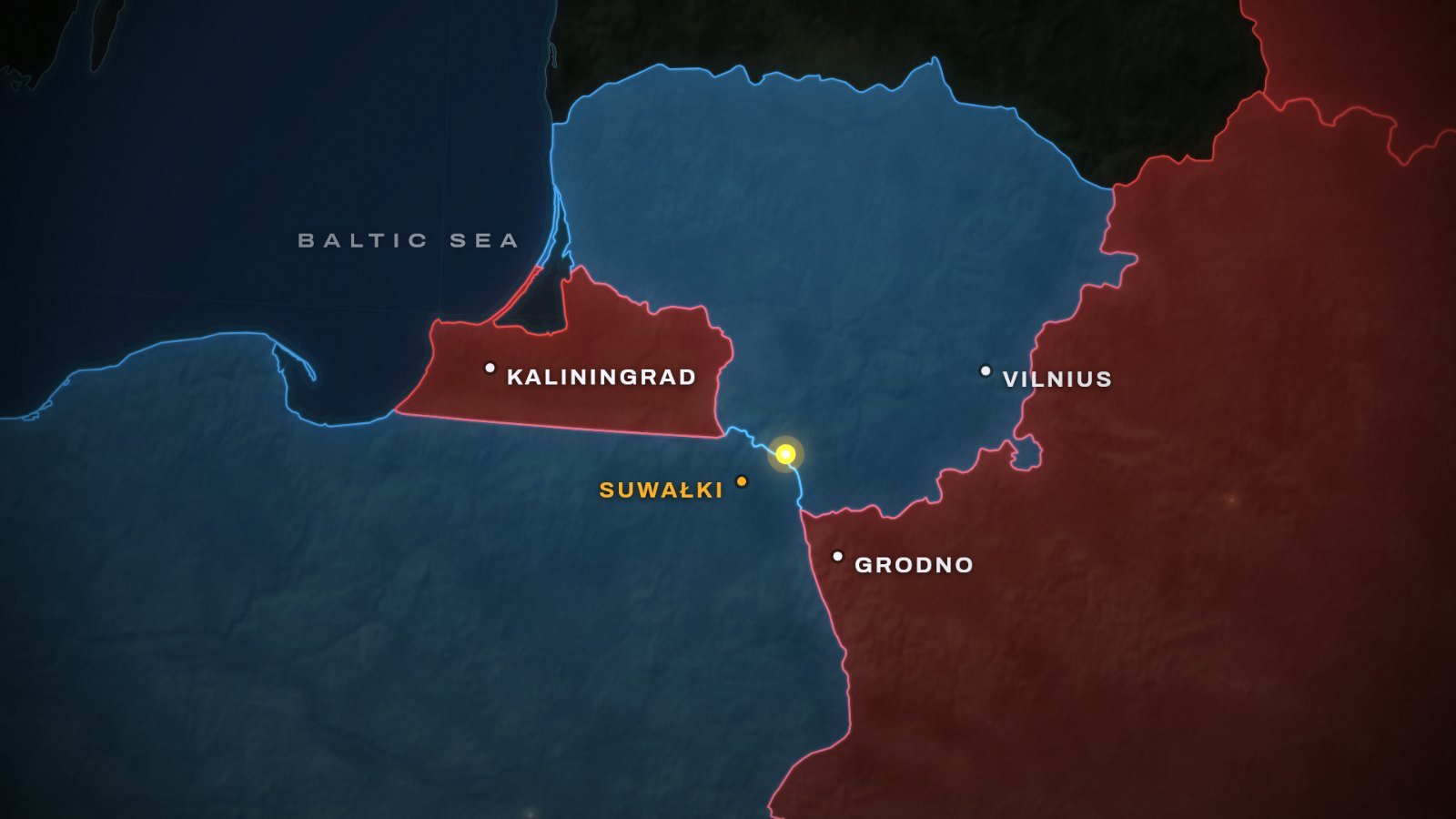
The gap is the stretch of the Polish-Lithuanian border between two tripoints. In the west, Poland and Lithuania meet Russia’s Kaliningrad region. In the east, they meet Belarus. Between those two points lie about 65 km in a straight line. The border itself winds for about 104 km, and the road between the tripoints is about 100 km.
It takes its name from Suwałki, the biggest Polish town nearby, about 25 km from the Lithuanian border.
To the west lies Kaliningrad, a piece of Russia cut off from the rest of the country. To the east lies Belarus, which Moscow calls its closest ally. To the north are NATO’s three Baltic members, Estonia, Latvia and Lithuania, home to about 6.09 million people at the start of 2026. Their other land borders are with Russia and Belarus. So this strip is their only land route to the rest of the alliance.
| The Suwalki Gap in numbers | Figure | As of |
|---|---|---|
| Width between the tripoints | about 65 km in a straight line | 2026 |
| Length of the winding border | about 104 km | 2026 |
| People in the Baltic states | about 6.09 million | 1 January 2026 |
| People in Kaliningrad | about 1 million | 2025 |
| Range of Kaliningrad’s Iskander-M missiles | up to about 500 km | since 2018 |
| Kaliningrad to Warsaw, straight line | about 280 km | |
| German brigade in Lithuania | about 4,800 soldiers + 200 civilians | full strength due in 2027 |
| Lithuania’s defence budget | 5.38% of GDP | 2026 |
How did the Suwalki corridor come to exist?
Kaliningrad was once Königsberg, a German city in East Prussia. At Potsdam on 2 August 1945, the victorious Allies agreed “in principle” to the transfer of the city and the area next to it to the Soviet Union, in the words of the Potsdam Protocol. The rest of East Prussia, in the south, was placed under Polish administration. On 4 July 1946, Königsberg was renamed Kaliningrad.
For decades, that line mattered little. Lithuania was under Soviet rule, so the road from Kaliningrad to Moscow never left Soviet land. Then Lithuania declared its independence restored on 11 March 1990, and Moscow recognised it on 6 September 1991. Kaliningrad became an island of Russia between Lithuania and Poland. The longer story is in why Russia owns Kaliningrad.
Poland joined NATO on 12 March 1999. Estonia, Latvia and Lithuania followed on 29 March 2004. From then on, the alliance’s only land link to the Baltic states was this short border, squeezed between Kaliningrad and Belarus.
The name took hold in 2015. The ICDS, an Estonian think tank, credits Estonia’s president at the time, Ilves, with coining it. An American general, Ben Hodges, then head of the US Army in Europe, made it famous. In the Cold War, NATO had feared Soviet tanks rushing through West Germany’s Fulda Gap. Now it had a new gap to worry about.
What runs through the Suwalki Gap?
- Roads. The main one is the Via Baltica (the S61 in Poland, the A5 in Lithuania), part of a 970 km route from Warsaw through all three Baltic states to Tallinn. Since October 2025, it has been four lanes wide through the gap. A second road crosses at Ogrodniki and Lazdijai.
- One railway. A single track, not electrified, runs from Suwałki through Trakiszki to Mockava. The new Rail Baltica line on the Polish side is not due before 2030.
- Energy. The GIPL gas pipeline began carrying gas in May 2022. The LitPol Link power line has run since 2015. In February 2025, it helped tie the Baltic grids to continental Europe instead of Russia’s system.
The ground makes things harder. Forests and lakes cover about half the land, and swamps another 11%, according to the Baltic Security Foundation. That squeezes traffic onto a few roads and bridges.
So if an enemy closed the gap, NATO’s help for the Baltic states would have to come by sea or by air. Much of that route would be within reach of Russia’s missiles in Kaliningrad, analysts say.
Why is the Suwalki Gap so hard to defend?
Kaliningrad, to the west
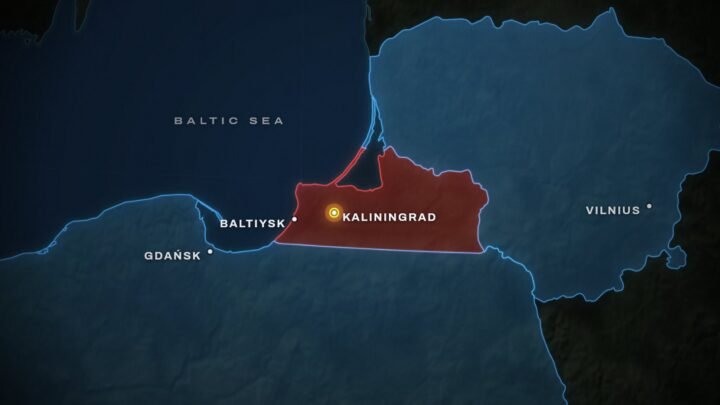
Kaliningrad has about 1 million people. It hosts Russia’s Baltic Fleet, headquartered in Kaliningrad city, with its main base at Baltiysk. Since February 2018, Russia has kept nuclear-capable Iskander-M missiles there for good. Their range is usually put at up to about 500 km. Warsaw, Vilnius and Riga are all less than 300 km from the missile brigade’s base at Chernyakhovsk. Air defence and coastal missiles guard the sky and the sea around the region.
Belarus, to the east
In June 2023, Belarus’s leader, Alexander Lukashenko, said Russian nuclear warheads had begun arriving. Vladimir Putin confirmed it days later and said Russia keeps control of them. Their number and sites have not been independently confirmed. In December 2025, Minsk and Moscow said Russia’s new Oreshnik missile was on combat duty in Belarus too.
In March 2024, a video showed Lukashenko asking a general how wide the corridor is. He told his army to prepare for a possible confrontation with the Baltic states, and Lithuania protested to Minsk. Then, in September 2025, Russia and Belarus held their Zapad exercise. Poland closed every crossing on its border with Belarus while it ran, and for more than a week after.
What the war games say
In RAND’s war games, published in 2016, Russian forces reached the outskirts of Tallinn or Riga in 60 hours at most. Those games were about Estonia and Latvia, played against NATO’s forces of the time. The gap mattered because help would have to come through it.
How does Moscow see the Suwalki Gap?
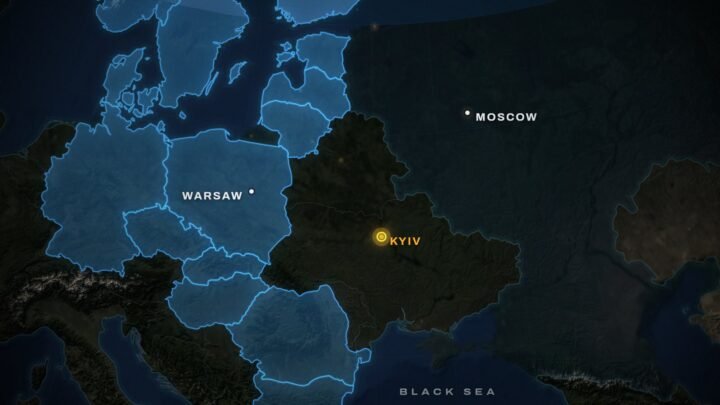
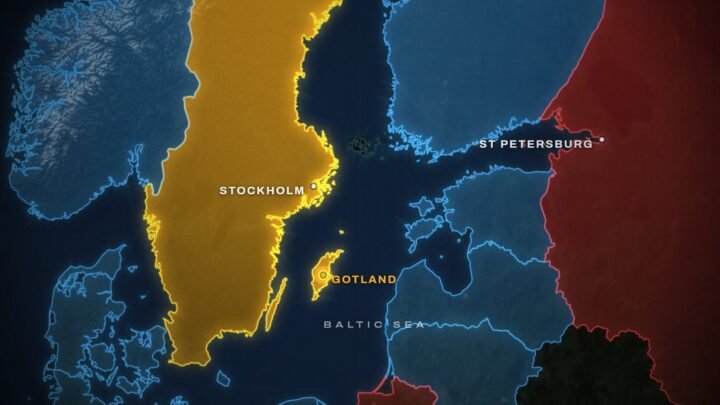
Now look at the same map from Moscow. Since Finland joined NATO in April 2023, and Sweden in March 2024, almost every shore of the Baltic Sea belongs to the alliance. Kaliningrad is the one surrounded. Its people and its fleet depend on the sea and the air, or on transit by rail and road across Lithuania.
In June 2022, Lithuania stopped goods under EU sanctions, such as steel, from crossing by rail to Kaliningrad. Lithuania said it was only applying EU sanctions, and people and other goods kept moving. Russia’s foreign ministry called the move “openly hostile”. Nikolai Patrushev, then secretary of Russia’s Security Council, warned of “a serious negative impact” on Lithuania’s population. In July, the European Commission clarified its rules, and the trains with sanctioned goods ran again, within limits.
Moscow’s case goes deeper. Its 2014 military doctrine puts NATO’s build-up and its expansion toward Russia’s borders first among the main external military risks. Now Moscow says NATO is preparing an air and naval blockade of Kaliningrad. NATO denies it, and AP notes that Moscow has not publicly backed up the claim.
On 1 October, Putin said the note spoke of “all means” and did not mention nuclear weapons. He added:
We have no intention of attacking anyone, not in 2029, not in 2030, not in 2050. But if we face aggression, we will have to respond.
Vladimir Putin, Valdai Club, 1 October 2026 (AP translation)
Belarus has its own version. In October 2025, Lukashenko said it is the West that provokes conflict, by threatening to close the corridor. Russia only moves goods through it, he said, and Lithuania’s border guards check them.
So the same 65 km look like two different things. To NATO, the gap is a door that could slam shut on the Baltic states. To Moscow, it is the missing land link to Kaliningrad.
How is NATO defending the Suwalki Gap?
Troops, barriers and money
First, Germany. On 1 April 2025, it formally created a tank brigade for Lithuania: about 4,800 soldiers and 200 civilians. AP calls it the first German brigade based abroad for the long term since the Second World War. It is due at full strength in the second half of 2027, but it is short of volunteers. On 14 September 2026, Germany said it would start ordering soldiers there.
Second, Poland is digging in. Its East Shield programme lines the borders with Russia and Belarus with ditches, anti-tank barriers and bunkers, to be finished by 2028. By summer 2026, the army said about 100 km were secured, counting barriers stored nearby and ready to place. Permanent works were far shorter: about 10 km in 2025.
Third, Estonia, Latvia and Lithuania agreed in January 2024 to build a Baltic Defence Line. All four countries have also left the treaty that bans anti-personnel mines. Leaving it is not the same as laying mines, and no mines had been reported laid by mid-October.
They are paying for it, too. Lithuania’s 2026 budget puts 5.38% of GDP into defence, and Poland plans 4.8%. From 16 to 26 June 2026, about 6,500 Polish troops, joined by Lithuanian and French soldiers, drilled near the gap in an exercise called Gallant Boar. In February 2026, asked about the gap, NATO’s secretary general, Mark Rutte, said: “No one should think they can attack NATO, because our reaction will be devastating.”
The open question is America. In May 2026, the Pentagon halted a planned rotation of about 4,000 troops to Poland. Days later, President Donald Trump said he would send 5,000 more. In September, he spoke of “major progress” toward a new US Army base in Poland, at a site not yet announced. As of October, Washington had announced no final decision on its troops in Europe.
Pressure below the level of war
Meanwhile, Poland and the Baltic states say the pressure is already here, just not in the form of tanks. On the night of 9 to 10 September 2025, Poland tracked 19 drone violations of its airspace and said the drones were Russian. Polish and allied jets shot several down. Moscow said it had no plans to hit targets in Poland, and NATO launched Eastern Sentry to watch its eastern flank.
From October 2025, balloons carrying smuggled cigarettes drifted in from Belarus, shutting Vilnius airport again and again. Lithuania calls it a hybrid attack; Belarus rejects the blame. Then, on the night of 14 to 15 September 2026, Italian jets on NATO air policing shot down a drone over Lithuania, the first such incident there. Lithuania says it came from Belarus.
What to watch next
- The war in Ukraine. In March 2026, Lithuania’s intelligence services judged that with a temporary ceasefire, Russia could be ready for a limited conflict in the Baltic Sea region within 3 to 5 years. If the war goes on, they put it at 6 to 10 years. The background is in why Russia doesn’t want Ukraine in NATO.
- The German brigade. Will it reach full strength in 2027?
- America’s review of its forces in Europe. Options are due on 6 November, and the review in December.
- Kaliningrad itself. Do Moscow’s warnings about a blockade fade, or grow?
For now, 65 km of farmland carry the weight of an alliance. Read more analysis on Europe.
Frequently asked questions
Who owns the Suwalki Gap?
No single country, because it is a border. The Suwalki Gap is the stretch of the Polish-Lithuanian frontier between Kaliningrad and Belarus. Poland holds the land to the south and Lithuania the land to the north, and both are members of NATO and the EU. Russia’s Kaliningrad region lies to the west, Belarus to the east.
How wide is the Suwalki Gap?
About 65 km in a straight line, measured between the two points where the Polish-Lithuanian border meets Kaliningrad and Belarus. The border itself winds for about 104 km, and the road between those two points is about 100 km. That is why published figures range from 65 km to more than 100 km.
Why is the Suwalki Gap important?
It is the only land route between NATO’s three Baltic members, Estonia, Latvia and Lithuania, and the rest of the alliance. The Via Baltica highway, a railway line, a gas pipeline and a power line all cross it. If it were closed, help for about 6 million people would have to come by sea or air.
Is the Suwalki corridor the same as the Suwalki Gap?
Yes. Suwalki corridor and Suwalki Gap are two names for the same strip along the Polish-Lithuanian border. The word “gap” took hold in 2015, echoing the Cold War’s Fulda Gap in West Germany. “Corridor” describes the same land link, and it is the word Belarus’s leader, Alexander Lukashenko, uses.
Could Russia close the Suwalki Gap?
Western war games have long worried about it. RAND’s 2016 study found that Russian forces could reach the outskirts of Tallinn or Riga within 60 hours, against NATO’s forces of that time. Since then, NATO has added a German brigade in Lithuania and new border defences. Russia says it has no intention of attacking anyone.
What defences protect the Suwalki Gap?
Poland’s East Shield is lining its borders with Russia and Belarus with ditches, barriers and bunkers, due by 2028. The Baltic states are building their own defence line. Germany’s tank brigade in Lithuania should reach full strength in 2027, and Polish, Lithuanian and French troops exercise near the gap.
Sources
- Russia warns NATO of possible nuclear response if Kaliningrad is cut off
- Russia issues nuclear warning to NATO as tensions rise in the Baltic (Reuters)
- Russia warns NATO of nuclear response if Kaliningrad is cut off (AP)
- Putin says all weapons on agenda if Russia's Kaliningrad attacked
- The Suwałki Corridor
- The Baltics look to strengthen NATO's weakest link
- Population of Estonia, 1 January 2026
- Latvia has a population of 1.845 million
Show all 47 sources
- Protocol of the Proceedings of the Berlin (Potsdam) Conference
- Königsberg (Kaliningrad) region formed in the RSFSR
- Lithuania: independence
- NATO member countries
- Poland's Suwalki Gap replaces Germany's Fulda Gap as top NATO concern
- President Ilves and the Suwałki Gap
- Lithuanian, Polish presidents highlight military mobility as they open Via Baltica section
- Kaunas: frequently asked questions (rail via Trakiszki and Mockava)
- Inauguration of the gas interconnection between Poland and Lithuania
- Strengthened protection of the Poland-Lithuania interconnection
- Russia holds naval drills in Baltic Sea during major NATO exercises (Reuters)
- Russia deploys Iskander missiles to Kaliningrad
- Russian nuclear weapons arriving in Belarus, Lukashenko says
- Belarusian leader says Russia deployed its latest nuclear-capable Oreshnik missile to the country (AP)
- Belarus warned against aggressive statements
- Russia and Belarus hold big military exercises
- Reinforcing Deterrence on NATO's Eastern Flank: Wargaming the Defense of the Baltics
- Finland officially becomes 31st member of NATO alliance
- Russia threatens to retaliate as Lithuania bans rail transit to Kaliningrad
- Lithuania's response to European Commission guidance on Kaliningrad
- Lithuanian Railways resumes transit of sanctioned goods to Kaliningrad
- The Military Doctrine of the Russian Federation (translation)
- Deutsche Panzerbrigade 45 Litauen: Indienststellung
- Germany to order soldiers to Lithuania amid volunteer shortage
- Tarcza Wschód rośnie w oczach: 100 km granicy już zabezpieczone
- Baltic countries build defensive installations on their borders
- Poland: mine ban policy
- The Seimas approves record defence budget of EUR 4.79 billion, or 5.38% of GDP, in 2026
- Gallant Boar 2026: NATO drills near Suwałki Gap
- NATO chief warns of devastating response to any Russian move on Suwałki Gap
- Pentagon Europe force posture changes
- Trump touts major progress towards setting up US military base in Poland
- NATO launches Eastern Sentry to bolster posture along eastern flank
- Russia denies any intention of violating Polish airspace
- Lithuania extends Belarus border closure over balloon attack
- Italian fighter jets shoot down unidentified drone over Lithuania
- Lukashenko on the Suwałki corridor
- National Threat Assessment 2026
- US force posture review in Europe: timetable
Facts as of 14 October 2026. Spotted a mistake? Tell us, and we will correct it.