Europe Analysis
Why Did Sweden Join NATO After 200 Years of Neutrality?
Sweden stayed out of military alliances for two centuries. Russia's invasion of Ukraine changed its mind in weeks, but getting into NATO took almost two years.

In short
- Sweden applied to join NATO on 18 May 2022, together with Finland, after Russia's full-scale invasion of Ukraine.
- Turkey and Hungary delayed ratification; Turkey's parliament approved Sweden's membership in January 2024 and Hungary's on 26 February 2024.
- Sweden became NATO's 32nd member on 7 March 2024.
- Gotland, about 300 km from Kaliningrad, gives Sweden a central position in the Baltic Sea.
- Sweden's government expects defence spending of 2.8% of GDP in 2026 and aims for 3.5% by 2030.
In this analysis 8 sections
On 7 March 2024, Sweden’s prime minister, Ulf Kristersson, handed his country’s accession documents to the US State Department in Washington. With that step, Sweden became NATO’s 32nd member. For a country that had stayed outside military alliances for about two centuries, it was a historic break.
So why did Sweden join NATO after 200 years of neutrality, and why did it take almost two years? The short answer is Russia’s full-scale invasion of Ukraine, followed by long bargaining with Turkey and Hungary. The longer answer starts with how neutral Sweden really was.
Was Sweden really neutral for 200 years?
Sweden’s tradition of staying out of wars and alliances is usually dated to 1814. Its leaders still use that frame. After Hungary approved Sweden’s membership, Kristersson said Sweden was “now leaving 200 years of neutrality and nonalignment behind us”.
But the record has limits. During the Second World War, Sweden stayed out of the fighting, yet it kept selling iron ore to Germany. From 1940 until 1943, it also let German soldiers on leave and military supplies cross its railways between occupied Norway and Germany. The soldiers’ trips continued until August 1943, according to the US National Archives.
The Cold War added a quieter layer. Officially, Sweden was non-aligned in peace and aimed at neutrality in war. Yet a Swedish government commission found in 1994 that, between 1949 and 1969, Sweden had prepared to receive Western military help if the Soviet Union attacked. The commission found no binding agreements for joint operations, and it concluded that neutrality had not been breached.
After the Cold War, Sweden joined the EU in 1995 and took part in NATO’s Partnership for Peace. It now described its policy as military non-alignment rather than neutrality. It also cut its forces: in 2005, it disbanded its regiment on the island of Gotland and sold the barracks.
The reversal began in 2015, amid concerns over Russia after its annexation of Crimea. That year, the government proposed an extra SEK 6.2 billion for defence over five years, Reuters reported. Permanent troops returned to Gotland in September 2016. Conscription came back too, and the first new conscripts began training in January 2018.
Why did Sweden join NATO in 2022?
Russia’s full-scale invasion of Ukraine on 24 February 2022 changed Swedish opinion within days. In early March, a Demoskop poll for the newspaper Aftonbladet found 51% in favour, up from 42% in January. According to Bloomberg, it was the first time a majority of Swedes had backed membership.
Finland mattered too. The pollster Novus said Swedish opinion was also being shaped by the debate in neighbouring Finland, which shares a 1,340 km border with Russia and moved first. Denmark, Iceland and Norway, NATO members from the start, welcomed both applications in a joint statement.
The decisive shift came inside the governing party. On 15 May 2022, the board of the Social Democrats dropped the party’s long opposition to membership. It also said Sweden should make clear that it did not want nuclear weapons or permanent bases on its soil.
The next day, Prime Minister Magdalena Andersson announced that Sweden would apply. On 18 May 2022, the Swedish and Finnish ambassadors handed their applications to NATO together in Brussels.
At first, Moscow’s reaction was measured. On 16 May 2022, Vladimir Putin said the two countries’ membership posed no direct threat to Russia. But he warned that military infrastructure on their territory would bring a Russian response.
Why did Sweden join NATO so late?
At first, Reuters reported, the process was expected to take only a few weeks. It took almost two years, because every existing member must ratify a new ally, and two held out: Turkey and Hungary.
What Turkey asked for
Turkey said Sweden and Finland protected people from groups it calls terrorist, above all Kurdish militants. At NATO’s Madrid summit in June 2022, the three countries signed a memorandum.
In it, Sweden and Finland agreed not to support the Syrian Kurdish YPG/PYD or the movement Ankara calls FETÖ. The text describes the Kurdistan Workers’ Party (PKK) as a terrorist organisation. The two Nordic states also promised to handle Turkey’s extradition requests “expeditiously and thoroughly”, and all three confirmed that no national arms embargoes remained between them.
Turkey then pressed for more. In January 2023, a far-right politician burned a Quran near the Turkish embassy in Stockholm, at a protest the police had approved. President Recep Tayyip Erdoğan answered sharply.
“Those who allow such blasphemy in front of our embassy can no longer expect our support for their NATO membership.”
Recep Tayyip Erdoğan, 23 January 2023
Swedish leaders condemned the burning but defended free speech. Sweden also tightened its law: from 1 June 2023, taking part in a terrorist organisation became a crime.
Turkey’s parliament finally approved Sweden’s membership on 23 January 2024, by 287 votes to 55. Days later, the US government told Congress of a $23 billion F-16 package for Turkey: 40 new jets and upgrades for 79 more. Ankara had made its ratification depend on that sale, according to reports at the time.
What Hungary wanted
Hungary’s government sent Sweden’s accession protocol to parliament in July 2022, but the vote stalled. Prime Minister Viktor Orbán linked the delay to Swedish politicians’ criticism of Hungary’s democracy.
Shortly before the final vote, Kristersson visited Budapest. The two leaders announced a defence deal: Hungary would buy four more Swedish-made Gripen fighter jets and extend the service contract for its existing fleet. On 26 February 2024, Hungary’s parliament approved Sweden’s membership by 188 votes to 6.
On 7 March 2024, Sweden became a member. US Secretary of State Antony Blinken called the moment the product of “nearly two years of tireless diplomacy”.
| Date | Step on Sweden’s road to NATO |
|---|---|
| 24 February 2022 | Russia launches its full-scale invasion of Ukraine |
| Early March 2022 | First poll majority for membership: 51% (Demoskop) |
| 15–16 May 2022 | Social Democrats drop their opposition; the government decides to apply |
| 18 May 2022 | Sweden and Finland hand in their applications |
| June 2022 | Memorandum with Turkey and Finland at the Madrid summit |
| 4 April 2023 | Finland joins NATO as its 31st member |
| 1 June 2023 | Sweden’s tougher terrorism law takes effect |
| 23 January 2024 | Turkey’s parliament approves, 287 votes to 55 |
| 26 February 2024 | Hungary’s parliament approves, 188 votes to 6 |
| 7 March 2024 | Sweden becomes NATO’s 32nd member |
Why does Gotland matter so much?
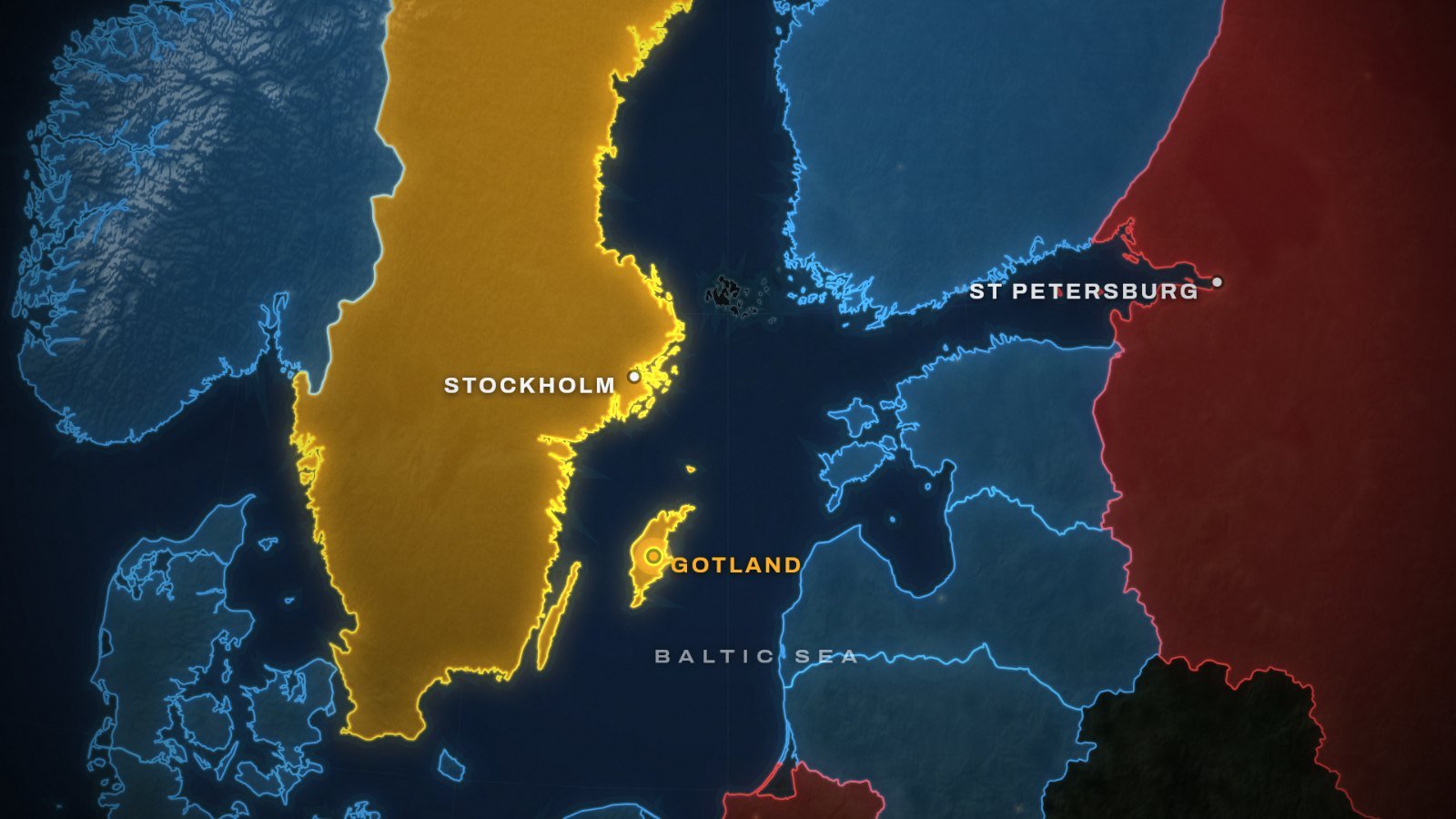
Look at the map. Gotland lies in the middle of the Baltic Sea, about 300 kilometres from Kaliningrad, home of Russia’s Baltic Fleet. Officers quoted by Reuters describe it as the key to control of the Baltic Sea. The island would also be crucial if NATO had to send troops and supplies to the Baltic states.
That is why Sweden brought soldiers back after disbanding the Gotland regiment in 2005. In December 2017, it announced its first new regiment since the Second World War: about 350 soldiers on Gotland, due to deploy to the main town, Visby, in 2018.
Is the Baltic now a “NATO lake”?
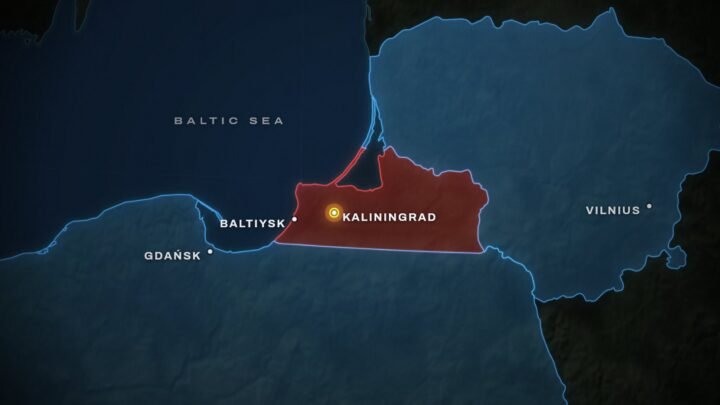
With Sweden and Finland inside, Russia is the only country on the Baltic coast outside NATO. Its access to the sea runs through the Gulf of Finland to St Petersburg, and through the exclave of Kaliningrad.
Some commentators now call the Baltic a “NATO lake”. Chatham House disagrees: in April 2024 it argued that the sea is far from that. Ports such as St Petersburg and Primorsk still matter to Russia’s oil exports.
The think tank CEPA adds that Russian forces near Kaliningrad and St Petersburg could still disrupt NATO’s supply lines in a war. For the land side of Baltic defence, see the Suwałki Gap.
Cables under the sea
The Baltic also shows the limits of any alliance. According to the AP, at least 11 Baltic cables were damaged in the 15 months to January 2025. That month, NATO launched Baltic Sentry, sending frigates, patrol aircraft and naval drones to protect undersea infrastructure.
One break that month hit a cable linking Gotland with Ventspils in Latvia. Swedish authorities detained the ship Vezhen. Swedish prosecutors later concluded that its anchor had dragged by accident.
What does Sweden bring to NATO?
Sweden brings forces built for the Baltic and the far north. Reports published as it joined counted about 94 to 96 Gripen fighters in its air force. The jets are designed to fly from dispersed bases and damaged runways.
In 2024, its navy ran four submarines: three Gotland-class boats and one older vessel. They suit the Baltic’s shallow, brackish water, where larger submarines struggle. Two new Blekinge-class (A26) boats are on order. But after two contract revisions, their delivery has slipped to the early 2030s: 2031 and 2033, according to Naval News.
Troops on NATO’s front line
Sweden already pulls weight on land. In January 2025, it sent its first battalion to Latvia, into a Canadian-led NATO brigade, in a rotation it shares with Denmark. Since 6 June 2026, Sweden has led NATO’s Forward Land Forces Finland, with a battalion of about 600 soldiers at Boden, in northern Sweden.
A defence agreement signed on 5 December 2023 gives US forces access to 17 Swedish military sites. Parliament approved it in June 2024, by 266 votes to 37.
An arms industry
Sweden also brings industry. Saab builds the Gripen, and its Kockums yard builds the new submarines. Besides Hungary’s order, Ukraine signed a letter of intent on 22 October 2025 for 100 to 150 Gripen E jets; a letter of intent is not a binding contract.
Spending and politics in 2026
Sweden reported defence spending of 2.2% of GDP for 2024, by NATO’s definition. Its 2026 budget raised defence funding by SEK 26.6 billion, or 18%, for an expected 2.8% of GDP in 2026. The government aims for 3.1% in 2028 and 3.5% by 2030, financed partly by loans.
That fits NATO’s new goal. At the alliance’s summit in The Hague in June 2025, allies committed to spend 5% of GDP by 2035, including 3.5% on core defence.
Politics may slow the next steps, but probably not the direction. The centre-left opposition narrowly won the election of 13 September 2026, with 176 of the 349 seats, and Kristersson asked to be relieved as prime minister. On 15 October 2026, however, parliament rejected the Social Democrat leader, Magdalena Andersson, as prime minister by 248 votes to 99. During the campaign, the AP reported broad agreement among the main parties on NATO membership and support for Ukraine.
How did Russia respond to Sweden joining NATO?
Moscow’s objections followed the same line as on Finland. In July 2023, Kremlin spokesman Dmitry Peskov said the negative consequences for Russia’s security were “unambiguous”, and that Moscow was planning countermeasures.
After Hungary’s vote in February 2024, Russia’s embassy in Stockholm said Moscow’s response would depend on “the conditions and scale of Sweden’s integration into NATO”. Foreign ministry spokeswoman Maria Zakharova said Russia would watch which NATO weapons and units Sweden hosted. Moscow would then plan its “military-technical and other” responses.
Russia’s case, in its own terms, is that NATO enlargement in no way contributes to stability and security on the continent, as Peskov put it. Moscow makes the same argument, with higher stakes, about Ukraine joining NATO.
Sweden’s foreign ministry replied that such statements were not new and did not affect its decisions. Kristersson called Russia’s reaction expected, and pointed to Russian cyberattacks and attempts at influence.
What to watch next
First, Sweden’s next government. Watch whether the parties can agree on a prime minister, and whether the new cabinet keeps the target of 3.5% of GDP by 2030.
Second, Finland. Sweden’s battalion at Boden can grow to 1,200 soldiers, and its government states a brigade-size ambition for the force over time.
Third, the Baltic seabed. Every new cable incident tests Baltic Sentry, and the line between accident and sabotage.
Last, Moscow’s “military-technical” answer: what Russia deploys near Sweden as the alliance settles in. For more analysis on Europe, see our regional page.
Frequently asked questions
Why did Sweden join NATO so late?
Sweden applied on 18 May 2022 but joined only on 7 March 2024, because every NATO member must ratify a new ally. Turkey wanted Sweden to act against groups it calls terrorist and linked its approval to a US sale of F-16 jets. Hungary cited Swedish criticism of its democracy. Both approved in early 2024.
When did Sweden join NATO?
Sweden joined NATO on 7 March 2024, when Prime Minister Ulf Kristersson handed its accession documents to the US State Department in Washington. It became the alliance’s 32nd member. Sweden had applied on 18 May 2022, together with Finland, which joined first, on 4 April 2023.
Why did Turkey let Sweden join NATO?
Turkey’s parliament approved Sweden’s membership on 23 January 2024, by 287 votes to 55. By then, Sweden had signed a 2022 memorandum on terrorism and extraditions and had tightened its terrorism law in June 2023. Days after the vote, Washington notified Congress of a $23 billion F-16 package for Turkey, which Ankara had sought.
Why is Gotland important to NATO?
Gotland sits in the middle of the Baltic Sea, about 300 kilometres from Kaliningrad, home of Russia’s Baltic Fleet. Officers quoted by Reuters call it the key to control of the Baltic Sea, and it matters for reinforcing the Baltic states. Sweden disbanded its Gotland regiment in 2005, but permanent troops returned in 2016.
What does Sweden contribute to NATO?
Sweden brings Gripen fighters built for dispersed bases, submarines suited to the shallow Baltic, and an arms industry led by Saab. It sends troops to Latvia, leads NATO’s land force for Finland and gives US forces access to 17 sites. It expects to spend 2.8% of GDP on defence in 2026.
Sources
- Finland and Sweden submit applications to join NATO
- Sweden joins NATO as 32nd Alliance member
- Sweden officially joins NATO, ending longstanding military neutrality (AP)
- Finland and Sweden submit applications to join NATO
- Hungary's parliament ratifies Sweden's NATO accession, clearing the final obstacle to membership (AP)
- Turkey's parliament approves Sweden's membership in NATO
- US approves sale of F-16 fighter jets to Turkey
- US approves F-16 fighter jet sale after Turkey ratifies Sweden's Nato membership
Show all 76 sources
- Finland and Sweden reach NATO agreement with Turkey
- Sweden and Finland agree with Turkey on anti-terrorism cooperation to join NATO
- Türkiye satisfied with constructive approach by Sweden, Finland
- Erdogan to Sweden: don't expect Turkish support for NATO bid
- Sweden sends new terror law to parliament
- Sweden amends anti-terrorism legislation to pave the way for NATO membership
- Swedish poll shows majority backs joining NATO for first time
- Growing majority of Swedes back joining NATO, opinion poll shows
- Sweden's ruling Social Democrats support joining NATO
- Prime minister says Sweden will formally apply for NATO membership
- 'Military tension will rise': Russia chides NATO Nordic expansion
- 'No problem with these countries': Putin upon Finland and Sweden joining NATO
- Will Finland and Sweden join NATO? Five things to know (AFP)
- Joint Nordic support for Finland and Sweden in NATO
- Explained: why isn't Sweden part of NATO and should it join now?
- Was Sweden ever neutral?
- Sisters but not twins: prospects of Finland and Sweden's NATO accession
- SOU 1994:11, Om kriget kommit... Förberedelser för mottagande av militärt bistånd 1949–1969 (Had there been a war)
- Headed towards the West: Swedish neutrality and the German question, 1949–1972
- Sweden's commitment problem
- Swedish neutrality
- Holocaust-Era Assets: records of the US Legation in Stockholm (RG 84, Sweden)
- As Sweden joins NATO, it bids farewell to more than two centuries of neutrality (AP)
- New book on Sweden's 200-year long peace
- A history of neutrality potentially broken? Sweden's move toward NATO
- Sweden raises military spending amid concerns over Russia (Reuters)
- Amid worries over Russia, Sweden returns troops to Baltic island
- Sweden returns troops to Gotland
- Sweden to re-establish military unit on Baltic Sea island
- In English
- Sweden's Gotland island (Reuters)
- The Baltic Sea is far from a 'NATO lake': the alliance must strengthen its defences
- The Baltic: a NATO lake with crocodiles
- Putin's gift to NATO: the rise of the 'New Nordic Shield'
- 11 Baltic cables damaged in 15 months, pushing NATO to boost security (AP)
- Sweden says ship broke Baltic Sea cable by accident (Reuters)
- Swedish prosecutors confirm January cable break was accident by bulker
- What Sweden adds to NATO's military arsenal
- Quality not quantity: how new member Sweden will bolster NATO's military prowess
- What capabilities does Sweden have to offer NATO?
- Saab, FMV renegotiate troubled A26 submarine contract for second time
- Sweden's A26 submarine programme faces new delays
- Ukraine signs framework to acquire 100-150 Gripen fighter jets of new generation type
- Sweden and Ukraine sign Gripen E letter of intent
- Swedish Armed Forces to contribute forces in Latvia
- Sweden's role in Baltic defense
- Swedish troops to be placed under NATO command in FLF Finland
- NATO Forward Land Forces Finland to start operations on 6 June
- NATO activates forward land forces presence in Lapland
- Sweden and the US sign Defense Cooperation Agreement
- Swedish MPs adopt US defence deal amid nuclear fears (AFP)
- Military budget
- The Government presents defence investments for a stronger Sweden
- The Budget for 2026 in five minutes
- Sweden targets $30B increase in defense spending to hit 3.5% of GDP by 2030
- NATO summit in The Hague: Trump's return and a two-component 5% of GDP on defence
- Russia threatens 'countermeasures' after Sweden's 'unambiguously negative' NATO deal
- Russia warns of 'military-technical' response to Sweden's NATO membership
- Moscow vows response to Sweden's NATO accession
- Sweden's actions in NATO to determine Russia's response steps, Russian diplomat says
- Russia threatens countermeasures over Sweden's Nato membership
- Sweden prime minister to resign as left-wing bloc seals narrow election win
- Sweden's next government uncertain with thin lead for left-wing opposition after tight election (AP)
- Left-wing bloc wins slim majority in Swedish election
- Magdalena Andersson set to be Swedish prime minister as left-wing bloc wins general election
- Social Democrat leader Magdalena Andersson loses Sweden's first PM vote
- Sweden's center-left leader loses PM vote in parliament
- Swedish parliament votes against Andersson as prime minister
Facts as of 16 October 2026. Spotted a mistake? Tell us, and we will correct it.