Europe Analysis
Why Russia Doesn’t Want Ukraine in NATO
Moscow has called NATO's eastward growth a threat since at least 2007, and it calls Ukraine a red line. Here is Russia's case, the answers from Kyiv and NATO, the record from Bucharest to Ankara, and where the bid stands in today's peace talks.

In short
- Vladimir Putin called NATO's expansion "a serious provocation" in Munich in February 2007, and in December 2021 Russia demanded an end to enlargement that would have ruled out Ukraine.
- At Bucharest in April 2008, NATO agreed that Ukraine "will become" a member but set no date; since 2023 allies have said they will invite it "when Allies agree and conditions are met".
- Ukraine wrote its EU and NATO course into its constitution in February 2019 and applied for fast-track membership on 30 September 2022.
- Whether Western leaders promised Moscow in 1990 that NATO would not move east is still disputed: declassified US notes record what the US National Security Archive calls Baker's "not one inch eastward" formula, but Western governments deny any promise.
- As of October 2026, the US secretary of state says membership is not under consideration for now, NATO's 2026 summit declaration left it out according to the Kyiv Independent, and Moscow still demands that Ukraine give up the bid.
In this analysis 7 sections
In early October 2026, on a visit to Iceland, US Secretary of State Marco Rubio said that NATO membership for Ukraine was not under consideration for now. It needs the agreement of every ally, he noted. Eighteen years earlier, at Bucharest, the same alliance had agreed that Ukraine “will become” a member. Between those two statements lie Russia’s annexation of Crimea, a full-scale war and years of talks.
So why does Russia not want Ukraine in NATO? Moscow says the alliance’s growth threatens its security, its borders and its naval base in Crimea. Kyiv and NATO answer that every country may choose its own alliances. This article sets out each side’s case, the record from 1990 to 2026, and where the bid stands in today’s peace talks.
Why does Russia not want Ukraine in NATO?
Moscow gives three main reasons. First, it sees NATO’s growth towards its borders as a threat. Second, it points to geography, because Ukraine lies close to Russia’s heartland. Third, it cites Crimea and the Black Sea.
NATO enlargement as a threat
Vladimir Putin set out the argument at the Munich Security Conference on 10 February 2007. He also asked what had become of the assurances the West gave after the Warsaw Pact dissolved.
“NATO expansion … represents a serious provocation that reduces the level of mutual trust. And we have the right to ask: against whom is this expansion intended?”
Vladimir Putin, Munich, 10 February 2007
Writing in The National Interest, Ted Galen Carpenter of the Cato Institute later argued that the speech should have removed any doubt that Russia saw NATO policy as a threat.
In late 2021, as Russian forces massed near Ukraine, Moscow turned the argument into demands. On 30 November 2021, Putin called NATO troops and weapons in Ukraine a “red line”. According to the AP, he warned that NATO could one day place missiles in Ukraine able to reach Moscow in 5 minutes.
Then, on 17 December 2021, Russia’s foreign ministry published two draft agreements, one with the United States and one with NATO. Under the NATO draft, members would give up any further enlargement, including Ukraine. The alliance would also station no forces or weapons in countries that joined after May 1997, Brookings noted.
Analysts at Brookings and Stanford doubted that the drafts were meant to succeed. NATO would not drop its open-door policy, Brookings noted, since that needs consensus among all members. On 24 February 2022, Russia launched its full-scale invasion of Ukraine.
A buffer close to Moscow
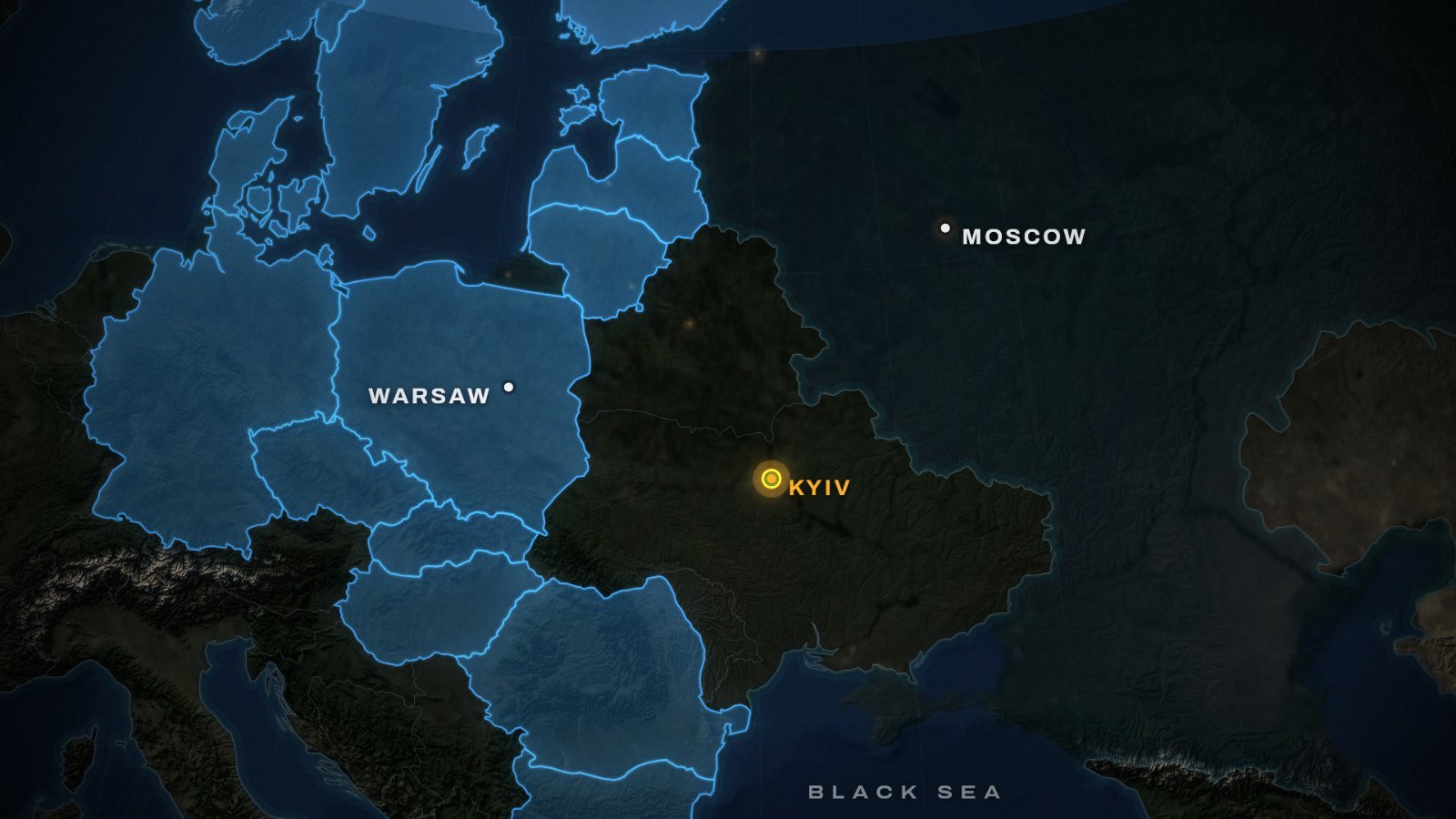
Look at the map. Ukraine and Belarus lie between NATO’s eastern members and Moscow. The Kremlin wants that space kept outside the alliance. When spokesman Dmitry Peskov listed Moscow’s terms for peace in an interview with the French magazine Le Point, neutrality for Ukraine was one of them, the Kyiv Independent reported. Peskov has also rejected NATO infrastructure in Ukraine, and even European peacekeepers after a ceasefire.
Sevastopol and the Black Sea
The third reason is the sea. Russia keeps a major naval base at Sevastopol, in Crimea. Before 2014, its forces there relied on a clause in Ukraine’s constitution that let foreign forces stay at existing bases under lease terms.
In March 2014, Russia annexed Crimea after a referendum on 16 March. In his speech on 18 March, Putin tied the move to NATO. Without it, he argued, a NATO fleet could have appeared in Sevastopol, which he called a city of Russian military glory, and threatened southern Russia, TASS reported.
Crimea’s status is disputed. Russia treats the peninsula as its own territory, while Ukraine and most countries recognise it as part of Ukraine. On 27 March 2014, the UN General Assembly affirmed Ukraine’s territorial integrity and said that the referendum had no validity. The vote was 100 in favour, 11 against and 58 abstentions.
Kyiv removed that clause in a constitutional amendment in 2019. On the map, NATO members already line the Black Sea’s western shore. With Ukraine inside, the alliance would reach the sea’s northern shore as well.
Did the West promise “not one inch” in 1990?
Moscow’s case also rests on history. Russian leaders say the West promised in 1990 that NATO would not move east, then broke its word. Western governments say they made no such promise. The documents allow both readings.
The case for a promise
On 9 February 1990, US Secretary of State James Baker met the Soviet leader, Mikhail Gorbachev, during talks on German unification. Declassified notes, which the US National Security Archive published in December 2017, show that Baker tried out what the archive calls the “not one inch eastward” formula three times in that meeting.
The archive describes it as one of many assurances about Soviet security that Western leaders gave at the time. Moscow has cited it ever since, as Putin did in Munich.
The case against
Others read the talks as being about Germany alone. A Brookings analysis in November 2014 argued that the West made no such promise. It added that a key 1990 statement by NATO’s then Secretary General, Manfred Wörner, concerned NATO forces in eastern Germany.
Gorbachev himself, in an interview in October 2014, said that NATO expansion “was not discussed at all” at the time. In January 2022, US Secretary of State Antony Blinken said that NATO had never promised not to admit new members. The EU’s EUvsDisinfo project lists the “broken promise” claim as disinformation.
The argument turns on remarks in meeting notes, not on a signed text, so each side still reads them its own way.
Ukraine and NATO: how close has membership come?
From Bucharest to the application
At the Bucharest summit on 3 April 2008, allies welcomed the membership hopes of Ukraine and Georgia. They agreed that both countries “will become members of NATO”, according to NATO’s summit record. But they gave neither country a Membership Action Plan, the usual next step. Instead, they asked foreign ministers to review progress in December 2008.
Ukraine later wrote its choice into law. On 7 February 2019, parliament amended the constitution to set a strategic course towards full EU and NATO membership. In all, 334 deputies voted in favour, more than the 300 that a change needs. President Petro Poroshenko signed it on 19 February 2019.
On 30 September 2022, Putin held a ceremony in Moscow to proclaim the annexation of four partly occupied Ukrainian regions, Reuters reported. The same day, Ukraine applied for fast-track NATO membership. President Volodymyr Zelensky, the speaker of parliament and the prime minister signed the application.
From Vilnius to Ankara
The allies answered at Vilnius in July 2023. They said they would invite Ukraine “when Allies agree and conditions are met”. Zelensky called the lack of a timeframe “unprecedented and absurd”. He warned that it left room for bargaining with Russia.
At the Washington summit on 10 July 2024, the words grew warmer. Allies pledged to support Ukraine “on its irreversible path to full Euro-Atlantic integration, including NATO membership”. Yet they repeated the Vilnius condition and set no timeline.
Since then, the language has faded. According to the Kyiv Independent, the declarations of The Hague in 2025 and Ankara on 8 July 2026 left out membership wording. The Ankara text does recognise Ukraine’s contribution to transatlantic security. The Kyiv Independent noted that this echoes the test that NATO’s treaty sets for new members.
| Date | Step on Ukraine’s road to NATO |
|---|---|
| 9 February 1990 | Baker and Gorbachev talk about Germany: the disputed “not one inch” assurance |
| 10 February 2007 | Putin calls NATO expansion “a serious provocation” in Munich |
| 3 April 2008 | Bucharest: allies agree Ukraine “will become” a member, without a Membership Action Plan |
| 27 March 2014 | After Russia annexes Crimea, the UN General Assembly backs Ukraine’s territorial integrity, 100 votes to 11 |
| 7 and 19 February 2019 | Ukraine writes its EU and NATO course into the constitution |
| 17 December 2021 | Russia publishes draft treaties demanding no further NATO enlargement |
| 24 February 2022 | Russia launches its full-scale invasion |
| 30 September 2022 | Ukraine applies for fast-track membership |
| July 2023 | Vilnius: an invitation “when Allies agree and conditions are met” |
| 10 July 2024 | Washington: an “irreversible path” to membership |
| 8 July 2026 | Ankara: about €70 billion in aid for 2026; no membership wording, says the Kyiv Independent |
| October 2026 | Rubio: membership not under consideration for now |
What do Ukraine and NATO say?
Ukraine’s case is about sovereignty: a free country, Kyiv argues, should choose its own alliances. At Washington in 2024, the allies affirmed Ukraine’s sovereign right to choose its own security arrangements. Ukraine’s government has also said that it expects the Bucharest decision of 2008 to be fulfilled.
NATO’s own position rests on Article 10 of its founding treaty. It lets the allies, by unanimous agreement, invite “any other European State” that can further the treaty’s principles and contribute to the security of the North Atlantic area. According to NATO, all allies decide by consensus, and no third country has a say.
In December 2021, as Russia pressed its demands, Secretary General Jens Stoltenberg said NATO would accept no compromise on the right of sovereign nations to seek membership.
Yet the open door is an invitation, not a right. Article 10 says the allies “may” invite a country; it obliges none of them to. Every ally must agree, and one can hold up a candidate for months, as Turkey and Hungary showed with Sweden. Even in December 2021, Brookings saw little enthusiasm within NATO for putting Ukraine on a membership track.
What Finland and Sweden changed
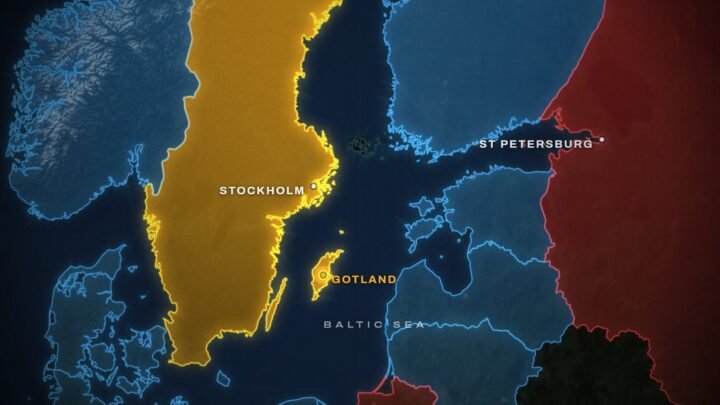
Russia’s invasion pushed two long-neutral neighbours into NATO. Finland joined on 4 April 2023. That day, NATO’s land border with Russia more than doubled, to about 2,500 kilometres. Sweden followed on 7 March 2024.
Moscow’s response was calmer than over Ukraine itself. On 16 May 2022, Putin said the two countries’ membership posed no direct threat to Russia. He warned, though, that military infrastructure on their soil would bring a response. That contrast suggests that Moscow weighs Ukraine differently, because Crimea, Sevastopol and the war itself set it apart.
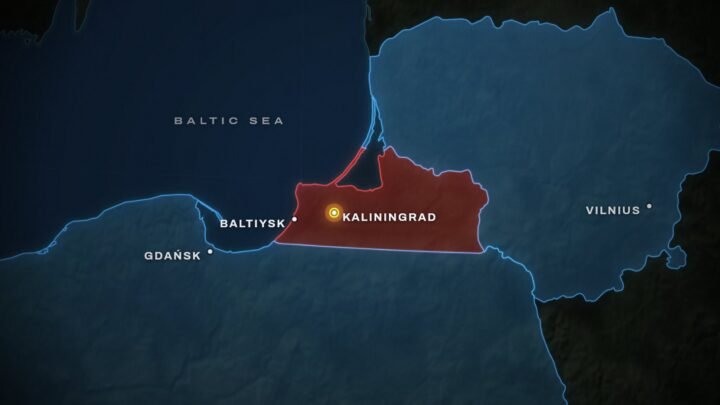
In the Baltic, the two accessions also left Kaliningrad almost surrounded by the alliance. NATO’s own weak point there is the Suwałki Gap, its land link to the Baltic states.
Where does Ukraine’s NATO bid stand in the peace talks?
As of 16 October 2026, the war goes on and no peace deal exists. On 12 October 2026, Russia struck Ukrainian energy facilities hours after President Donald Trump announced an energy ceasefire, the AP reported. Meanwhile, the NATO question remains one of the hardest in the talks.
The United States
Washington has moved away from the Bucharest promise. In February 2025, the US defence secretary, Pete Hegseth, ruled out NATO membership for Ukraine as part of a settlement. The Kremlin welcomed this, and Peskov called the membership bid “one of the root causes of this conflict”.
In November 2025, a US 28-point plan, drafted by envoy Steve Witkoff, went further. Under it, Ukraine would write into its constitution that it will not join NATO. In return, the US and Europe would offer a guarantee modelled on NATO’s Article 5. Zelensky called the plan a US “vision”, not a final offer.
In early October 2026, at a press conference in Iceland, Rubio said that NATO membership for Ukraine was not under consideration for now, according to the State Department’s transcript. He pointed to the need for consensus among all the allies. Washington, he said, was focused on ending the war, although the trends on the ground did not point to an early end.
Europe and NATO
Europe’s plan centres on guarantees. In the Paris Declaration of 6 January 2026, the Coalition of the Willing, Ukraine and the US agreed on politically and legally binding guarantees, to take effect once a ceasefire begins. A European-led Multinational Force for Ukraine would then deploy at Ukraine’s request. France and Britain confirmed that they intend to send troops after a ceasefire.
At Ankara in July 2026, allies pledged about €70 billion in military support for Ukraine in 2026, and at least as much in 2027, funded by European allies and Canada. NATO’s Secretary General, Mark Rutte, said in late 2025 that allies had no consensus on Ukraine’s membership. In April 2026, he said that several allies were holding it back, Ukrainska Pravda reported. Poland, the main gateway for Western aid to Ukraine, is meanwhile building up its own army.
Russia
Moscow’s terms have not moved. In July 2025, Russian officials said any deal depended on Ukraine withdrawing from four regions and renouncing its NATO bid.
In December 2025, during talks in Berlin, Ukraine floated dropping its NATO bid in exchange for binding security guarantees from the US and others. The Kremlin replied that Ukraine’s non-NATO status was a “cornerstone” of any settlement. The presidential aide Yuri Ushakov said Ukraine would never join NATO.
On 29 June 2026, Peskov said that Russia’s conditions had not changed since 2024, Reuters reported. Putin had then demanded that Ukraine withdraw from four regions that Moscow claims and publicly drop its plans to join NATO.
In late September 2026, at the UN Security Council, Foreign Minister Sergei Lavrov again rejected calls for a ceasefire. He argued that Europe wanted a pause so that Ukraine could replenish its arsenals. Ukraine’s foreign minister replied that Kyiv was ready for an immediate ceasefire if Russia also kept to it.
Ukraine
Kyiv has not formally given up its course towards NATO, and the goal still stands in its constitution. Any deal that rules out membership would also mean amending the constitution that Ukraine changed in 2019.
What to watch next
- Guarantees instead of membership. Watch whether Kyiv formally trades its NATO bid for binding guarantees, and whether its parliament would change the constitution to do it.
- A ceasefire and the Multinational Force. Europe’s guarantees start only after a ceasefire, while Moscow rejects European troops in Ukraine. Any truce will test both positions.
- NATO’s wording. The declarations of The Hague and Ankara left membership out, the Kyiv Independent reports. Will allies bring it back at their next summit?
- Crimea and Sevastopol. Watch how any deal treats the peninsula, still disputed and still central to Moscow’s case.
For more analysis on Europe, see our regional page.
Frequently asked questions
Why does Putin not want Ukraine in NATO?
Putin has called NATO’s eastward expansion “a serious provocation” since his Munich speech of 2007. He argues that NATO in Ukraine could put missiles minutes from Moscow and threaten Russia’s naval base at Sevastopol, in Crimea. Ukraine and NATO reply that Kyiv has the sovereign right to choose its own alliances.
Why is Ukraine not in NATO?
Joining needs the agreement of all 32 allies, which Ukraine does not have. NATO said in 2008 that Ukraine would join, but set no date. Since 2023, allies have said they will invite Ukraine “when Allies agree and conditions are met”. As of October 2026, the US secretary of state says membership is not under consideration for now.
Is Ukraine a NATO member?
No. As of October 2026, Ukraine is a NATO partner that has declared its aim to join, not a member. It applied for fast-track membership on 30 September 2022. At Washington in 2024, allies called its path “irreversible”, but they have issued no invitation, and the 2026 Ankara declaration did not mention membership, the Kyiv Independent reports.
When did Ukraine apply to join NATO?
Ukraine applied for fast-track NATO membership on 30 September 2022, the day Russia proclaimed the annexation of four partly occupied Ukrainian regions. President Zelensky, the speaker of parliament and the prime minister signed the application. Ukraine had already written its EU and NATO course into its constitution in February 2019.
Did NATO promise Russia not to expand east?
It is disputed. Declassified US notes show that on 9 February 1990, in talks on German unification, James Baker gave Mikhail Gorbachev what the US National Security Archive calls the “not one inch eastward” assurance. Western governments say they made no promise, and Gorbachev said in 2014 that NATO expansion was not discussed then. Moscow calls it a broken pledge.
Sources
- Putin's path to war in three speeches
- Munich Security Conference: Putin's speech and Ukraine
- Putin's Munich speech 15 years later: what prophecies have come true?
- Did Putin's 2007 Munich speech predict the Ukraine crisis?
- Putin warns West: Moscow has 'red line' about Ukraine, NATO (AP)
- Putin warns West: Russia has 'red line' over Ukraine
- Russia's draft agreements with NATO and the United States: Intended for rejection?
- Russia's draft agreements with NATO and the United States: Intended for rejection?
Show all 63 sources
- Russia in Review, Dec. 10-17, 2021
- NATO not to go for compromise on sovereign nations' right to join - Stoltenberg
- Will Finland and Sweden join NATO? Five things to know (AFP)
- Crimeans determine their fate for first time in history - Vladimir Putin
- Putin signs treaty to annex Crimea
- Territorial integrity of Ukraine: resolution adopted by the General Assembly (A/RES/68/262)
- NATO Expansion: What Gorbachev Heard (National Security Archive briefing book, reposted)
- Documents show Gorbachev was assured US wouldn't expand NATO into Central and Eastern Europe
- Did NATO promise not to enlarge? Gorbachev says 'No'
- The myth of NATO's promise not to expand
- Disinfo: NATO repeatedly promised to Russia not to expand eastward
- Bucharest Summit: Allies welcome Ukraine's and Georgia's aspirations
- Ukraine proceeds from the fact that the Bucharest summit decision on our membership in NATO will be fulfilled: Dmytro Kuleba
- Ukraine amends constitution to cement EU, NATO course
- Ukraine solidifies NATO, EU aspirations in constitution
- Poroshenko signs constitutional amendments on Ukraine's movement to EU, NATO
- Ukraine accelerates bid to join NATO after Russia's annexation
- Ukraine applies for fast-track NATO membership
- Ukraine applies for NATO membership, rules out Putin talks (Reuters)
- Zelenskyy criticised partners who discuss NATO without Ukraine: unprecedented and absurd
- NATO nations agree Ukraine is on 'irreversible path' to membership
- NATO allies say Ukraine's path to Euro-Atlantic integration is irreversible
- The Ankara Summit Declaration
- The Ankara NATO Summit: a reality check on words and deeds
- 70 billion euros for Ukraine in 2026 and at least that much in 2027: declaration from the NATO summit in Ankara
- Ukraine's NATO membership remains irreversible despite possible communique omission, Rutte says
- NATO's 2026 Ankara Summit: beyond the 5% pledge
- NATO to label Russia as threat at Ankara summit and pledge €140bn to Ukraine over next two years
- Enlargement and Article 10
- Finland joins NATO
- Russia, Ukraine and a postwar divided European security
- Sweden joins NATO as 32nd Alliance member
- 'Military tension will rise': Russia chides NATO Nordic expansion
- Zelenskyy says Russia strikes energy facilities despite Trump claim of an energy ceasefire (AP)
- U.S. defense chief rules out NATO membership for Ukraine in peace settlement with Russia
- Munich Security Conference 2025 updates
- Kremlin says U.S. position ruling out NATO membership for Ukraine gives satisfaction
- Trump's full 28-point Ukraine-Russia peace plan
- Factbox: Trump's 28-point plan to end Russia-Ukraine war
- Secretary of State Marco Rubio and Icelandic Foreign Minister Þorgerður Katrín Gunnarsdóttir at a Joint Press Availability
- Rubio says Ukraine's NATO membership is not being discussed
- Ukraine NATO membership not on table: Rubio (IANS)
- Paris Declaration: robust security guarantees for a solid and lasting peace in Ukraine
- France and UK confirm boots on the ground after ceasefire in Ukraine
- No consensus yet on Ukraine's NATO membership, says alliance chief
- NATO secretary general: Several countries are holding back Ukraine's NATO membership
- Russia says open to talks with Ukraine, but insists on its goals
- Kremlin spokesperson reiterates demands for Ukraine to give up territory in exchange for end to war
- Russia rejects European peacekeepers, NATO infrastructure in Ukraine amid potential peace talks, Peskov says
- Kremlin calls Ukraine's non-NATO status a 'cornerstone' as peace talks continue in Berlin
- Moscow: Ukraine dropping NATO membership bid central to peace talks
- Russia in Review, Dec. 12-19, 2025
- Kremlin says Russia's stance on conditions for a Ukraine peace deal has not changed since 2024 (Reuters)
- Kremlin says Russia's stance on conditions for a Ukraine peace deal has not changed since 2024 (Reuters)
- Russia rejects Ukraine ceasefire calls at UN Security Council
Facts as of 16 October 2026. Spotted a mistake? Tell us, and we will correct it.