Middle East Analysis Episode 27
Why Nobody Can Conquer Yemen
Rome, the Ottomans, Egypt and a Saudi-led coalition all marched into Yemen. None held it for good. The mountains, the sea gate below them and the bargains that rule both explain why.

In short
- Yemen's western highlands rise to about 3,666 metres, the highest point in Arabia, and most Yemenis live in them.
- Yemen guards the Bab el-Mandeb, a strait about 30 km wide that every ship between Suez and the Indian Ocean must pass.
- Rome, the Ottoman Empire (twice), Egypt and Saudi Arabia all sent armies into Yemen; each took the coast or the cities, but none held the mountains for good.
- Even Yemen's own rulers, from the Zaydi imams to Ali Abdullah Saleh, held the highlands mostly by bargaining with the tribes.
- As of 12 October 2026, the Yemen war has flared again: Saudi-backed forces are attacking on the Red Sea coast and Saudi airports have been hit.
In this analysis 8 sections
- 01Why is there war in Yemen?
- 02Why are Yemen's mountains so hard to conquer?
- 03Why does the Bab el-Mandeb keep pulling armies in?
- 04Who has tried to conquer Yemen, and what happened?
- 05How did Saudi Arabia's wars in Yemen turn out?
- 06Why can't Yemenis conquer Yemen either?
- 07What to watch next in the Yemen war
- 08Frequently asked questions
On 10 October 2026, a strike on the passenger terminal of Riyadh’s King Khalid airport killed at least 12 people, according to Saudi Arabia’s civil aviation authority. Saudi Arabia and the United States blamed the Houthis, though the group had not claimed that strike. Eleven years after a Saudi-led coalition entered the Yemen war, the Houthis still hold the capital, Sanaa.
That pattern is far older than the Houthis. Rome, the Ottoman Empire (twice), Egypt and Saudi Arabia have all sent armies into this corner of Arabia. Some took the coast. Some took the cities. None held the mountains for good. So why can nobody conquer Yemen, and what does that history tell us about the Yemen war that flared again in October 2026?
Why is there war in Yemen?
The short answer: a movement from the far north took the capital, and Yemen’s neighbours went to war to reverse it.
In September 2014, the Houthis, a rebel movement from the mountains of Saada, took Sanaa. In March 2015, Saudi Arabia led a coalition of Arab states into Yemen in an operation called Decisive Storm. Riyadh said it was restoring Yemen’s government and keeping Iran from gaining a foothold on its border. The Houthis say they are defending Yemen.
The war then settled into a long stalemate. The coalition’s allies retook Aden and much of the south, but the Houthis kept Sanaa and the northern highlands. A UN-brokered truce from April 2022 formally lapsed that October, yet it largely held.
Then the Yemen war spread to the sea. From late 2023, the Houthis attacked ships in the Red Sea. In 2025, US jets and missiles hit more than 1,000 targets in about seven weeks, before Washington agreed a ceasefire with the Houthis in May. In 2026, the fronts moved again, in the south and then on the Red Sea coast. To see why none of these sides has won outright, start with the map.
Why are Yemen’s mountains so hard to conquer?
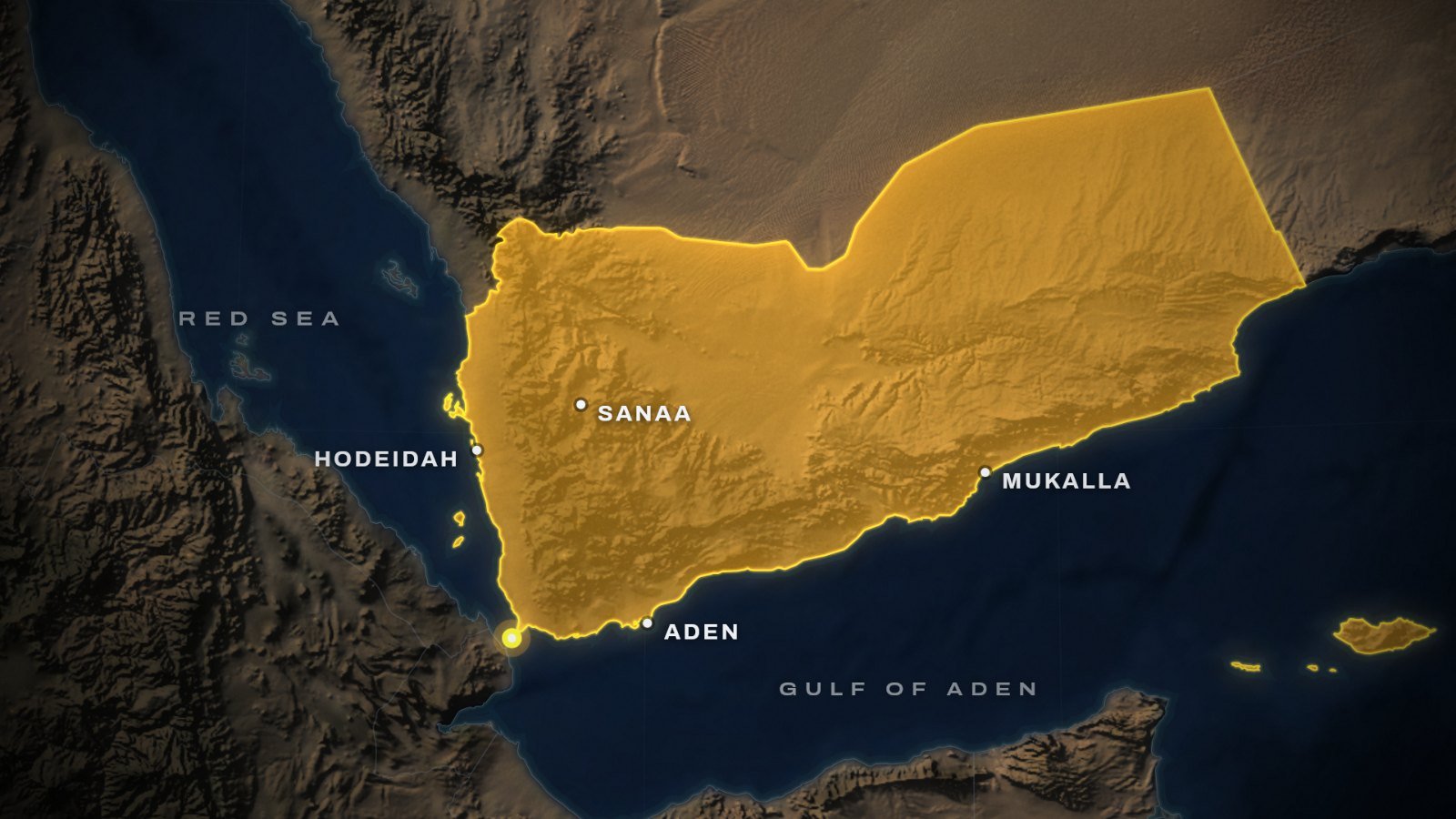
Most of Arabia is flat desert. In its south-west corner, however, the land rises into a wall of mountains. The highest peak in Arabia is here, at about 3,666 metres, and Sanaa sits more than 2,000 metres above the sea.
These mountains catch monsoon rains that miss most of Arabia. For thousands of years, Yemenis have farmed them on terraces cut into the slopes. That is why, according to the UN’s Food and Agriculture Organization, most of the population lives in the western mountains, where much of the food is grown.
Below them runs the Tihama, a hot, flat coastal plain along the Red Sea. An army can cross it quickly. Climbing the escarpment behind it is another matter: the roads wind up steep valleys where small forces can block an advance.
The people matter as much as the rock. Power in the highlands has long been shared among strong tribes, with their own sheikhs, customs and fighters. Analysts describe the big tribal confederations as loose networks rather than chains of command. So they are hard to defeat in one battle, and hard to buy all at once.
They are also well armed. In 2017, the Small Arms Survey estimated about 53 civilian guns for every 100 Yemenis, more than any country except the United States. The estimate includes illegal guns, so its margin of error is wide.
Why does the Bab el-Mandeb keep pulling armies in?
If the mountains push armies out, the sea pulls them in. Yemen’s south-west tip guards the Bab el-Mandeb, the strait at the mouth of the Red Sea. The US Energy Information Administration puts it at about 18 miles, roughly 30 km, wide at its narrowest point.
Every ship sailing between Europe and Asia through the Suez Canal must pass it; the only alternative is the long route around Africa. Over 2,000 years, the cargo has changed: incense, then coffee, then coal, then oil. In the 1600s, Yemen’s coffee sailed from Mokha, the port that gave mocha its name.
Whoever holds this coast can squeeze one of the world’s busiest sea routes. After the Houthis began attacking ships in late 2023, much of the Red Sea’s traffic turned away and sailed around Africa. The EIA found that oil flows through the strait fell by more than half in the first eight months of 2024.
In 2026, the stakes rose again. On 20 July, the Houthis declared a blockade of Saudi-linked shipping at the strait. Meanwhile, with the Strait of Hormuz all but closed by the war with Iran, Saudi Arabia was sending much of its oil out through the Red Sea. The Bab el-Mandeb is one of the chokepoints that control world trade, and that is why empires keep coming.
Who has tried to conquer Yemen, and what happened?
The list of invaders is long, and the endings are strikingly similar.
| Invader | When | How far they got | How it ended |
|---|---|---|---|
| Rome | about 25 BC | About 10,000 soldiers reached a city that was probably Marib | Six-day siege; water ran out; they turned back |
| Aksum (Ethiopia) | 525 | Crossed the Red Sea and took Yemen | Persians invited in about 50 years later |
| Ottoman Empire, first time | 1538 to the 1630s | Aden (1538), Sanaa (1547) | Driven out by the Zaydi imams by the mid-1630s |
| Ottoman Empire, second time | 1849 to 1918 | The coast (1849), Sanaa (1872) | 1911 treaty left the highlands to the imam; left in 1918 |
| Britain | 1839 to 1967 | Aden and treaties with local rulers | Stayed 128 years; left after an armed independence movement |
| Saudi Arabia (Ibn Saud) | 1934 | The port of Hodeidah | Peace treaty; kept Asir, Najran and Jizan |
| Egypt | 1962 to 1967 | About 70,000 troops by 1965; cities and main roads | At least 10,000 dead by most estimates; withdrew by end-1967 |
| Saudi-led coalition | from 2015 | Aden and the south; the edge of Hodeidah (2018) | Sanaa and the highlands stayed Houthi; truce in 2022 |
| United States (air only) | 2025 | More than 1,000 targets hit in about seven weeks | Ceasefire with the Houthis in May 2025 |
Rome: the land fights first
The Romans called southern Arabia Arabia Felix, “fortunate Arabia”, for its frankincense and myrrh. Around 25 BC, Augustus sent about 10,000 soldiers from Egypt to bring that wealth under Roman control. Their guide led them the long way round, and the Romans later accused him of treachery. Disease and thirst killed more of them than battle. After about six months, they besieged a city that was probably Marib for six days. Then the water ran out, and they turned back. No Roman army ever marched into Yemen again.
Yemen was not untouchable, though. Aksum took it by sea in 525, and Persians invited by a Yemeni prince followed about 50 years later. Both came when Yemen was already weak and divided.
The Ottomans: twice in, twice out
In the 1500s, the Ottomans sailed into the Red Sea to stop Portugal’s fleets taking over the spice trade. They took Aden in 1538 and Sanaa in 1547. But the Zaydi imams, religious leaders from the far north, drew their strength from the mountain tribes, and by the mid-1630s they had driven the Ottomans out.
The Ottomans came back in 1849 and took Sanaa in 1872. Revolt followed revolt, and the empire lost soldiers to fighting, disease and hunger. In 1911, a treaty left the highlands to Imam Yahya, and in 1918 the Ottomans left for good. A Turkish folk song still remembers the soldiers who never came home:
Those who go there don’t come back. Why is that?
“Yemen Türküsü”, Turkish folk song of the Ottoman era
Britain: hold the port, not the mountains
In 1839, the East India Company seized Aden, a port on the sea route to India. Britain never marched into the mountains. Instead, it signed protection treaties with the sultans and sheikhs around Aden and paid many of them to keep the peace. A line agreed with the Ottomans in 1914 is why there were two Yemens for much of the 20th century. Britain stayed 128 years and left in 1967, after an armed independence movement.
Egypt: “Egypt’s Vietnam”
In September 1962, army officers in Sanaa overthrew the imam, who escaped north and rallied the tribes. Egypt’s president, Gamal Abdel Nasser, sent troops to defend the new republic, while Saudi Arabia armed the royalists. Egypt expected a short campaign. By 1965, about 70,000 Egyptian soldiers held the cities and main roads; the tribes held the mountains. In 1967, Red Cross doctors found deaths “in all probability” caused by poison gas after air raids, which Egypt denied. By most estimates, at least 10,000 Egyptian soldiers died before the last troops left at the end of 1967. The historian Jesse Ferris calls it “Egypt’s Vietnam”.
How did Saudi Arabia’s wars in Yemen turn out?
Saudi Arabia learned its own lesson early. In 1934, its founder, Ibn Saud, fought Imam Yahya over the borderlands. His army raced down the coast to Hodeidah, but in the mountains it barely moved. With the army stuck, and European warships off Hodeidah, he made peace. He kept Asir, Najran and Jizan and left the highlands to the imam.
The 2015 campaign was far larger. The Yemen Data Project, an independent monitor, recorded more than 25,000 air raids between March 2015 and April 2022. On the ground, the UAE led the fighting in the south, and its allies retook Aden in July 2015. In 2018, UAE-backed forces reached the edge of the port city of Hodeidah. Under international pressure, the offensive stopped there with a UN-brokered deal in Stockholm.
The northern highlands and Sanaa stayed in Houthi hands. Meanwhile, the human cost grew. A UN report in November 2021 projected that the war, with the hunger and disease that came with it, would have killed about 377,000 people by the end of that year. As of June 2026, the UN said 22.3 million people in Yemen needed aid.
The lesson repeats itself. Air power can hit targets, and an army can take the flat coast. Neither can hold a mountain population that refuses the deal on offer.
Why can’t Yemenis conquer Yemen either?
Outsiders are not the only ones who fail. Yemenis do too.
In 897, a religious scholar founded the Zaydi imamate in Saada, in the far north. On and off, imams ruled from these mountains for more than 1,000 years, yet they rarely controlled all of Yemen. They ruled mostly by bargaining with the tribes, and only sometimes by force.
The modern master of that bargain was Ali Abdullah Saleh. He ruled North Yemen from 1978 and a united Yemen from 1990. When southern leaders tried to break away in 1994, his army took Aden, proof that conquest inside Yemen is possible. Saleh described ruling Yemen as “dancing on the heads of snakes”. He fought six wars against the Houthis around Saada between 2004 and 2010, and none was decisive. After handing power to his deputy in 2012, he helped the Houthis take Sanaa in 2014. In 2017, he turned on them, and the Houthis killed him.
The old north–south line never quite disappeared either. In December 2025, the UAE-backed Southern Transitional Council took Hadramawt and al-Mahra. According to ACLED, the conflict-data group, Aden fell to Saudi-backed government forces on 7 January 2026.
The pattern holds for everyone. You can take the coast. You can take the cities. But you hold the mountains only for as long as the people in them accept your deal.
What to watch next in the Yemen war
As of 12 October 2026, the Yemen war is back in full. In September, the Houthis took the port of Mokha and the island of Perim. On 4 October, Saudi-backed government forces struck back, and the Houthis now claim strikes on airports across Saudi Arabia. Donald Trump has said the US may join Saudi strikes on the Houthis. Turkey and Pakistan, Saudi Arabia’s partners in a new defence pact, said they would prepare forces to help defend the kingdom, though Turkey says it won’t fight the Houthis. That pact is part of a wider realignment we explain in Israel vs Turkey.
Three things will decide what comes next.
First, the mountains. The government says it has retaken Mokha; the Houthis deny it, and nobody has independently confirmed who holds the town. The real test is whether government forces can climb from the coast into the highlands, where every earlier coastal advance stalled.
Second, Taiz. By taking ground to the south of this government-held city, including al-Turbah, the Houthis have cut the last main road linking it to government areas. Whoever controls the roads around Taiz controls a route into the mountains.
Third, the deal. Most of Yemen’s wars have ended not with a conquest but with a bargain: the 1911 treaty, the 1934 peace, the compromise of the late 1960s, Stockholm in 2018, the truce of 2022 and the US ceasefire of 2025. The counter-examples, Aden in 1994 and again in January 2026, were taken by force.
The sea adds pressure on everyone. Across the water lie Eritrea and the Horn of Africa, where outside powers also compete for ports, as in Israel’s interest in Somaliland. For more analysis on the Middle East, see our region page.
Frequently asked questions
Why is there war in Yemen?
The Houthis, a rebel movement from Yemen’s far north, took the capital, Sanaa, in September 2014. In March 2015, a Saudi-led coalition intervened to restore the government. The Houthis kept Sanaa and the highlands. A truce from 2022 largely held, but fighting returned in 2026, with a government offensive on the Red Sea coast from 4 October.
Who are the Houthis?
The Houthis are an armed movement from the mountains of Saada, in Yemen’s far north, the old heartland of the Zaydi imams. They fought six wars with the government between 2004 and 2010 and took Sanaa in 2014. They have held the capital and most of the northern highlands ever since, despite the Saudi-led war.
Why are the Houthis attacking Saudi Arabia?
Saudi Arabia has led the war against the Houthis since 2015 and backs the government offensive that began on 4 October 2026. In July 2026, the Houthis declared a blockade of Saudi-linked shipping, and they claim strikes on Saudi airports. Saudi Arabia calls Mecca a “red line”; the Houthis say they target oil sites and bases, not the city.
Has anyone ever conquered Yemen?
Yes, in part. Aksum took Yemen in 525, Persia came about 50 years later, and Britain held Aden for 128 years. In 1994, northern forces took Aden by force. But no outside army has held the northern highlands for good: Rome, the Ottomans, Egypt and the Saudi-led coalition all failed there.
What is the Bab el-Mandeb strait?
The Bab el-Mandeb is the strait between Yemen and Djibouti at the southern mouth of the Red Sea. It is about 30 km wide at its narrowest point. Every ship using the Suez Canal to sail between Europe and Asia must pass through it, which is why attacks there divert traffic around Africa.
Is the Yemen civil war over?
No. As of 12 October 2026, fighting has resumed on several fronts. Saudi-backed government forces are attacking on the Red Sea coast, the Houthis have tightened their hold on the roads around Taiz, and Saudi airports have been struck. A UN-brokered truce from 2022 had kept the front lines largely quiet for years before this.
Sources
- Highest mountains in Yemen
- Yemen: geography and population
- Estimating Global Civilian-held Firearms Numbers
- Bab el-Mandeb: width and oil flows (Today in Energy)
- Oil and gas flows through the Red Sea chokepoints (Today in Energy)
- Res Gestae Divi Augusti, chapter 26
- Ottoman-Ruled Egypt Sends Expeditions South and East
- Yemen Türküsü
Show all 28 sources
- The Crater Residence and Captain S. B. Haines
- Egypt's Vietnam
- ICRC Report on Yemen, 1967
- Case YEM: Yemen 1962-70
- The war on Yemen's civilians (Yemen Data Project figures)
- Yemen war deaths will reach 377,000 by end of the year: UN
- UN-brokered two-month truce in Yemen begins
- Trump says US halting military campaign against Houthis
- The Houthi War Machine: From Guerrilla War to State Capture
- Ali Abdullah Saleh and 'dancing on the heads of snakes'
- Q&A: Southern Yemen, how did we get here and what happens next?
- Houthis seize Red Sea port city in push to seize Bab el-Mandeb
- Yemen's armed forces say they have taken control of Mocha
- Saudi Arabia says 12 dead, 309 hurt in Riyadh airport attack
- Houthi strike on Saudi airport kills 12, worst attack on kingdom in a decade
- Trump says US may join Saudi strikes on the Houthis
- Mecca alliance agrees to activate collective deterrence measures
- Turkey says will not send troops to fight Yemen's Houthis
- Houthis cut vital supply route linking Taiz with Aden
- October sees near-daily strikes on ships in Hormuz
Facts as of 12 October 2026. Spotted a mistake? Tell us, and we will correct it.