Americas Analysis Episode 25
Why Trump Wants Greenland
Donald Trump says America must own Greenland, an island of about 57,000 people in the Kingdom of Denmark. The map explains why, and the September 2026 deal shows what Washington actually got.
In short
- Greenland is part of the Kingdom of Denmark but governs itself, and since 2009 it has had the right to declare independence.
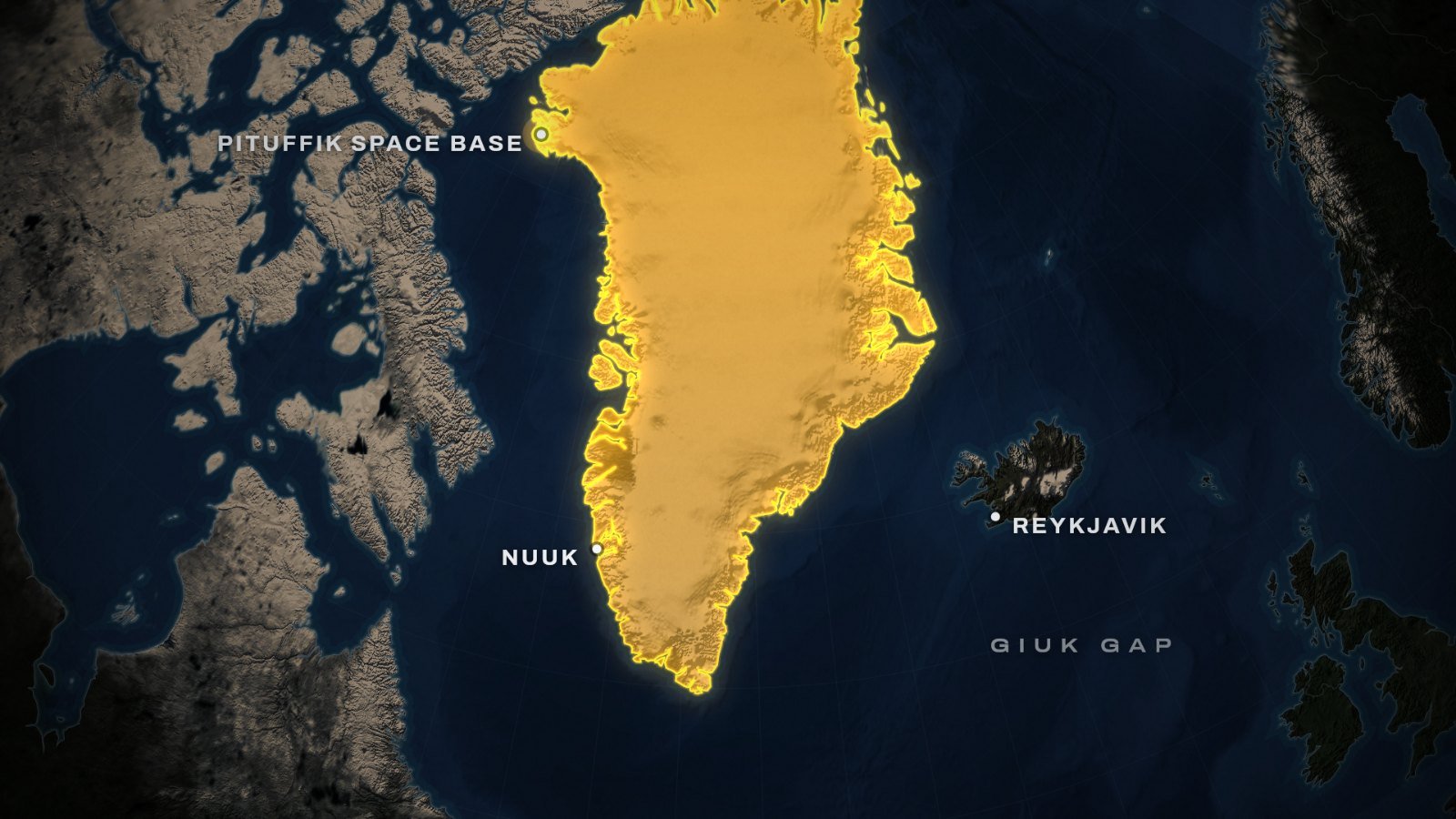
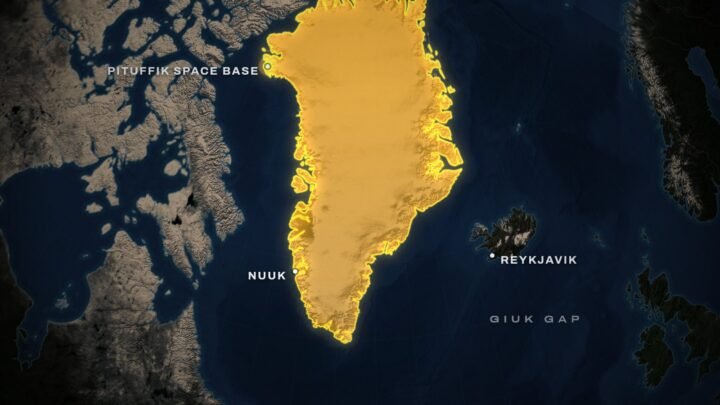
- Pituffik Space Base, about 1,500 km from the North Pole, watches for missiles flying toward North America and tracks objects in space.
- Russia's Northern Fleet must pass the GIUK gap, between Greenland, Iceland and the UK, to reach the open Atlantic.
- Under a 1951 agreement, the US could already build new defence areas in Greenland if Denmark agreed, but Trump says ownership is necessary.
- The agreement signed on 22 September 2026 gives the US more bases, not the island, and needs the approval of both parliaments.
In this analysis 8 sections
- 01Where is Greenland, and why does it matter to America?
- 02Has America tried to buy Greenland before?
- 03What changed in the Arctic?
- 04So why does Trump want Greenland, and not just bases?
- 05What do Greenlanders and Denmark want?
- 06What did the US get from the Greenland deal?
- 07What to watch next
- 08Frequently asked questions
On 22 September 2026, at the United Nations in New York, Donald Trump signed a security agreement over Greenland. Beside him were the leaders of Denmark and Greenland. Trump calls the deal permanent control; Denmark says the island stays part of its kingdom. It capped almost two years in which Trump said America must own the world’s largest island.
So why does Trump want Greenland so badly, when it belongs to a NATO ally? The answer sits on the map: missile routes over the Arctic, a submarine gateway to the Atlantic, rivals moving north and minerals under the ice. The deal then shows what America actually got.
Where is Greenland, and why does it matter to America?
Start with the map. On most flat maps, Greenland looks almost as big as Africa. It isn’t: Africa is about 14 times larger. Still, Greenland covers 2,166,086 square kilometres, about three times the size of Texas, and about 81% of it lies under ice.
An island that governs itself
About 56,740 people lived there on 1 January 2026. Almost all of them live in towns along the coast, and most are Inuit. The capital is Nuuk.
Greenland belongs to the Kingdom of Denmark, but it is not simply part of Denmark. It was a Danish colony until 1953 and gained home rule in 1979. Since 2009, it has governed itself, with the right to declare independence.
What it does not have yet is the money. Every year, Denmark sends a block grant of about DKK 4.3 billion (the 2024 figure). That is roughly half of the Greenland government’s income.
The top of the world
Turn the globe and look at it from the top. From there, you see what planners in Washington see. The shortest routes between Russia and North America cross the Arctic, and Greenland sits right beside them.
Pituffik Space Base
In Greenland’s far north-west stands Pituffik Space Base, about 1,500 kilometres from the North Pole. It is the Pentagon’s northernmost base. Its radar watches for missiles flying toward North America and tracks objects in space. Until April 2023, it was called Thule Air Base.
The GIUK gap
Then there is the sea. Russia’s Northern Fleet is based on the Kola Peninsula, next to Finland. To reach the open Atlantic, its submarines must pass the GIUK gap: the waters between Greenland, Iceland and the United Kingdom.
In the Cold War, NATO watched that gap closely. Now it is watching it again. The GIUK gap is a chokepoint for submarines rather than cargo, but the logic is the same as at the chokepoints that control world trade: whoever watches the passage watches the traffic.
Golden Dome
There is a newer reason too. In May 2025, Trump announced Golden Dome, a missile shield for the United States. In January 2026, he called Greenland vital to it.
| Greenland in numbers | Figure | As of |
|---|---|---|
| Area | 2,166,086 km², about 81% under ice | Statistics Greenland |
| Population | 56,740 | 1 January 2026 |
| Denmark’s yearly block grant | about DKK 4.3 billion, roughly half of the government’s income | 2024 |
| Pituffik Space Base to the North Pole | about 1,500 km | straight line |
| US bases and installations | 17 in 1945; one base with about 200 people today | March 2025 |
| Rare-earth reserves (USGS) | about 1.5 million tonnes; China about 44 million | 2026 |
| Working mines | 2, neither for rare earths | 2025 |
| Greenlanders against joining the US | 85% | January 2025 |
| Greenlanders against independence now | 62% | January 2026 |
| The 2026 agreement | signed 22 September; no end date; needs both parliaments | September 2026 |
Has America tried to buy Greenland before?
Yes, more than once. In 1867, the year America bought Alaska, Secretary of State William Seward’s department looked at buying Greenland too. Nothing came of it.
In 1916, America agreed to buy Denmark’s islands in the Caribbean. At the same time, it said it would not object to Denmark’s interests across all of Greenland.
Then the Second World War changed the island’s role. Germany occupied Denmark in 1940. A year later, Denmark’s envoy in Washington, Henrik Kauffmann, let America defend Greenland, and American bases and weather stations followed.
After the war, the Truman administration proposed buying the island. Secretary of State James Byrnes raised it in December 1946, according to State Department records. American officials talked of paying $100 million in gold. Denmark did not sell.
Instead, the two allies signed a defence agreement on 27 April 1951. That summer, about 12,000 men built a huge air base at Thule, in secret. In 1953, more than 100 local Inuit had to leave their homes nearby; in 1999, a Danish court ruled in their favour.
In January 1968, an American B-52 carrying four hydrogen bombs crashed on the sea ice near the base. The bombs did not explode, but plutonium spread across the ice.
Then, in August 2019, Trump said he would like to buy Greenland. Denmark’s prime minister, Mette Frederiksen, called it “an absurd discussion”, and Trump called off a visit to Denmark.
What changed in the Arctic?
So why does Trump want Greenland more now than in 2019? Part of the answer is melting.
Since satellites began watching in 1979, the Arctic’s summer sea ice has shrunk sharply. The record low came in 2012. Less ice means new sea lanes, and new interest from far away.
In January 2018, China called itself a “near-Arctic state” and planned a “Polar Silk Road”. That year, a Chinese state company was shortlisted to build Greenland’s new airports. Denmark stepped in with money of its own, and the Chinese firm withdrew in 2019.
Russia, meanwhile, has reopened Soviet-era bases along its Arctic coast. In July 2024, Russian and Chinese bombers flew together near Alaska for the first time. For Washington, the Arctic is no longer empty. For Norway’s Arctic islands, see our article on Svalbard.
What lies under the ice?
Greenland’s rocks hold rare earths, metals used in the magnets of electric cars, wind turbines and missiles. Today, China dominates their supply. The US Geological Survey puts Greenland’s rare-earth reserves at about 1.5 million tonnes; China’s are about 30 times larger.
Minerals are part of why the Trump team wants Greenland. In January 2025, Mike Waltz, then Trump’s incoming national security adviser, put it plainly: “This is about critical minerals.”
But almost none of it is mined. Greenland has just two working mines, for gold and anorthosite, and neither digs rare earths. Its best-known rare-earth deposit, Kvanefjeld, is blocked by a 2021 ban on uranium mining. Another, Tanbreez, is still years away from its first ore.
So why does Trump want Greenland, and not just bases?
Here is the part that is easy to miss. Under the 1951 agreement, America can already build new defence areas in Greenland if Denmark agrees. And the agreement lasts as long as NATO does.
At the end of the Second World War, America had 17 bases and installations in Greenland, with thousands of troops. Today it has one base, with about 200 people, according to Denmark’s foreign minister, Lars Løkke Rasmussen. America can already invest, too: in June 2025, the US Export-Import Bank issued a $120 million letter of interest for Tanbreez: a first step toward a possible loan, not a loan itself.
For Trump, access is not enough: he wants Greenland itself. In December 2024, he wrote that “the ownership and control of Greenland is an absolute necessity.”
In January 2025, asked about Greenland and the Panama Canal, he refused to rule out military or economic pressure. In March 2025, he told Congress: “One way or the other, we’re going to get it.” Later that month, Vice President JD Vance landed at Pituffik. His message to Denmark: “You have not done a good job by the people of Greenland.”
The January 2026 crisis
In January 2026, the dispute became a crisis between allies. On 5 January, Frederiksen warned: “If the United States chooses to attack another NATO country militarily, then everything stops.” Four days later, Trump said America would get Greenland “the easy way” or “the hard way.”
European allies then sent small teams of soldiers to Greenland. On 17 January, Trump answered by threatening tariffs on eight European countries, Denmark among them: 10% from 1 February, rising to 25% on 1 June.
Then, at Davos on 21 January, he stepped back. “I won’t use force,” he said. With NATO’s Secretary General, Mark Rutte, he announced the framework of a future deal, and the tariffs were dropped.
Each side kept its own case. Washington’s is security: missile warning, Golden Dome, the polar routes, the GIUK gap, keeping China and Russia out, and minerals. Denmark’s answer is that Greenland is not for sale, and that the 1951 agreement already lets America build, with Denmark’s consent.
What do Greenlanders and Denmark want?
Greenland’s leaders keep saying the same thing. They don’t want to be Americans, and they don’t want to be Danes either. They want to be Greenlanders.
In January 2025, a Verian poll found 85% of Greenlanders against joining the United States. But most are not ready to leave Denmark either: in a poll a year later, 62% were against independence now. Independence would also mean replacing the block grant, about half of the government’s income.
Trust in Copenhagen has limits too. In September 2025, Frederiksen apologised in Nuuk for a campaign that fitted thousands of Inuit women and girls with contraceptive coils, many without their consent.
Still, when the pressure peaked, Greenland’s premier made his choice.
“If we have to choose between the United States and Denmark here and now, we choose Denmark.”
Jens-Frederik Nielsen, premier of Greenland, 13 January 2026
Denmark, for its part, announced Arctic and North Atlantic defence packages worth DKK 14.6 billion in January 2025 and DKK 27.4 billion in October 2025.
What did the US get from the Greenland deal?
On 22 September 2026, Trump, Frederiksen and Nielsen signed the new agreement at the United Nations. It amends the 1951 agreement. According to the White House and news reports, America can:
- modernise and expand Pituffik Space Base;
- open new defence areas at Narsarsuaq in the south and Mestersvig in the east;
- build parts of Golden Dome on the island.
Countries outside NATO cannot set up military bases without all three governments agreeing. And the deal has no end date.
But the agreement also recognises Denmark’s sovereignty and the right of Greenlanders to decide their own future. It takes effect only when the parliaments of Greenland and Denmark approve it. Trump calls it permanent control. On paper, America gets more bases, not the island.
What to watch next
First, the votes. The deal takes effect only after both parliaments approve it, and no dates had been set by early October 2026.
Second, Trump himself. He has not said that he no longer wants to own Greenland.
Third, Greenland’s own debate on independence, and whether new mines could one day help pay for it.
Last, the ice. Every summer that it shrinks, the top of the world matters a little more. For more analysis on the Americas, see our regional page.
Frequently asked questions
Why does Trump want Greenland so badly?
Trump calls the ownership and control of Greenland “an absolute necessity”, and Washington’s case is security. The island sits beside the shortest routes between Russia and North America, hosts the Pituffik radar, and guards the GIUK gap that Russia’s submarines must cross. Washington also wants to keep China and Russia out, and Greenland holds rare earths.
Why did Trump try to buy Greenland?
In August 2019, Trump said he would like to buy Greenland; Denmark’s prime minister called it “an absurd discussion”. The idea is old. Seward’s State Department looked at buying it in 1867, and in December 1946 the Truman administration proposed a purchase. American officials talked of $100 million in gold.
What is Pituffik Space Base?
Pituffik Space Base, called Thule Air Base until April 2023, is the Pentagon’s northernmost base. It lies in north-west Greenland, about 1,500 kilometres from the North Pole. Its radar watches for missiles flying toward North America and tracks objects in space. About 200 people serve there, Denmark’s foreign minister said in March 2025.
What is the GIUK gap?
The GIUK gap is the stretch of sea between Greenland, Iceland and the United Kingdom. Submarines of Russia’s Northern Fleet, based on the Kola Peninsula, must pass through it to reach the open Atlantic. NATO watched the gap closely during the Cold War, and it is watching it again today.
Did the US get Greenland in the 2026 deal?
No. The agreement signed on 22 September 2026 gives the United States more military rights, not the island. America can expand Pituffik, open defence areas at Narsarsuaq and Mestersvig, and build parts of Golden Dome. The deal recognises Denmark’s sovereignty and Greenlanders’ right to decide their future, and needs both parliaments’ approval.
Watch the video
Why Trump Wants Greenland
The video loads from YouTube in privacy-enhanced mode, only when you press play.
Sources
- President Trump inks historic Arctic security agreement
- US signs 'tremendous' Arctic security deal with Denmark, Greenland
- Agreement signed by President Trump and leaders of Denmark and Greenland (AP)
- Trump's Greenland security deal: sovereignty, annexation threats and military guarantees
- Three things to know about Trump's Greenland deal
- US secures authority for Golden Dome missile defense in Greenland
- Desolate Arctic outpost likely to host US troops under new Greenland deal (Reuters)
- Trump claims deal with Denmark gives US 'permanent control' over Greenland
Show all 61 sources
- Expected agreement on strengthened security in the Arctic and the North Atlantic area
- Population estimates, 1 January 2026
- Greenland in Figures 2025
- Greenland election tests independence ambitions as US interest looms (Reuters)
- Trump's push for Greenland shakes up Arctic island's politics (Reuters)
- Greenland: territorial autonomy
- Greenland's National Day: the Home Rule Act of 1979 and the Act on Self-Government of 2009
- Pituffik Space Base fact sheet
- Space Force renames Greenland's Thule Air Base
- 12th Space Warning Squadron fact sheet
- The GIUK gap: a new age of A2/AD in contested strategic maritime spaces
- Trump estimates Golden Dome will cost $175B over three years
- America's first bid for Greenland
- A report on the resources of Iceland and Greenland (1868)
- Declaration from the USA on Danish sovereignty of Greenland, 1916
- Notes on international affairs (the 1941 Greenland agreement)
- Foreign Relations of the United States, 1947, Volume III, Document 423
- Fact check: did Harry Truman really try to buy Greenland?
- Defense of Greenland: agreement between the United States and the Kingdom of Denmark
- Ice and strategy: a timeline of the US military in Greenland
- Taissumani, May 25, 1953: the expulsion of the Inughuit
- 1968 Thule Air Base B-52 crash with four hydrogen bombs on board
- Trump postpones meeting with Danish PM after she says Greenland isn't for sale
- Arctic sea ice news and analysis
- China's Arctic policy (white paper briefing)
- Greenland picks Denmark as airport project partner over Beijing (Reuters)
- China withdraws bid for Greenland airport projects
- Ice curtain: hunting Russia's newest military treasures in the far north
- NORAD jets intercept joint Russian-Chinese bomber flights near Alaska
- Mineral Commodity Summaries 2026: rare earths
- Greenland and Afghanistan: frontiers in the race for critical minerals
- Trump is fixated on Greenland, a vast Arctic island with massive resource potential
- Revving up Greenland's mineral production will take time
- Critical Metals in line for $120m US loan to fund Greenland rare earth project
- Trump says control of Greenland is an 'absolute necessity'
- Trump declines to rule out military force to take over Greenland
- Trump says the US will take control of Greenland 'one way or the other'
- Vance lands in Greenland as Trump reiterates desire to take territory
- Vance tells Greenlanders they'd be better off being part of the United States (AP)
- A US takeover of Greenland would mark the end of NATO, Danish prime minister says
- US will take Greenland 'the hard way' if it can't do it 'the easy way', Trump says (CNN)
- 'We choose Denmark' over joining US, says Greenland PM Nielsen
- Arctic Endurance continues throughout 2026
- Trump threatens tariffs on European countries over Greenland
- Trump's Davos speech: tariffs and Greenland
- Trump's Greenland 'framework' deal: what we know and what we don't
- Majority of Greenlanders oppose US takeover in poll
- Poll: clear majority of Greenlanders reject independence now
- Greenland US territory poll
- Denmark's leader apologizes to Indigenous women in Greenland over forced contraception
- Denmark to pump $2bn into Arctic security as Trump eyes Greenland
- Danes bolster High North plans (DKK 14.6 billion first Arctic agreement)
- The second agreement on the Arctic and North Atlantic: new acquisitions totalling DKK 27.4 billion
Facts as of 9 October 2026. Spotted a mistake? Tell us, and we will correct it.