Americas Analysis
Why Trump Wants the Panama Canal
Donald Trump says China runs the Panama Canal and that the United States is taking it back. Here is what he wants, how Panama and China have answered, and what has actually changed.

In short
- Since December 2024, Donald Trump has called the Panama Canal's fees unfair, said China operates the canal and declared in his inaugural address that the United States is 'taking it back'.
- Panama has run the canal alone since 1999; it says its sovereignty is not negotiable and denies that China plays any role in running the canal.
- In March 2025, Hong Kong's CK Hutchison agreed to sell its ports business, including two ports at the canal, to a group led by BlackRock and MSC's terminal arm; Beijing ordered a review, and as of late August 2026 the wider sale, now without the Panama ports, was still under negotiation.
- On 29 January 2026, Panama's Supreme Court annulled CK Hutchison's concession for the Balboa and Cristóbal ports; Maersk's APM Terminals and MSC's TiL took over in February, and the Hong Kong operator went to arbitration.
- The canal earned about $5.7 billion in the year to September 2025, and traffic rose further in 2026 after the closure of the Strait of Hormuz.
In this analysis 8 sections
- 01What does Trump want from the Panama Canal?
- 02How did Panama get the canal? The Panama Canal treaty of 1977
- 03Panama Canal and China: who really runs the ports?
- 04How has Panama answered Trump?
- 05Panama Canal traffic, tolls and the drought
- 06What does each side want?
- 07What to watch next
- 08Frequently asked questions
On 20 January 2025, in his inaugural address, Donald Trump said that China was operating the Panama Canal. “We gave it to Panama, and we’re taking it back,” he said. Panama’s president, José Raúl Mulino, answered that the canal is Panama’s and will stay that way.
Since then, the dispute has moved from speeches to ports, courts and arbitration. So why does Trump want the Panama Canal, what has actually changed, and where does the contest between Washington, Panama City and Beijing stand in October 2026?
What does Trump want from the Panama Canal?
Trump first raised the canal in December 2024, before he took office. On 21 December, he called the fees Panama charges “ridiculous”. He said the US Navy and American trade were treated “in a very unfair and injudicious way”. If that did not change, he said, the United States would demand the canal back.
Mulino replied in a video address. He said every square metre of the canal and the land beside it belongs to Panama, and that Panama’s sovereignty is not negotiable. The fees are not arbitrary, he added, but set in public hearings. Trump then posted an image of an American flag, captioned “Welcome to the United States Canal!”
On 7 January 2025, Trump refused to rule out military force to take the canal, or Greenland. “It might be that you’ll have to do something. The Panama Canal is vital to our country,” he said, according to AP. Panama’s foreign minister replied that “the sovereignty of our canal is not negotiable”.
Then came the inaugural address.
We didn’t give it to China. We gave it to Panama, and we’re taking it back.
Donald Trump, 20 January 2025
In the same speech, Trump accused Panama of breaking the promises it made for the 1999 handover, Reuters reported. Panama denies that China plays any role in running the canal.
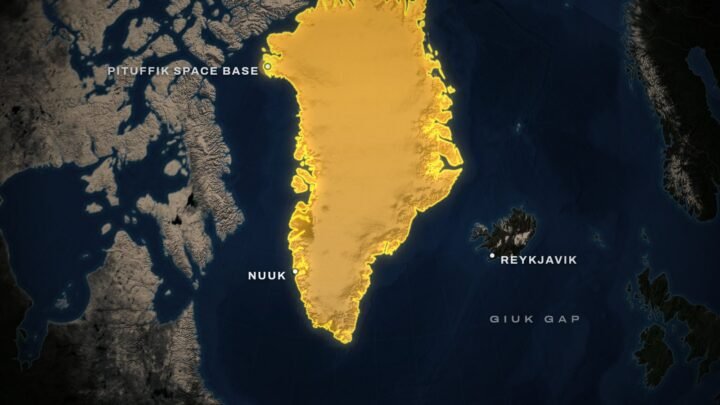
So Trump’s case for the Panama Canal rests on three claims. The fees are unfair to American ships. China has too much influence around the canal. And the canal is vital to US security. The same month, he would not rule out force over Greenland either; our article on why Trump wants Greenland explains that parallel case.
How did Panama get the canal? The Panama Canal treaty of 1977
The United States built the canal and opened it in 1914. For most of the 20th century, it ran the waterway and governed a strip of land around it, the Canal Zone.
In 1977, President Jimmy Carter and Panama’s leader, Omar Torrijos, signed two treaties. The first handed the canal to Panama by the end of 1999. The United States returned the Canal Zone in 1979 and ended its joint control of the waterway in 1999, AP notes.
The second, the Neutrality Treaty, has no end date. Its full title is the Treaty Concerning the Permanent Neutrality and Operation of the Panama Canal. As the title says, it makes the canal permanently neutral.
The US Senate added a condition when it approved the treaty, known as the DeConcini reservation. If the canal is closed or its operation is blocked, each country may take the steps it deems necessary, including military force, to reopen it. However, the ratified texts also state that US action gives no right to intervene in Panama’s internal affairs.
So the treaty gives Washington a say in keeping the canal open and neutral, but not ownership. That is why Trump’s charge that Panama broke its promises matters: it points to neutrality, the main lever the treaty provides.
Panama Canal and China: who really runs the ports?
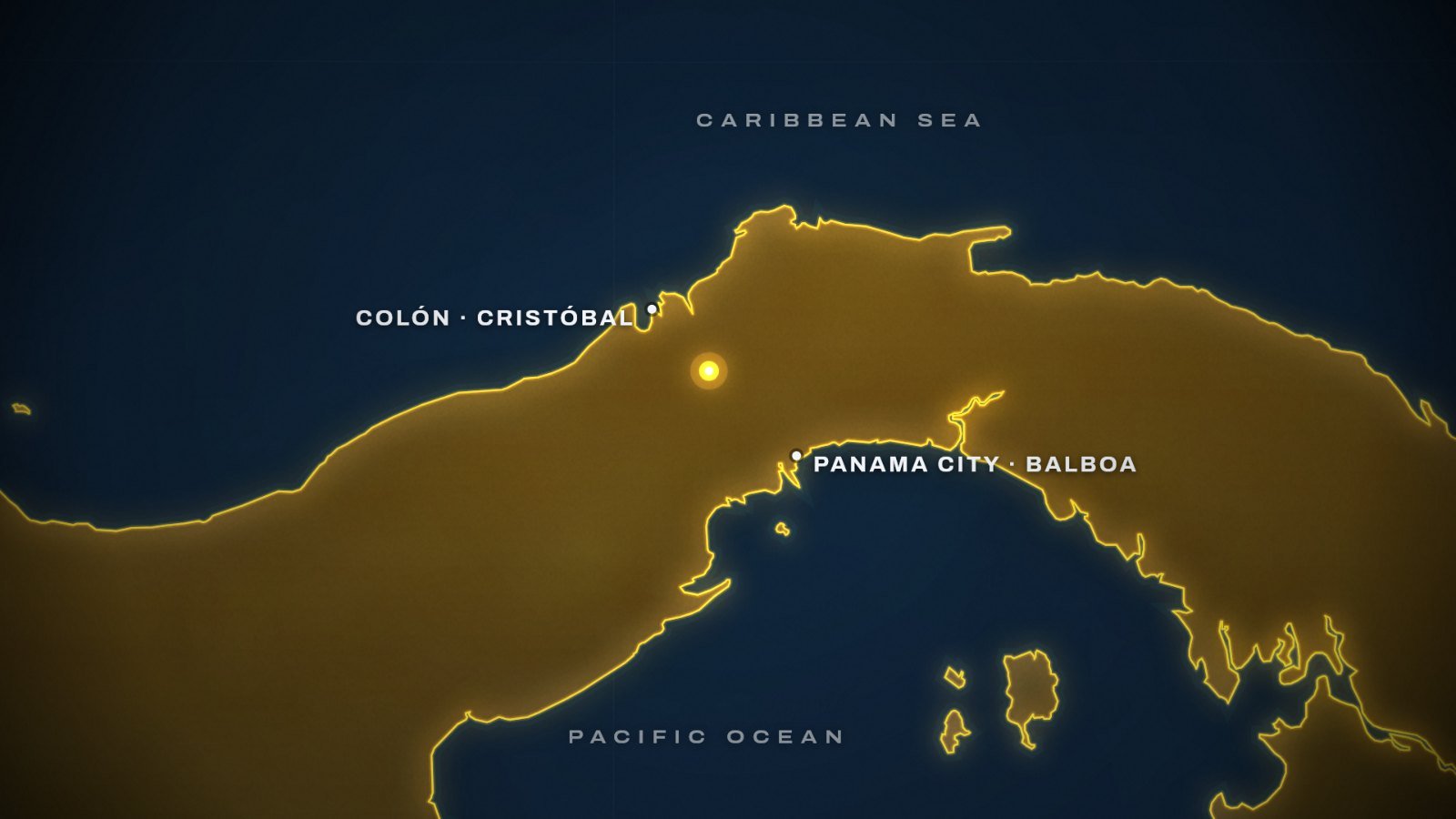
The canal itself is run by the Panama Canal Authority, a Panamanian state agency. However, a subsidiary of CK Hutchison, a privately owned Hong Kong conglomerate, ran two of the five ports beside it: Balboa on the Pacific side and Cristóbal on the Atlantic side. Its concession dated from 1997 and was extended for 25 years in 2021.
The BlackRock deal and Beijing’s objections
In March 2025, CK Hutchison agreed in principle to sell 80% of its ports business, 43 ports in 23 countries, including the two in Panama. The buyers were a group led by BlackRock and Terminal Investment Limited (TiL), the terminal arm of the shipping line MSC. The deal was worth about $23 billion.
Beijing objected. On 28 March 2025, China’s market regulator said it would review the sale under competition law, Reuters reported. Ta Kung Pao, a pro-Beijing Hong Kong newspaper, ran commentaries depicting it as a betrayal of China. In July 2025, the Wall Street Journal reported that China would block the deal unless its state shipping giant COSCO got a stake. By December, reports said COSCO wanted a majority, and BlackRock and MSC were reconsidering. As of late August 2026, talks on the wider sale were still going on, now without the two Panama ports, Bloomberg reported.
The court ruling and the new operators
Meanwhile, Panama’s own institutions moved. In 2025, an audit by the Comptroller General estimated that the state had lost about $300 million since the 2021 extension. The company denied it. Then, on 29 January 2026, Panama’s Supreme Court declared the concession unconstitutional, CNN reported.
On 23 February 2026, Panama took control of both ports. Maersk’s APM Terminals now runs Balboa and MSC’s TiL runs Cristóbal, under 18-month transition agreements. So MSC, one of the would-be buyers, ended up running a canal port anyway.
CK Hutchison’s Panama Ports Company rejected the ruling. In February, it began arbitration against Panama under the rules of the International Chamber of Commerce. It is claiming about $2 billion, according to IISD.
China’s response
Beijing pushed back. China’s foreign ministry said it would take “all necessary measures” to protect Chinese companies, and accused Washington of a “Cold War mentality”. Then, from early March, detentions of Panama-flagged ships in Chinese ports rose sharply. The maritime security firm Ambrey counted 93 such detentions in March and 136 in April. The US Federal Maritime Commission linked the surge to the ports ruling. China denies this and says the inspections are routine safety checks. In late April, the United States, Bolivia, Costa Rica, Guyana, Paraguay and Trinidad and Tobago criticised what they called Chinese economic retaliation, Al Jazeera reported.
How has Panama answered Trump?
Panama’s line has not changed: the canal is Panama’s, and its sovereignty is not negotiable. Yet Mulino has also moved to meet several US concerns.
In February 2025, days after a visit by Secretary of State Marco Rubio, Mulino announced that Panama would leave China’s Belt and Road Initiative, which it had joined in 2017. He said the decision was his own.
In April 2025, US Defence Secretary Pete Hegseth visited Panama, and the two countries signed a security agreement. It lets US troops deploy to Panama for training and exercises, at facilities Panama controls. Hegseth floated a rotating US presence at former US bases. However, Panama’s security minister, Frank Ábrego, said Panama would not accept military bases. Ábrego also said that Hegseth had acknowledged Panama’s sovereignty over the canal.
The two sides also discussed the passage of US warships. Hegseth said they should go “first and free”. Panama’s canal minister, José Ramón Icaza, spoke instead of a cost-neutral compensation system, AFP reported.
Then there are the ports. The court case began with Panama’s own Comptroller General, not with Washington. In July 2026, Mulino said Balboa and Cristóbal will be tendered separately, with new concessions of 25 to 30 years awarded before mid-2027, Infobae reported.
Panama Canal traffic, tolls and the drought
The canal’s finances explain why Panama guards its tolls. In the year to September 2025, the Panama Canal Authority reported revenue of about $5.7 billion and a net profit of about $4.1 billion, Baird Maritime reported. Transits rose 19.3% to 13,404 as the canal recovered from drought.
That drought hit in 2023. The canal’s locks run on fresh water from rain-fed lakes, so less rain means fewer ships. The authority cut daily booking slots to 24 in November 2023 and to 22 in December, The Waterways Journal reported. By early 2024, transits were 49% below their peak, UNCTAD estimated.
| Fiscal year (October to September) | Transits | Revenue |
|---|---|---|
| 2024, the drought year | 11,240 | $4.99 billion |
| 2025 | 13,404 | $5.71 billion |
| 2026, first nine months | 10,726 | about $4.8 billion |
In 2026, war in the Gulf sent more ships to Panama. From October 2025 to June 2026, the canal recorded 10,726 transits, 5.2% more than a year earlier, the authority said. Revenue in those nine months rose 17%, Seatrade Maritime reported. At the peak of the closure of the Strait of Hormuz, the canal handled 40 to 41 ships a day, against a typical 34 to 35. So the authority expected revenue for the full year to beat its forecast, FreshPlaza reported.
On fees, Trump’s complaint is that American ships pay too much. Panama answers that the same published tolls, set after public hearings, apply to every ship. The United States is the canal’s largest user. About three-quarters of the canal’s cargo is going to or from the United States. China comes second, with about a fifth, according to canal authority figures for fiscal year 2024. So tolls weigh on American trade more than on anyone else’s. The canal is one of the main global trade chokepoints.
What does each side want?
- The Trump administration wants lower costs for American ships, no Chinese-linked operators at either end of the canal, and a guaranteed right of passage for the US Navy. It argues that the canal is vital to US security, and that Panama broke its handover promises by letting China gain influence.
- Panama wants to keep full sovereignty and the canal’s income. It argues that the canal is already neutral, that tolls are set publicly for everyone, and that no foreign power runs it. Its strategy is to cooperate on security while refusing anything that looks like a handover.
- China says it will protect the rights and interests of Chinese companies. Its foreign ministry calls the court ruling baseless and blames US pressure. US officials link a surge in Chinese inspections of Panama-flagged ships to the dispute; China calls them routine safety checks.
- CK Hutchison wants compensation through arbitration. Meanwhile, BlackRock and MSC want their wider ports deal without a political veto from Beijing.
For the wider picture in the region, see more analysis on the Americas.
What to watch next
- The port tenders. Panama plans to award Balboa and Cristóbal separately before mid-2027. Who bids, and who is allowed to, will show how far Panama has moved away from Chinese-linked operators.
- The arbitration. Panama Ports Company’s claim, reported at about $2 billion, could take years, and it could cost Panama money even if the ruling stands.
- China’s pressure. Watch whether detentions of Panama-flagged ships continue, and whether the wider CK Hutchison sale goes ahead, with or without COSCO.
- Water. An expected El Niño threatens new capacity limits. A dry year would cut transits and income just as Hormuz has raised demand.
- Washington’s endgame. In Greenland, a September 2026 agreement gave the United States wider military rights, while Denmark and Greenland say sovereignty stays with them, Al Jazeera reported. Rights rather than ownership is one possible end point in Panama too.
Frequently asked questions
Why does Trump want the Panama Canal?
Trump says Panama charges American ships unfair fees, that China operates the canal, and that the waterway is vital to US security. In his January 2025 inaugural address, he said the United States was “taking it back”. Panama rejects his claims and says its sovereignty over the canal is not negotiable.
Does China control the Panama Canal?
No. The canal is run by the Panama Canal Authority, a Panamanian state agency. China’s link was through CK Hutchison, a Hong Kong company that ran the Balboa and Cristóbal ports at either end. Panama’s Supreme Court annulled that concession in January 2026, and other operators took over in February.
What is the BlackRock Panama Canal deal?
In March 2025, CK Hutchison agreed in principle to sell 80% of its global ports business, including its two Panama Canal ports, to a group led by BlackRock and MSC’s terminal arm, for about $23 billion. China ordered an antitrust review and pressed for a COSCO stake. As of late August 2026, talks on the wider sale continued, without the Panama ports.
Can the US take back the Panama Canal under the treaty?
Not as owner. The 1977 Neutrality Treaty keeps the canal permanently neutral and in Panama’s hands. A condition added by the US Senate lets either country act, including with force, to reopen the canal if it is closed or blocked. The ratified texts add that this gives no right to intervene in Panama’s internal affairs.
What did Trump call the Panama Canal?
In December 2024, after Panama’s president rejected his demands, Trump posted an image captioned “Welcome to the United States Canal!” He also called the canal’s fees “ridiculous” and said the US Navy and American trade were treated unfairly. In January 2025, he said the United States was “taking it back”.
Who runs the Panama Canal ports now?
Since 23 February 2026, Maersk’s APM Terminals has run Balboa and MSC’s Terminal Investment Limited has run Cristóbal, under 18-month transition agreements. Panama has said it plans separate tenders for new 25 to 30-year concessions before mid-2027. The former operator, CK Hutchison’s Panama Ports Company, is seeking compensation in arbitration, reportedly about $2 billion.
Sources
- Trump threatens to reclaim the Panama Canal
- Presidente de Panamá respondió a Trump por canal de Panamá: la soberanía e independencia no son negociables
- Trump threatens to take back control of Panama Canal over 'ridiculous fees'
- Panama marks canal handover anniversary amid Trump threat
- Donald Trump refuses to rule out use of military force to take control of Greenland and the Panama Canal
- Trump vows US 'taking back' Panama Canal, despite 'peacemaker' pledge
- Trump vows Panama Canal 'takeback' in bold inaugural threat
- Panama dismisses Trump's claims of Chinese control over Panama Canal
Show all 45 sources
- China slams US as Panama quits Belt and Road Initiative
- Hegseth vows US will take back Panama Canal from Chinese influence
- Pentagon chief says US could 'revive' Panama bases
- Memorandum From Acting Secretary of State Christopher to President Carter (Foreign Relations of the United States, 1977-1980, vol. XXIX, Panama, document 167)
- Potential U.S. Trade Implications of Trump Administration's Panama Canal Interest
- Could 2026 be the make-or-break year of CK Hutchison's Panama ports deal?
- MSC and BlackRock reconsider $23 billion port deal amid control dispute
- CK Hutchison will not sign deal to sell strategic Panama ports next week, sources say
- Pro-Beijing media ramp up attack on CK Hutchison ports deal
- China threatens to block Panama ports deal unless its shipping giant gets stake, WSJ reports
- Panama Canal ports deal at risk after China's Cosco demands majority stake
- CK Hutchison ports sale talks continue without the Panama terminals (Bloomberg report)
- Panama court finds CK Hutchison's port terminal concession unconstitutional
- Hong Kong company's concession to operate Panama Canal ports is ruled unconstitutional
- Panama declares CK Hutchison's Panama Ports concession unconstitutional
- China's foreign ministry on the Panama ports ruling
- China slams US for undermining international law amidst Panama canal ports crisis
- Hong Kong firm begins arbitration proceedings over ruling against its Panama Canal port contract
- Panama takes control of canal ports, ousting Hong Kong group
- APM Terminals starts temporary operation of Port of Balboa, TIL to take over Cristóbal
- U.S. accuses China of detaining Panama-flagged ships
- Statement of Chairman DiBella on China's Detention of Panama-Flagged Vessels
- China ramps up detentions of Panama-flag ships, hitting 136 in April
- Six states criticize China for detaining Panama-flagged ships
- Panama faces USD 2 billion claim after Supreme Court annuls strategic port concessions
- US, Latin America countries criticise China's retaliation over Panama Canal
- Los puertos de Balboa y Cristóbal en Panamá tendrán nuevas concesiones de hasta 30 años
- Panama Canal revenue hits $5.7b in FY2025 as traffic surges
- Ingresos del Canal de Panamá suben 14.4% en su año fiscal 2025
- Panama Canal reports higher transits and tonnage while preparing to meet demand amid expected El Niño conditions
- Panama Canal sees increase in transits as El Niño impact looms
- Panama Canal revenue set to beat $5.2B forecast after Hormuz closure
- Panama Canal expects revenue to exceed US$5.2 billion forecast
- Panama Canal transits up 5.2% as El Niño capacity restrictions loom
- Panama Canal restrictions extended, deepened
- UNCTAD raises concerns over Red Sea, Black Sea and Panama Canal disruption
- US signs 'tremendous' Arctic security deal with Denmark, Greenland
Facts as of 16 October 2026. Spotted a mistake? Tell us, and we will correct it.