Europe Analysis
Why Is Ukraine Bombing Russia’s Oil Refineries?
Ukraine's drones keep hitting Russia's oil industry, even after Donald Trump called the strikes a disgrace. What do they cost Moscow, why does Washington want them stopped, and are they really behind the world's diesel shortage?

In short
- Ukraine has struck Russian refineries and fuel terminals with its own long-range drones since at least early 2024; in the first eight months of 2026, a Russian refinery was hit about once every three days, according to IEA figures.
- The IEA estimates that Russia's refinery runs fell to 3.8 million barrels a day in June 2026, about 30% lower than a year earlier; Vladimir Putin has put the cost of the strikes at about 1% of Russia's GDP.
- Kyiv says the strikes hit the money and fuel behind Russia's war and answer Russian attacks on Ukraine's energy system; Moscow says they run counter to President Trump's peace efforts.
- Trump wants the strikes stopped to ease diesel prices: he announced an 'energy ceasefire' on 11 October 2026 and called Ukraine's strike on a Ryazan refinery four days later 'a disgrace'.
- As of 19 October 2026, no energy ceasefire is in force: drones hit St Petersburg's oil terminal on 18 October, and analysts quoted by CNN name the closure of the Strait of Hormuz as the main cause of dear diesel.
In this analysis 8 sections
- 01What are Ukraine's refinery strikes, and how did they start?
- 02Why does Kyiv target Russia's oil refineries?
- 03How much damage have the strikes done to Russia?
- 04Why does Moscow call the strikes a challenge to Trump?
- 05Why does Trump want Ukraine to stop hitting Russian oil?
- 06Are Russia's diesel exports really behind high fuel prices?
- 07What to watch next in the refinery war
- 08Frequently asked questions
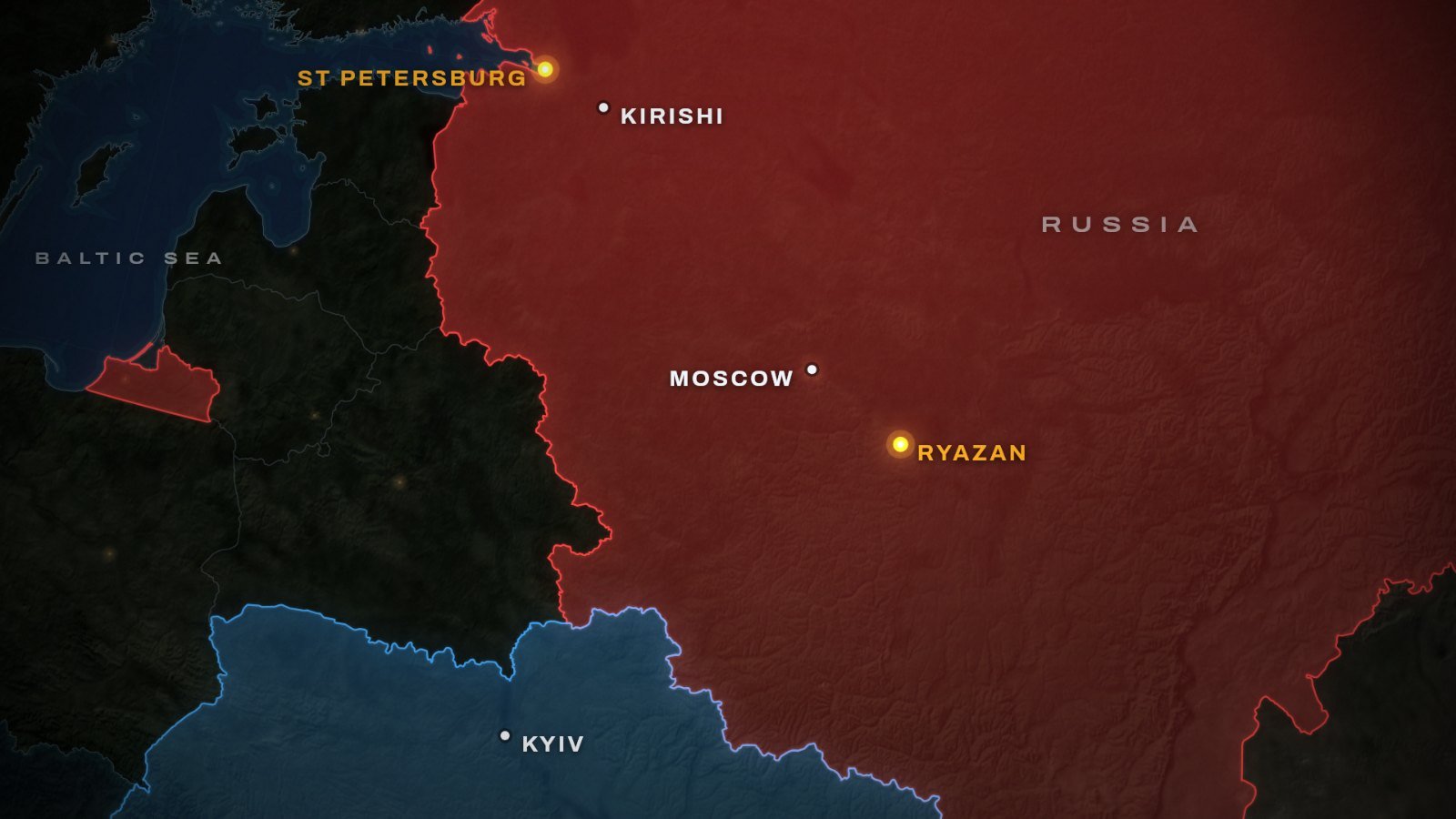
Early on 18 October 2026, drones struck St Petersburg, Russia’s second city. Its governor, Alexander Beglov, said fires broke out at the city’s oil terminal, an oil depot and industrial warehouses. He reported one dead and five injured. Russia’s Defence Ministry said its air defences downed more than 1,000 Ukrainian drones over 15 regions, Al Jazeera reported.
Three days earlier, Ukraine hit a Rosneft refinery south-east of Moscow, and President Donald Trump called the attack “a disgrace”. So why do Ukraine’s refinery strikes go on, even at the cost of a row with Washington? The short answer is money. Vladimir Putin himself puts their cost at about 1% of Russia’s GDP.
What are Ukraine’s refinery strikes, and how did they start?
Ukraine’s refinery strikes are long-range drone attacks on the plants that turn Russian crude oil into petrol, diesel and jet fuel. They also hit the terminals that ship fuel abroad. Ukraine makes these drones itself, and that matters. In 2024, President Volodymyr Zelensky said Ukraine would not accept limits on how it uses weapons it produces at home.
The campaign was already under way in early 2024. On 31 January that year, drone debris started a fire at the Nevsky Mazut refinery in St Petersburg, Novaya Gazeta Europe reported. Then, in March 2024, the Financial Times reported that the Biden administration had urged Kyiv to stop. According to the paper, Washington feared higher oil prices and Russian retaliation.
Kyiv pushed back. Mykhailo Podoliak, an adviser to the president, called the report “fake information”. He said Ukraine had the right under international law to hit an aggressor’s war capabilities. The strikes went on.
In 2026, the pace rose sharply. According to the International Energy Agency (IEA), drones hit a Russian refinery about once every three days in the first eight months of the year. In early July, they reached Gazprom Neft’s Omsk refinery, Russia’s largest, about 2,500 km from the border by Ukraine’s count. St Petersburg’s oil terminal had already burned in June and again in July.
Why does Kyiv target Russia’s oil refineries?
Kyiv gives four reasons, and they support one another.
First, money. Oil and gas earned the Russian state 5.47 trillion roubles in the first nine months of 2026, according to Finance Ministry data. Kyiv’s argument is simple: that money pays for the war, and every idle refinery means less of it.
Second, fuel for the army. Tanks, trucks and aircraft all run on refined fuel. Kyiv has long argued, as Podoliak did in 2024, that refineries feed Russia’s war machine. That is why it calls them fair targets.
Third, reciprocity. Russia keeps striking Ukraine’s energy system. On the night before the Ryazan attack, Zelensky said Russia launched more than 850 drones at Ukraine. When he ended the pause, he pointed to continued Russian strikes, less US intelligence sharing and limits on Starlink.
Fourth, leverage. The strikes give Kyiv something to trade. Zelensky has said Ukraine would honour a mutual pause on energy strikes if Moscow did the same. Putin, however, has turned down one such trade. On 1 October, he rejected halting attacks on Ukrainian ships in return for an end to the refinery strikes, according to Meduza.
Seen from Kyiv, refineries are ideal targets: large, fixed and hard to protect. According to IEA-based reporting, attackers now send several waves of drones at one plant to overwhelm its mostly passive defences.
How much damage have the strikes done to Russia?
Russia keeps most of its energy data secret, so every estimate is partial. Still, the main ones point the same way.
The IEA estimates that Russia’s refinery runs fell to 3.8 million barrels a day in June 2026. That was about 30% below a year earlier and the lowest level since May 2004. For scale, Russia’s 32 major refineries can process about 6.5 million barrels a day. Diesel output, by the same estimates, was down nearly 30% from 2025.
Ukraine’s Defence Ministry goes further. In early October, it said the strikes had knocked out 51% of Russia’s refining capacity. As AP noted, nobody has independently verified that figure, and Russia publishes no damage totals.
Then there is Putin’s own figure. At the Valdai forum, he was asked whether Ukraine’s aim of hurting the Russian economy had worked. He answered “partially”. By Russia’s own estimates, he said, the country had lost about 1% of its GDP, TASS reported. He also described the refineries as civilian targets.
| Key numbers | Figure | Source |
|---|---|---|
| Russia’s refining capacity | About 6.5 million barrels a day at 32 major refineries | IEA, 2026 |
| Refinery runs, June 2026 | 3.8 million barrels a day, about 30% below June 2025 | IEA |
| Diesel output, 2026 | Down nearly 30% from 2025 | IEA estimate |
| Capacity knocked out | 51%, not independently verified | Ukraine’s Defence Ministry, early October 2026 |
| Cost to Russia | About 1% of GDP | Putin, 1 October 2026 |
| Oil and gas revenue, September 2026 | 452.4 billion roubles, about 22% below September 2025 | Finance Ministry data, via The Bell |
| Oil and gas revenue, January to September 2026 | 5.47 trillion roubles, down 17.2% | Finance Ministry data, via The Bell |
Why Russia earns less even when oil is dear
At the end of September, Russia’s main export blend, Urals, traded above $92 a barrel. Yet Russia’s oil and gas revenue that month fell about 22% from a year earlier, according to Finance Ministry data reported by The Bell.
One reason is a subsidy. Russia pays its refiners to make up the gap between world and domestic fuel prices, so that fuel stays affordable at home. In September, those payments jumped from about 197 billion roubles in August to 306 billion. That swallowed all the extra money from the oil production tax. High prices raised the tax take, and the state handed it straight back.
The strain shows at home too. Russia has banned petrol exports until 31 January 2027. It has also restricted diesel exports by producers since July, extending the ban month by month to protect its own market. In mid-September, Reuters calculated that three of Russia’s six largest diesel refineries had stopped or sharply cut output. One of them, Kirishi, near St Petersburg, was fully shut, its sources said.
Why does Moscow call the strikes a challenge to Trump?
Moscow’s public line has two parts. First, it plays down the damage: Putin called the effect only partial.
Second, and more important now, it presents the strikes as a threat to Trump’s peace effort. Foreign Minister Sergey Lavrov said Zelensky’s opposition to the US-Russian diesel deal was “a direct challenge, and a rude one, to President Trump”. The Kremlin said the strikes ran counter to US peace efforts. It also claims that Ukraine never actually stopped its strikes. Spokesman Dmitry Peskov said Moscow did not expect Kyiv ever to keep a ceasefire.
The logic is clear. If Washington blames Kyiv for high fuel prices and stalled talks, the pressure falls on Ukraine, not on Russia. Meanwhile, Moscow has not confirmed Trump’s “energy ceasefire”. Asked about it on 12 October, Peskov said only that contacts were ongoing.
Moscow also frames its own attacks as a response. At Valdai, Putin said Russia had begun hitting Ukrainian economic targets in reply to the refinery strikes. In the Kremlin’s telling, Russia is the one answering.
Moscow has not rejected a truce in principle, either. In September, Peskov called the idea of an energy truce “a very good” one. He added that it would not solve the world’s problems.
Why does Trump want Ukraine to stop hitting Russian oil?
For Washington, the issue is diesel, and a deal. The war with Iran has disrupted shipping through the Strait of Hormuz since early 2026 (see can Iran close the Strait of Hormuz?), and diesel is scarce worldwide. With the US midterm elections on 3 November, fuel prices are a political issue, AP noted.
Trump’s answer has been to talk to Moscow. After a call with Putin on 9 October, he said Russia would supply more than 300,000 tonnes of diesel at once and 500,000 tonnes in November. The same day, the US Treasury issued General License 135, which allows Russian diesel into the United States until 7 April 2027.
On 11 October, Trump announced an “energy ceasefire”. A White House official told Axios it covered only refineries, “refinery for refinery”, and that power plants and grids could follow. Kyiv said it learned of the deal from the media. Ukraine paused its refinery strikes for three days, then resumed them on 15 October, saying Russia kept attacking its energy system.
Trump’s reply was blunt. “Well, I think that’s a disgrace,” he told Newsmax, adding that there were “a lot of targets that you can hit”. He also said he found Zelensky “more difficult to deal with than Putin”.
Why did Trump waive the Graham Act sanctions?
Late on 16 October, Trump waived the main Russia measures of a new US sanctions law, the Graham Act. These were duties of up to 500% on Russian goods, and tariffs of up to 100% on top buyers of Russian oil and gas, such as China and India. The White House said enforcing them now would hold back peace efforts. Secretary of State Marco Rubio said Trump would take up to 60 days to weigh the sanctions, and Treasury Secretary Scott Bessent stressed that “no sanctions have been lifted”. Zelensky called the decision “wrong”; Kirill Dmitriev, Putin’s envoy for economic ties, welcomed it.
Seen from the White House, this is one strategy: cheaper fuel at home and Moscow at the table. In 2024, according to the Financial Times, the Biden administration made a similar request over oil prices. So two very different US administrations reached the same view of Ukraine’s refinery strikes. Both times, Kyiv kept striking.
Are Russia’s diesel exports really behind high fuel prices?
This is the most disputed part of Trump’s case. Analysts quoted by CNN named the Hormuz closure, not Ukraine’s drones, as the main cause of record diesel prices. US Energy Secretary Chris Wright, by contrast, has called the war in Ukraine the “single biggest factor”.
Russia still matters for diesel. It is normally the world’s second-largest diesel exporter after the United States, and its export ban keeps fuel off the world market. According to CNN, Andy Lipow of Lipow Oil Associates put the Russian restrictions at about 800,000 barrels of diesel a day, and the Hormuz closure at about 1.2 million.
The IEA’s October oil market report shows the scale of the Gulf shock. It expects diesel to stay tight well into 2027. Shipments of refined products from the Middle East were about 1.9 million barrels a day in September, still less than half their pre-war level.
So both play a part, but by these estimates Hormuz plays the bigger one. There is also an awkward detail in the diesel deal. Russia’s own rules ban diesel exports, with exceptions for earlier agreements between governments. How the cargoes Trump promised fit that ban is not yet clear. For the wider picture of how one blocked route moves prices, see the chokepoints that control world trade.
What to watch next in the refinery war
As of 19 October 2026, four things will shape what happens next.
First, the energy ceasefire. Kyiv says it will honour a mutual pause, but Moscow has not confirmed one. A deal that covered both refineries and power grids would change the winter for both countries.
Second, the diesel cargoes. Watch whether the 500,000 tonnes Trump promised for November arrive. Watch, too, whether Russia extends its ban on diesel exports by producers beyond 31 October.
Third, Washington’s sanctions clock. Rubio’s 60-day review of the Graham Act waiver runs to mid-December. The US midterm elections on 3 November come first.
Fourth, Russia’s budget. If revenue keeps falling while oil prices stay high, the cost Putin admits to may grow. The strikes are one front in a wider contest over how the war ends, from why Russia opposes Ukraine in NATO to tension in Russia’s north-west, near Finland’s border. For more analysis on Europe, see our region page.
Frequently asked questions
Why is Ukraine attacking Russian oil refineries?
Kyiv says refineries are part of Russia’s war capability, because they fuel its army and earn the money that pays for the war. The strikes also answer Russian attacks on Ukraine’s energy system and give Kyiv something to trade. Ukraine uses drones it makes itself. Putin has put the cost to Russia at about 1% of GDP.
How much of Russia’s oil refining capacity has Ukraine hit?
In early October 2026, Ukraine’s Defence Ministry said its strikes had knocked out 51% of Russia’s refining capacity, a claim nobody has independently verified. The IEA measures output instead: Russian refinery runs in June 2026 were 3.8 million barrels a day, about 30% below a year earlier and the lowest since 2004.
Did Trump tell Ukraine to stop the refinery strikes?
Yes. Trump said Zelensky “has to stop knocking out diesel fuel in Russia”. He announced an “energy ceasefire” on 11 October 2026 and called Ukraine’s 15 October strike on a Ryazan refinery “a disgrace”. Moscow never confirmed the ceasefire. Kyiv paused its strikes for three days, then resumed them, saying Russian attacks continued.
Are Ukraine’s drone strikes raising diesel prices?
Partly. After the strikes cut its output, Russia restricted diesel exports, which one analyst put at about 800,000 barrels a day. But analysts quoted by CNN name the closure of the Strait of Hormuz as the bigger cause. IEA data show Middle Eastern exports of refined products are still below half their pre-war level.
What is the energy ceasefire between Russia and Ukraine?
It is a pause on strikes against each other’s energy sites that Trump announced on 11 October 2026. A White House official called it “refinery for refinery”, with power plants and grids possibly to follow. The Kremlin did not confirm it, Kyiv said it learned of it from the media, and Ukraine resumed strikes on 15 October.
Has Ukraine attacked St Petersburg?
Yes. Drones hit St Petersburg’s oil terminal in June and July 2026, and again on 18 October. That night, the city’s governor reported fires at the oil terminal, an oil depot and warehouses, with one person dead. St Petersburg lies more than 800 km from Ukraine’s border, so the attacks show how far Ukraine’s drones now reach.
Sources
- Ukrainian drone attack on Saint Petersburg kills one, sets refinery ablaze
- 1 Killed, 5 Injured in Ukrainian Drone Attack on St. Petersburg, Governor Says
- Ukraine launches over 1,000 drones at Russia, setting oil facilities ablaze
- Massive Ukrainian drone attack hit oil facility, bridge, and data center in St. Petersburg
- Ukraine sets Saint Petersburg refinery ablaze in attack
- Ukraine abandons truce and attacks Russian oil refinery as Zelenskyy says he feels betrayed by Trump
- Trump calls renewed Ukraine attacks on Russian refineries 'a disgrace'
- Trump rebukes Zelensky, calls Ukraine's strikes on Russian refineries 'disgrace'
Show all 55 sources
- Trump calls Zelensky more difficult to deal with than Putin, says he's not a big fan
- By Putin's own estimate, Ukrainian strikes on Russian refineries have cost Russia 1% of GDP, but he says stopping them isn't worth halting attacks on Ukrainian vessels
- Putin's remarks at the Valdai Discussion Club on losses from the refinery strikes
- Ukraine claims its attacks have taken out more than half of Russia's oil refining capacity
- IEA: Ukrainian drone campaign degrades Russian refining resilience
- Russian refining sector struggles amid intensifying Ukrainian attacks
- Ukraine strikes Russia's largest oil refinery in Western Siberia
- Russia's largest oil refinery halts processing after drone attack, sources say
- Half of Russia's largest diesel producers cut output – Reuters
- Ukraine's drone strikes force Russia's 6 largest diesel refineries to halt or slash output, Reuters reports
- Russia's oil and gas revenues dropped by 22% in September despite rising oil prices
- Russia's oil revenue machine is losing steam: September income drops 22%
- Russia's oil revenues drop 17% despite a 13-year high for Urals crude (Reuters)
- Russia to extend diesel export ban through October as refinery attacks bite
- Russia extends ban on diesel exports until September 30
- Russian government extends the ban on diesel exports by producers to 31 October
- Russia extends diesel export ban for producers through October
- Russia's diesel export ban deepens global supply crunch (Reuters)
- Russia extended fuel export ban for another six months until end of January
- Trump says US to get diesel from Russia, relaxing pressure on Moscow to ease prices before midterms
- Trump has agreed with Putin on Russian diesel supplies to US
- OFAC issues General License 135 authorizing transactions involving Russian-origin diesel fuel
- US general license authorises supply of Russian diesel until 7 April 2027
- Trump's Russia-Ukraine energy ceasefire may only cover oil refineries
- Trump announces Russia-Ukraine energy ceasefire
- Kremlin says consultations on energy ceasefire are still ongoing
- Kremlin calls energy truce a very good idea but says it won't solve the world's problems
- Trump blames Kyiv for diesel costs amid Mideast oil crisis
- Trump tells Zelensky not to attack Russian refineries (PA Media/dpa)
- Zelensky announces new attacks on Russian refineries, defying Trump (dpa)
- Lavrov says Zelenskyy's diesel deal stance a rude challenge to Trump
- Trump waives broad new Russia sanctions, Zelenskyy condemns it as 'wrong'
- Trump waives new Russia sanctions in the "national interests"
- Rubio Says Trump To Take up to 60 Days To Weigh Russia Sanctions
- US Treasury Secretary downplays Russia sanctions waiver, warns Zelensky to 'be careful'
- Analysis of the Graham Act's 18 October deadline
- Oil Market Report - October 2026
- IEA: Oil supply rebound remains fragile; diesel tightness persists
- Diesel shortages could persist well into 2027, IEA says
- Trump blamed Ukraine for record diesel prices, but analysts named the Strait of Hormuz as the main cause
- Ukraine war 'single biggest factor' driving record diesel prices, Wright says
- Recovering Middle East exports fail to ease crude and diesel tightness
- FT sources: US urged Ukraine to halt strikes on Russian oil refineries; Ukraine denies FT's claims
- Washington Reportedly Told Kyiv to Stop Hitting Russian Oil Refineries: FT
- Drone debris causes fire at St. Petersburg oil refinery
- Drone attack and explosions: oil terminal ablaze in Russia's St Petersburg
- Leningrad Region Port, Oil Terminal Hit in Major Ukrainian Drone Attack
Facts as of 19 October 2026. Spotted a mistake? Tell us, and we will correct it.