Asia-Pacific Analysis
Why Are Pakistan and Afghanistan Fighting?
Pakistan was long seen as the Taliban's patron. Five years after their return to power, the two fight over a border Afghanistan has never accepted and a militant group Islamabad says Kabul shelters.

In short
- No Afghan government has formally accepted the Durand Line, the roughly 2,600 km frontier agreed in 1893; Pakistan says it is a settled international border.
- Pakistan accuses the Taliban government of sheltering the TTP, or Pakistani Taliban; the Taliban deny it, while UN sanctions monitors say the group operates from Afghanistan.
- On 27 February 2026, after Pakistani strikes on Kabul, Kandahar and Paktia, Pakistan's defence minister declared "open war".
- UNAMA counted 512 civilians killed and 1,236 injured in Afghanistan by cross-border violence between October 2025 and September 2026, according to reports of its latest update.
- On 11 October 2026, Pakistan declared an emergency in 12 districts of Khyber Pakhtunkhwa and suspended the provincial government; heavy clashes in Kurram and Paktia followed on 17 October.
In this analysis 8 sections
- 01What is the Durand Line, and why does Afghanistan reject it?
- 02Why did Pakistan's bet on the Taliban backfire?
- 03Who are the Pakistani Taliban, and what does each side say?
- 04How did the Pakistan-Afghanistan war start?
- 05What changed in October 2026?
- 06What does each side want?
- 07What to watch next
- 08Frequently asked questions
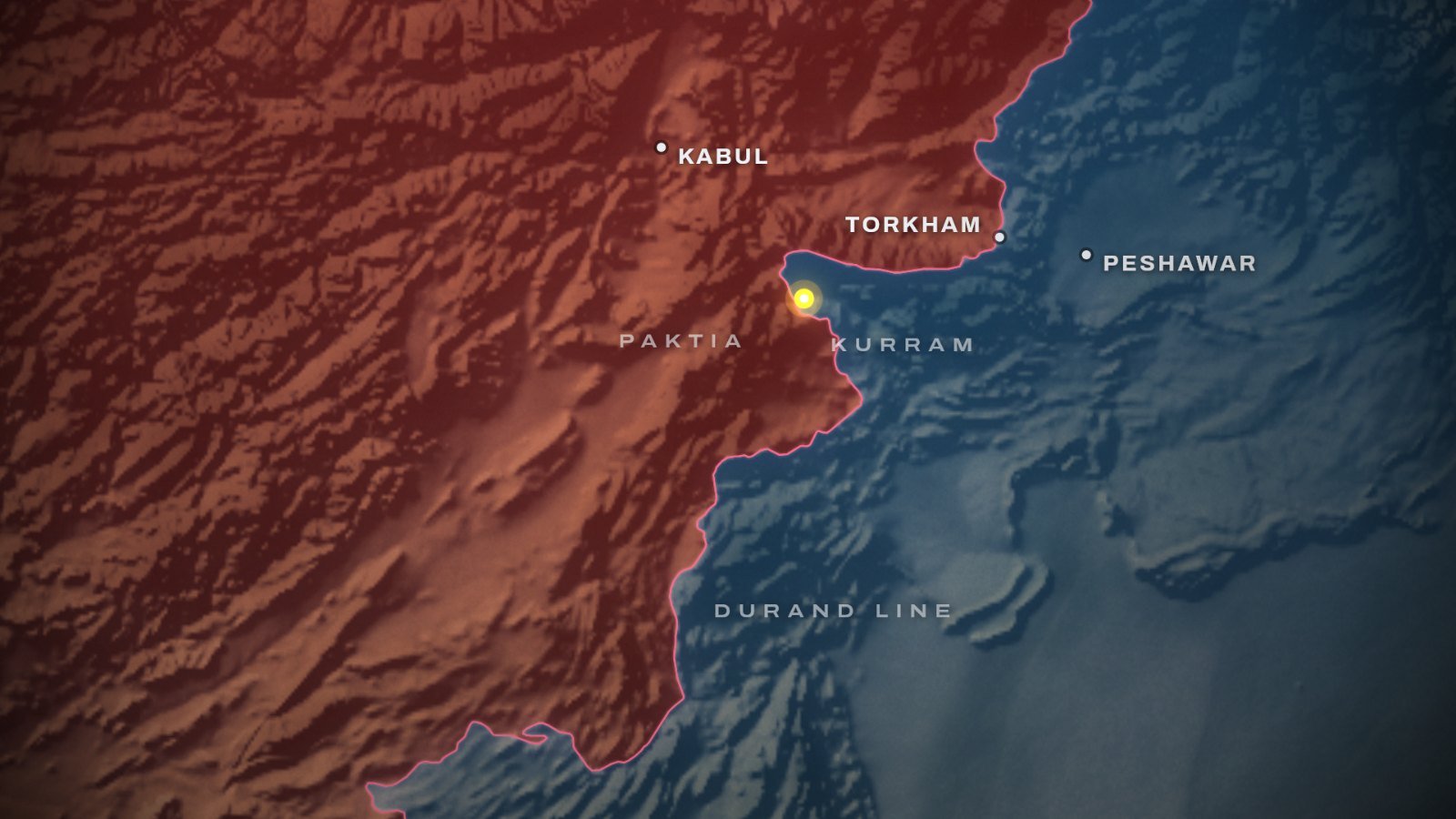
On 17 October 2026, Taliban forces and Pakistani troops traded heavy fire across the mountains between Afghanistan’s Paktia province and Pakistan’s Kurram district. Each side said the other fired first. Six days earlier, Islamabad had declared an emergency in Khyber Pakhtunkhwa, the province along that border.
This is the Pakistan-Afghanistan war, and it runs deeper than any one clash. Pakistan was long seen as the Taliban’s patron. Now its jets strike their country. So why did the two neighbours fall out? Here is the map, the timeline and what each side says it wants.
What is the Durand Line, and why does Afghanistan reject it?
Start with the border itself. On 12 November 1893, a British official, Mortimer Durand, and Afghanistan’s ruler, Emir Abdur Rahman Khan, signed a short agreement of seven articles. It set a line between Afghanistan and British India. Then a joint survey marked much of it on the ground.
Today that line forms the frontier between Afghanistan and Pakistan, about 2,600 km long. It runs through the homeland of the Pashtuns. So tribes, clans and even families live on both sides of it.
No Afghan government has ever formally accepted the line as an international border, and the Taliban are no exception. Kabul’s arguments are old. It says the emir signed under pressure. It also argues that the deal only marked out zones of influence, and that Britain’s treaty rights did not pass to Pakistan automatically in 1947.
Pakistan sees it differently. Islamabad says the Durand Line is a settled international border, inherited from British India. It also points to later agreements, in 1905, 1919 and 1921, in which it says Afghan rulers confirmed the frontier.
Why did Pakistan’s bet on the Taliban backfire?
For decades, Pakistan’s generals wanted a friendly government in Kabul. Analysts call the idea “strategic depth”: a safe western flank, so that the army can focus on India to the east.
For years, Pakistan faced accusations that it helped the Taliban during their insurgency. Officially, Islamabad said it wanted a broad, inclusive government in Kabul. Then, in August 2021, the Taliban took Kabul. The next day, Prime Minister Imran Khan said Afghans had “broken the shackles of slavery”. He was speaking about schools and culture, but critics heard a welcome for the Taliban.
Islamabad hoped for two things in return. It wanted a government that would at last accept the border. It also wanted one that would rein in the TTP, the Pakistani Taliban. Neither happened.
Why? For the Taliban, giving up the Afghan claim would cost them at home, because every government before them rejected the line. What’s more, many Taliban see the TTP as “brothers in arms”, bound to them by a shared Pashtun identity, according to an analysis in Fair Observer.
That is the irony at the heart of this conflict. Pakistan wanted a friendly government in Kabul. Instead, it got one that will not trade away an old Afghan claim.
Who are the Pakistani Taliban, and what does each side say?
The Tehreek-e-Taliban Pakistan, or TTP, is a separate group from the Afghan Taliban, but the two share an ideology and close ties. In talks with Islamabad in 2022, the TTP refused to work within Pakistan’s constitution, which it says is not based on Islamic law. Its reported demands included Islamic law in the Malakand region and a reversal of the 2018 merger of the former tribal areas into Khyber Pakhtunkhwa.
Islamabad’s case
Pakistan says the TTP’s leaders and fighters shelter in Afghanistan and cross the border to attack. Its military calls them “khawarij”, and it holds the Taliban government responsible.
The toll keeps rising. The Pakistan Institute for Conflict and Security Studies (PICSS), an Islamabad think tank, called 2025 the deadliest year in a decade. It counted at least 1,066 militant attacks. It also counted 664 security personnel killed, the most since 2011. Khyber Pakhtunkhwa suffered most.
Then, in September 2026, militant attacks reached their highest monthly level in 12 years, according to reports of PICSS’s monthly count.
UN sanctions monitors back part of Pakistan’s case. In February 2026, their report said the Taliban authorities still gave a “permissive environment” to several terrorist groups, notably the TTP. Their August 2026 report found that al-Qaeda had publicly endorsed TTP attacks on Pakistan for the first time, in April 2026.
Kabul’s case
The Taliban government denies all of it. It rejects the idea of TTP bases in Afghanistan. Taliban officials say the Pakistanis living on their side fled Pakistan’s own military operations years ago. In talks, the Taliban side has also said that Islamabad wants Kabul to take responsibility for Pakistan’s internal security.
Yet the UN’s August report suggests a mixed picture. It says the Taliban still support the TTP, but also that they moved about 2,000 TTP fighters and family members away from the border. It adds that the Taliban’s supreme leader, Hibatullah Akhundzada, reportedly warned the TTP to halt its attacks or lose the Taliban’s support.
How did the Pakistan-Afghanistan war start?
Clashes on this border are not new. But the fighting changed in October 2025. The Taliban said Pakistan had carried out air strikes on Afghan territory, which Pakistan did not confirm, and they launched what their spokesman, Zabihullah Mujahid, called a retaliatory operation.
The Taliban claimed 58 Pakistani soldiers killed. Pakistan said it lost 23 soldiers and killed more than 200 Taliban and allied militants. Then Pakistan shut the crossings, including Torkham, the main trade route, and thousands of trucks sat stranded on both sides.
Qatar and Turkey brokered a ceasefire in Doha on 19 October 2025. However, talks in Istanbul to turn it into a lasting deal broke down. According to Pakistani sources, the Taliban would not give a verifiable written guarantee against the TTP. Clashes went on.
The open break of February 2026
On 27 February 2026, Pakistan struck Kabul, Kandahar and Paktia in what it named Operation Ghazab lil-Haq. It called the strikes a response to “unprovoked Afghan attacks” on its border posts. The Taliban said they had answered earlier Pakistani action. Defence Minister Khawaja Asif wrote: “Now it’s an open war between us.”
Each side then claimed heavy losses for the other. Pakistan’s information minister said at least 133 Taliban fighters died. Nobody could check these claims. Saudi Arabia, Qatar and Iran offered to mediate, and UN Secretary-General António Guterres urged both sides to step back.
Civilians paid a heavy price. The UN Assistance Mission in Afghanistan (UNAMA) counted 372 civilians killed and 397 injured in Afghanistan by cross-border violence from January to March 2026, mostly in air strikes. From April to June, it recorded 57 killed and 342 injured, and it attributed all of them to Pakistani forces.
UNAMA does not monitor the Pakistani side, where TTP attacks also kill civilians. Pakistan, for its part, says its strikes target Taliban forces and militants.
| Date | What happened |
|---|---|
| 12 November 1893 | Durand and Emir Abdur Rahman Khan sign the border agreement |
| 15 August 2021 | The Taliban take Kabul |
| 11-12 October 2025 | Taliban forces attack Pakistani border posts; Pakistan closes Torkham |
| 19 October 2025 | Ceasefire in Doha, with Qatar and Turkey mediating |
| 27 February 2026 | Pakistan strikes Kabul, Kandahar and Paktia; its defence minister declares “open war” |
| 5 October 2026 | Moscow talks on Afghanistan end without a joint statement |
| 11 October 2026 | Emergency in 12 districts of Khyber Pakhtunkhwa and governor’s rule in the province |
| 17 October 2026 | Heavy clashes between Kurram and Paktia |
What changed in October 2026?
This month, three things moved at once.
First, diplomacy stalled. On 5 October, the Moscow Format talks on Afghanistan ended without a joint statement. Russia’s envoy, Zamir Kabulov, blamed disagreement between the Afghan and Pakistani delegations. According to Kabulov, the Afghan side objected that the draft mentioned Afghanistan too often next to terrorism.
Next, the border heated up. Pakistan’s military said that on 10 and 11 October it stopped an infiltration in Kurram, killing 12 militants and Afghan Taliban personnel and losing one soldier. It said Afghan Taliban posts fired to cover the infiltrators.
Then Islamabad turned to the province itself. On 11 October, it declared an emergency in 12 districts of Khyber Pakhtunkhwa, mostly former tribal areas on the Afghan border. It also imposed governor’s rule, suspending the provincial government of Imran Khan’s party, Pakistan Tehreek-e-Insaf (PTI).
The federal government accused the provincial government of failing to confront militant violence. The move followed a PTI protest march towards Islamabad, led by the province’s chief minister, Sohail Afridi. The PTI rejects the charges and says it will challenge the move in court and in parliament.
On 17 October, fresh heavy clashes broke out in Upper Kurram and across the line in Paktia’s Dand Patan and Zazi Aryob districts. Pakistani security sources said Taliban forces opened fire first, and that Pakistani troops destroyed two Taliban posts. Afghan media reported seven Pakistani soldiers killed. Nobody has independently confirmed either account.
Earlier, from 12 to 14 October, the EU’s envoy for Afghanistan, Thomas Frellesen, visited Kabul and urged the two neighbours to talk.
What does each side want?
Islamabad
Pakistan wants the attacks to stop, and it wants proof, not promises. In Istanbul, it sought a verifiable, written guarantee that the Taliban would act against the TTP.
Two other policies weigh on Afghanistan as well. Pakistan has shut crossings such as Torkham for long stretches. And under a plan announced in 2023 to send home foreigners it says lack legal status, Afghans have left in large numbers. According to UNHCR, the UN refugee agency, about 1 million Afghans left Pakistan in 2025 alone, either deported or “in adverse circumstances”.
Kabul
The Taliban government wants the air strikes to stop and its sovereignty respected. It will not recognise the Durand Line. It also rejects Islamabad’s demand that it answer for Pakistan’s internal security. And it wants standing abroad: at the Moscow talks, Russia’s foreign minister, Sergei Lavrov, called the Taliban a “national government”.
The TTP
The TTP’s stated goals are set out above, and it has found partners. The UN monitors report growing links between the TTP, al-Qaeda, Islamic State Khorasan and the Balochistan Liberation Army.
The people on both sides
The people in the middle are mostly Pashtuns, on both sides of the line. Closed crossings cut the trade they live on.
In Afghanistan, UNAMA counted 512 civilians killed and 1,236 injured by cross-border violence between October 2025 and September 2026, according to Afghan media reports of its latest update. At the end of June, its count stood at 499 killed and 1,216 injured. In Pakistan, Khyber Pakhtunkhwa bore the brunt of militant violence in 2025, according to PICSS.
| Key numbers | Figure |
|---|---|
| Length of the Durand Line | about 2,600 km |
| Civilians killed in Afghanistan by cross-border violence, October 2025 to September 2026 (UNAMA) | 512, with 1,236 injured |
| Militant attacks in Pakistan in 2025 (PICSS) | at least 1,066 |
| Security personnel killed in Pakistan in 2025 (PICSS) | 664 |
| Afghans who left Pakistan in 2025, deported or “in adverse circumstances” (UNHCR) | about 1 million |
| Districts of Khyber Pakhtunkhwa under emergency, October 2026 | 12 |
A country stretched three ways
Pakistan fights this war while stretched in other directions. To the east lies India, its old rival. In the Gulf, it has new duties. In August 2026, it signed the Mecca Joint Defence Agreement with Saudi Arabia and Turkey. On 5 October, it agreed with Turkey to prepare forces to help defend the kingdom against Houthi attacks, as we explain in why nobody can conquer Yemen. That pact belongs to a wider realignment, which we trace in Israel vs Turkey. In April, Pakistan also helped broker a truce between the US and Iran, as our analysis of the Strait of Hormuz shows.
So the army that wanted a quiet western flank now faces pressure on every side.
What to watch next
- Talks or more strikes. Qatar, Turkey, Saudi Arabia and China have all mediated, and the EU now urges dialogue. A new round would show whether either side has moved on the TTP.
- Khyber Pakhtunkhwa. The constitution limits governor’s rule to six months, approved by parliament two months at a time, though an aide to the prime minister has said it may last until elections. The PTI has vowed to fight it. How Islamabad runs the border districts will shape its campaign against the TTP.
- The UN’s numbers. UNAMA’s next quarterly count and the next report of the UN sanctions monitors will show whether the violence grows or shrinks.
For the wider region, read more analysis on Asia-Pacific.
Frequently asked questions
Why are Pakistan and Afghanistan fighting?
Pakistan accuses Afghanistan’s Taliban government of sheltering the TTP, a militant group that attacks Pakistan; the Taliban deny it. The two also disagree about the border itself, because no Afghan government has formally accepted the Durand Line. Clashes grew from October 2025, and in February 2026 Pakistan’s defence minister declared “open war”.
What is the Durand Line?
The Durand Line is the frontier of about 2,600 km between Afghanistan and Pakistan. A British official, Mortimer Durand, agreed it with Afghanistan’s ruler, Emir Abdur Rahman Khan, in 1893. It cuts through Pashtun lands. Pakistan treats it as a settled international border, but Afghanistan has never formally recognised it.
Who are the Pakistani Taliban (TTP)?
The Tehreek-e-Taliban Pakistan, or TTP, is a militant group that fights the Pakistani state. It is separate from the Afghan Taliban but shares their ideology. Pakistan says its leaders and fighters operate from Afghanistan, and UN sanctions monitors report the same. The Taliban government denies sheltering the group.
Is Pakistan at war with Afghanistan?
Pakistan’s own defence minister says so. On 27 February 2026, after Pakistani strikes on Kabul, Kandahar and Paktia, Khawaja Asif wrote: “Now it’s an open war between us.” Clashes went on into October 2026, with heavy fighting between Pakistan’s Kurram district and Afghanistan’s Paktia province on 17 October.
How many civilians have died in the Pakistan-Afghanistan war?
UNAMA, the UN mission in Afghanistan, counted 512 civilians killed and 1,236 injured in Afghanistan by cross-border violence between October 2025 and September 2026, according to reports of its latest update. Most of the deaths came from January to March 2026, mainly in air strikes. UNAMA does not cover Pakistan, where militant attacks also kill civilians.
Sources
- Taliban and Pakistani forces exchange fire along Afghan-Pakistan border
- Several Afghan Taliban personnel killed in alleged retaliatory action along border: Pak officials
- Pakistani media reports deaths of Afghan Taliban fighters in border clashes
- Pakistan-Taliban border clashes continue amid diplomatic efforts
- UN records over 1,700 civilian casualties in Afghanistan amid Pakistan-Taliban clashes
- UNAMA: 512 civilians killed in Pakistani attacks on Afghanistan in past year
- What do emergency and governor rule in Pakistan's Khyber Pakhtunkhwa mean?
- Pakistan imposes emergency and governor's rule in Khyber Pakhtunkhwa
Show all 57 sources
- Governor's rule imposed in K-P for fourth time
- Soldier martyred, twelve terrorists killed in Kurram
- 12 terrorists, Afghan Taliban personnel killed as security forces foil infiltration bid in Kurram
- Pakistan, Taliban clash at Moscow talks
- Moscow Format ends without joint statement as Afghanistan and Pakistan split over terrorism language
- Moscow consultations end without joint statement because of differences between Pak, Afghanistan
- Mecca alliance agrees to activate collective deterrence measures
- Afghanistan: quarterly meeting (What's in Blue)
- TTP may morph into 'extra-regional threat'
- UN report flags TTP's cross-border terrorist threat
- Türkiye, Saudi Arabia, Pakistan sign joint defence agreement: what's in it?
- Update on cross-border civilian casualties in Afghanistan, April to June 2026
- Cross-border civilian casualties in Afghanistan, January to March 2026
- Afghanistan, March 2026 monthly forecast
- UNAMA urges halt in Afghanistan-Pakistan clashes, warns of increasing civilian casualties and humanitarian impacts
- UNHCR-IOM Flash Update no. 83 (Afghans in Pakistan)
- Afghanistan situation: key figures, 2026
- 'Open war': Pakistan and Afghanistan's Taliban claim major casualties
- Pakistan now in 'open war' with Afghanistan, defence minister says, after countries trade attacks
- PICSS terms 2025 'deadliest' for militants in Pakistan with 2,115 fatalities
- Pakistan sees deadliest year in a decade, report says
- FO Talks: Why Pakistan's Taliban strategy backfired and triggered war on its own border
- No resolution as Afghanistan, Pakistan end peace talks in Istanbul
- Pakistan says peace talks with Afghanistan's Taliban government in Istanbul failed after four days
- Torkham trade crossing remains closed for ninth day amid Pak-Afghan tensions
- Pakistan, Afghan Taliban agree to ceasefire after another clash along the border
- Taliban kill 58 Pak troops along border, Islamabad claims 200 Afghan fatalities
- Afghans have broken shackles of slavery: Pakistan PM Imran Khan
- The Durand Line: a legal perspective and way forward
- The Durand Line: separating myth from reality
- Afghanistan-Pakistan border to remain contentious even with the 'good Taliban'
- The Torkham border point is the main point of transit for travellers and goods between Pakistan and Afghanistan (Reuters report)
- Durand Line
- TTP extends ceasefire indefinitely, peace talks with govt to continue: report
- TTP confirms ceasefire with Pakistan extended indefinitely, major progress made during talks
- UN group says Afghan authorities relocated 2,000 Pakistani Taliban fighters, families further inside Afghanistan
- Pakistan records 1,232 rebel attacks with 545 September deaths
- Months of border clashes claim nearly 500 civilians, says UN
- 23 troops martyred, 200 Taliban and affiliated terrorists killed in border skirmishes with Afghanistan: ISPR
- Pakistan reports a new clash with Afghan forces along northwest border (AP)
- Pakistan launches 'Operation Ghazab lil-Haq' after border clashes with Afghan Taliban
- Russia regrets statement not adopted after Moscow Format on Afghanistan
- Russia hosts consultations on Afghanistan, including with a Taliban delegation (AP)
- Security forces kill 12 khwarij in Kurram district
- Emergency, governor's rule imposed in KP as president approves cabinet decision
- Pakistan's opposition-run KP province rejects governor's rule warnings ahead of protest march
- Governor's rule in KP may remain in force until elections, says PM's coordinator
- EU Special Envoy Thomas Frellesen visited Kabul, 12-14 October (EEAS press release)
- EU Special Envoy Gilles Bertrand concludes visit to Afghanistan
Facts as of 19 October 2026. Spotted a mistake? Tell us, and we will correct it.