Asia-Pacific Analysis
Why Does China Want Taiwan?
Beijing calls Taiwan an inalienable part of China and says 'reunification' is unstoppable. Here is the history, the strategy and the geography behind the claim, and why Taipei, Washington and Tokyo see it differently.

In short
- Taiwan was ceded to Japan in 1895, came under the Republic of China in 1945, and became the seat of that government in 1949, when the Communists won China's civil war.
- Beijing's 2005 Anti-Secession Law provides for 'non-peaceful means' if Taiwan moves towards secession or if peaceful 'reunification' becomes impossible.
- Analysts point to Taiwan's place in the first island chain and to its chips: TSMC held 72.5% of the global foundry market in the second quarter of 2026, according to TrendForce.
- In a March 2026 poll for Taiwan's Mainland Affairs Council, 7.8% of respondents backed unification with China, now or later.
- As of 16 October 2026, the PLA had held no named large-scale exercise around Taiwan this year; the last was Justice Mission-2025 in late December 2025.
In this analysis 8 sections
- 01How did China and Taiwan split?
- 02Why does China want Taiwan? Beijing's reasons in its own words
- 03Why does China want Taiwan so badly? What strategists see
- 04What do Taiwan's people want?
- 05Where do the US, Japan and the Philippines stand?
- 06Will China invade Taiwan? The 2027 date, the drills and the strait
- 07What to watch next
- 08Frequently asked questions
On 29 and 30 December 2025, China’s military surrounded Taiwan with warships, coastguard vessels and live rocket fire. Beijing called the exercise Justice Mission-2025, a warning to “separatist” forces and to “external forces”. The next day, Xi Jinping used his New Year address to call “reunification” with Taiwan “unstoppable”.
So why does China want Taiwan, an island of about 23 million people that the People’s Republic has never governed? The answer runs through a lost war in 1895, a civil war in 1949 and a vote at the United Nations in 1971. It also runs through geography, submarines and the world’s most advanced chips. Here is each side’s case, in its own words, and the hard facts of the map.
How did China and Taiwan split?
In 1895, Qing China lost the First Sino-Japanese War and ceded Taiwan to Japan in the Treaty of Shimonoseki, signed on 17 April. Japan then ruled the island for 50 years.
During the Second World War, the Allies’ Cairo Declaration of November 1943 said Formosa (Taiwan) and the Pescadores (Penghu) would be restored to the Republic of China (ROC). After Japan surrendered in 1945, the ROC government took over the island’s administration.
In 1949, the Communists won the civil war on the mainland and founded the People’s Republic of China (PRC). Chiang Kai-shek’s Nationalist government, the Kuomintang (KMT), retreated to Taiwan and made Taipei its seat of government.
Until 1971, the ROC government in Taipei held China’s seat at the United Nations. On 25 October that year, General Assembly Resolution 2758 passed by 76 votes to 35, with 17 abstentions. It gave the seat to the PRC and expelled “the representatives of Chiang Kai-shek”. The ROC delegation then withdrew.
| Year | What happened |
|---|---|
| 1895 | Treaty of Shimonoseki: Qing China cedes Taiwan to Japan |
| 1945 | Japan surrenders; the Republic of China takes over Taiwan |
| 1949 | The Communists found the PRC; the ROC government moves to Taipei |
| 1971 | UN Resolution 2758 gives China’s seat to the PRC (76 to 35, 17 abstentions) |
| 1979 | The US normalises relations with Beijing; Congress passes the Taiwan Relations Act |
| 2005 | China’s Anti-Secession Law provides for “non-peaceful means” |
| 2025 | Justice Mission-2025 drills around Taiwan (29 and 30 December) |
How does each side read Resolution 2758?
The resolution never mentions Taiwan by name, and that silence is now a dispute of its own. In a September 2025 position paper, China’s foreign ministry said the resolution “solemnly confirms and fully embodies the one-China principle”. It says the vote settled the representation of the whole of China, “including Taiwan”, once and for all.
Taipei and several Western governments disagree. They say the resolution decided only who represents China at the UN. The US State Department has accused Beijing of deliberately misusing and mischaracterising the text. Taiwan’s government says Beijing is trying to build a legal basis for a future attack.
Why does China want Taiwan? Beijing’s reasons in its own words
Beijing’s case starts with sovereignty, not strategy. Its foreign ministry set out the “one-China principle” in three parts in 2025. There is one China, Taiwan is “an inalienable part of China’s territory”, and the PRC government is the sole legal government of all China.
The 2022 white paper, “The Taiwan Question and China’s Reunification in the New Era”, adds history. It appeared on 10 August 2022, within a week of a visit to Taiwan by the then US House Speaker, Nancy Pelosi. It says Taiwan has belonged to China “since ancient times” and names peaceful reunification under “one country, two systems” as the goal.
Much of the Anti-Secession Law, adopted on 14 March 2005, speaks of conciliatory steps, a US Congressional Research Service report notes. But Article 8 lists three triggers for “non-peaceful means”. They are moves by “Taiwan independence” forces to cause secession, “major incidents” leading to secession, and the complete exhaustion of chances for peaceful reunification. Taiwan’s Mainland Affairs Council called the law a “blank check” for an attack.
Xi Jinping keeps the message steady. At his May 2026 summit with Donald Trump in Beijing, he called Taiwan “the most important issue” between the two countries. He warned that mishandling it could bring “clashes and even conflicts”.
Read together, these texts show what Beijing fears most: a formal break, helped by foreign powers. That is why its drills now name “external forces” as well as “separatists”. In December 2025, its Eastern Theatre Command spoke for the first time of deterring foreign military intervention, according to Reuters.
Why does China want Taiwan so badly? What strategists see
Officials in Beijing frame Taiwan as a matter of national unity. Many foreign analysts, however, add a second layer: geography. In their reading, China wants Taiwan for what it controls as well as for what it means.
The first island chain
A line of islands runs from Japan through Taiwan to the Philippines. Strategists call it the first island chain, and it limits China’s access to the open ocean. Chinese warships must pass through a few gaps to reach the Pacific.
Taiwan sits in the middle of that line. Japan’s westernmost island, Yonaguni, lies about 110 km from Taiwan. To the south, the Bashi Channel between Taiwan and the Philippines is about 140 km wide. GlobalSecurity.org describes the Luzon Strait and the Bashi Channel as the deep-water exit from the South China Sea for carriers and submarines based on Hainan.
Taiwan’s own planners think the same way. In 2023, Admiral Huang Shu-kuang, who led Taiwan’s submarine programme, said its new submarines would hunt Chinese warships in the Bashi Channel and towards Japan. Collin Koh of Singapore’s S. Rajaratnam School of International Studies described the aim as bottling up China’s navy inside the island chain.
So, as analysts describe it, the logic cuts both ways. Outside Beijing’s control, Taiwan helps keep China’s navy in. In Beijing’s hands, it would open a door to the deep Pacific. The strait itself is also a major shipping lane, one of the chokepoints that shape world trade. Control of sea lanes shapes the US-China rivalry far from Asia too, as in the dispute over the Panama Canal.
Taiwan’s semiconductor weight
Then there are the chips. Taiwan Semiconductor Manufacturing Company (TSMC) held 72.5% of the global foundry market in the second quarter of 2026, according to TrendForce. In 2021, a US government supply-chain review said the world depended on Taiwanese firms for 92% of leading-edge chip production.
| Measure | Figure | As of |
|---|---|---|
| Taiwan Strait at its narrowest | about 130 km | 2025 |
| Yonaguni (Japan) to Taiwan | about 110 km | 2026 |
| Bashi Channel, Taiwan to the Philippines | about 140 km wide | 2026 |
| TSMC share of the global foundry market | 72.5% | Q2 2026 |
| Taiwanese firms’ share of leading-edge chip production | 92% | 2021 |
| Taiwan’s exports | US$640.75 billion, a record | 2025 |
| Support for unification, now or later | 7.8% | March 2026 |
The chips also power Taiwan’s economy: exports rose by nearly 35% in 2025 to a record US$640.75 billion, on demand for artificial-intelligence hardware.
Does China want Taiwan for its chips? Beijing’s main documents frame the claim as sovereignty and history, not technology. Some analysts even argue the chips protect Taiwan: a war would wreck the world’s chip supply and hurt China’s own economy. They call this the “silicon shield”; others say it is real but overrated.
What do Taiwan’s people want?
Taiwan’s people have their own view. In March 2026, the Election Study Center of National Chengchi University (NCCU) surveyed 1,138 adults for Taiwan’s Mainland Affairs Council.
The largest group, 33.9%, wanted to keep the status quo indefinitely. Another 24.1% wanted the status quo now and a decision later. Some form of independence, now or later, drew 27.8%. Unification, now or later, drew 7.8%, and 61.7% said they opposed unification.
Identity follows a similar line. In NCCU’s long-running survey, the share calling themselves “Taiwanese” only reached 64.3% in 2020 and stayed above 60% in later years, Taiwan News reported. A Tsinghua University researcher, Guo Shanwen, argues the survey’s categories are too simple and leave room for political spin.
Politics sharpens the divide. Beijing has raised pressure since 2016, when the Democratic Progressive Party (DPP) returned to power without endorsing a “One China” framework, the Council on Foreign Relations notes. In October 2024, Beijing said a speech by President Lai Ching-te showed his “hell bent position on Taiwan independence”. Other analysts called the same speech restrained.
Where do the US, Japan and the Philippines stand?
The United States: a policy, not a principle
In the 1979 joint communiqué that opened full relations with Beijing, the US “acknowledges” the Chinese position that there is one China and Taiwan is part of China. Acknowledging is not agreeing. That is the gap between Washington’s “one China policy” and Beijing’s “one China principle”. US officials have said Washington does not subscribe to the PRC’s principle, a Radio Free Asia fact check notes.
The Taiwan Relations Act of April 1979 fills in the rest. It says any effort to decide Taiwan’s future by other than peaceful means, including boycotts or embargoes, is “of grave concern” to the US. It also sets a policy of providing Taiwan with arms “of a defensive character”. But it does not say whether US forces would fight, a deliberate silence known as strategic ambiguity.
The policy is under strain. In February 2025, the State Department’s fact sheet on Taiwan dropped the line that Washington does “not support Taiwan independence”, though officials said policy had not changed. In December 2025, Washington approved a US$11.1 billion arms package for Taiwan.
At the May 2026 Beijing summit, Xi told Trump the US “must exercise extra caution in handling the Taiwan question”. Trump would not say directly whether the US would defend Taiwan, and said both sides should “cool it”. When Xi visited Washington in late September 2026, the White House readout did not mention Taiwan, Brookings notes. Some analysts argue that ambiguity is drifting towards weaker support; US officials say it remains intact.
Japan: a “survival-threatening situation”
In early November 2025, Prime Minister Sanae Takaichi told parliament that Chinese military action against Taiwan, such as a blockade using warships, could be a “survival-threatening situation” for Japan. She suggested Japan’s forces could then act. Beijing demanded she retract the “egregious” remarks and warned that Japan “must bear all consequences”. It also told Chinese citizens to avoid travel to Japan.
Taiwan’s government welcomed Tokyo’s stance, The Christian Science Monitor reported. In February 2026, Defence Minister Shinjiro Koizumi said Japan plans to station surface-to-air missiles on Yonaguni by March 2031. He added that the timing could change.
The Philippines: too close to stay out
In August 2025, President Ferdinand Marcos Jr said that if war broke out over Taiwan, the Philippines would be dragged in. He pointed to geography, noting that Kaohsiung is a 40-minute flight from Laoag in northern Luzon. He also pointed to the many Filipinos who work in Taiwan. Beijing accused him of “playing with fire”.
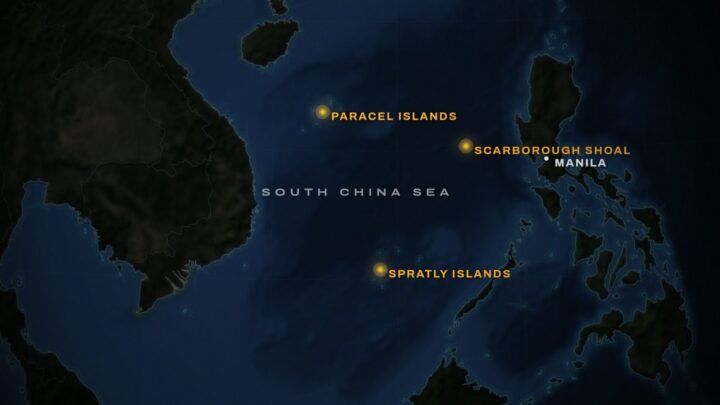
In 2023, Manila gave US forces access to four more sites under the Enhanced Defense Cooperation Agreement (EDCA). Three are in northern Luzon, facing the Luzon Strait. Beijing warned they could draw the Philippines into a Taiwan conflict. Manila also has its own quarrel with Beijing at sea, set out in our guide to the South China Sea dispute.
Will China invade Taiwan? The 2027 date, the drills and the strait
What does the 2027 date mean?
The year 2027 has three sources. In March 2021, Admiral Philip Davidson, then head of US Indo-Pacific Command, told senators the threat was “manifest during this decade, in fact in the next six years”. In February 2023, CIA Director William Burns said US intelligence knew Xi had told the People’s Liberation Army (PLA) to be ready by 2027 to invade successfully. He added a caveat:
Now, that does not mean that he’s decided to conduct an invasion in 2027 or any other year, but it’s a reminder of the seriousness of his focus and his ambition.
William Burns, CIA Director, February 2023
Burns also said Xi and his generals had doubts about whether an invasion would succeed. Third, the Pentagon’s annual China Military Power Report, released in late December 2025, judged that the PLA is still advancing towards Xi’s 2027 “Centennial Military Building Goal”, despite purges of its leaders. Analysts read it as a capability goal, not a date for war.
What do the drills around Taiwan show?
Since August 2022, the PLA has held a series of large exercises around Taiwan, from the Joint Sword drills of 2023 and 2024 to Strait Thunder-2025A in April 2025. Justice Mission-2025 covered a larger area than any of them, according to The Diplomat.
In the first 24 hours, Taiwan’s defence ministry counted 130 Chinese air sorties, 14 navy ships and 8 “official ships”. The PLA held about 10 hours of live fire, with rockets landing in waters north and south of the island, Reuters reported. Analysts quoted by Defense News saw a test run for a blockade. The drills came less than a fortnight after the US arms package.
As of 16 October 2026, the PLA has held no named large-scale exercise around Taiwan this year, the Taipei Times reports. Focus Taiwan notes there was at least one each year from 2023 to 2025. From 12 October, China held live-fire drills in five zones off its own coast, none of them around Taiwan. On 14 October, USNI News placed the carrier Liaoning in the Philippine Sea, east of Taiwan’s southern tip.
How hard would an invasion of Taiwan be?
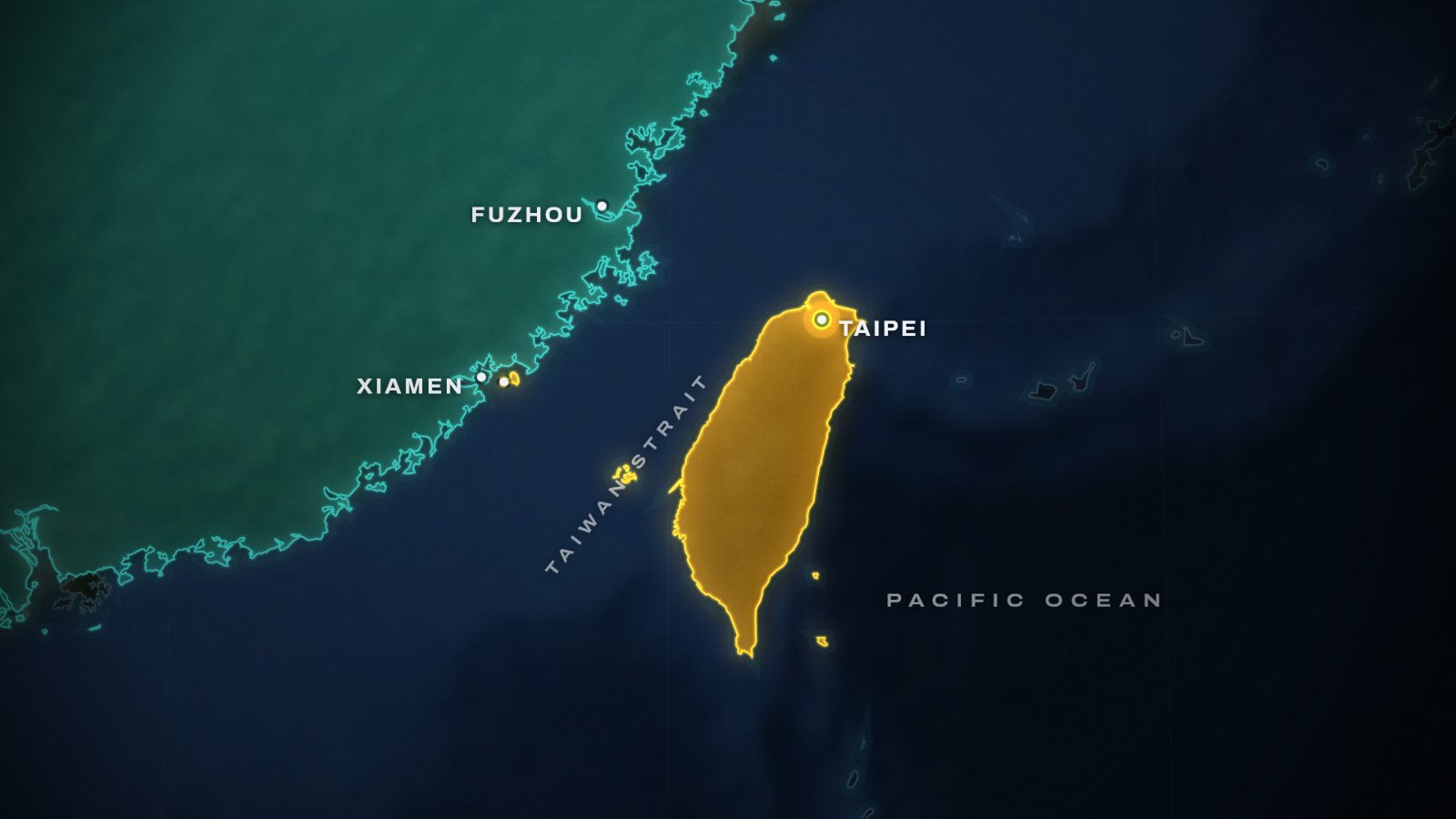
Very hard, according to the studies below. The Taiwan Strait is about 130 km wide at its narrowest, so an invasion fleet would spend many hours in open water. Weather narrows the options further. Ian Easton’s research on the invasion threat rates April and October as the best months; typhoons and monsoon winds make much of the rest of the year poor.
Better PLA capabilities may have eased some seasonal limits but have not removed the physical challenges, the analyst Christopher Sharman told The Star in August 2026.
In January 2023, the Center for Strategic and International Studies (CSIS) ran a wargame of a Chinese amphibious invasion 24 times. In most runs, the invasion failed. But the US and its allies lost dozens of ships, hundreds of aircraft and tens of thousands of service members. Taiwan’s economy was badly hurt, and China also lost heavily.
That is why many analysts now study a blockade as closely as an invasion.
What to watch next
- The autumn drill season. Taiwan’s defence ministry is watching for a large PLA exercise as the peak season approaches. Taiwan holds local elections in November 2026, and some analysts think Beijing may try to influence them.
- Washington’s wording. Watch the next US arms decisions and how the White House describes Taiwan after Xi’s September visit. Any shift on independence, from “not supporting” to “opposing”, would be a real signal.
- The 2027 benchmark. The Pentagon’s next report will judge whether the PLA is meeting its 2027 goal. Meeting it would mean a capability, not a decision for war.
For the wider picture, read more analysis on Asia-Pacific.
Frequently asked questions
Why does China want Taiwan so badly?
Beijing says Taiwan is an inalienable part of China, separated from the mainland since the civil war of 1949, and its 2005 Anti-Secession Law makes reunification a legal goal. Analysts add strategy: Taiwan sits in the middle of the first island chain that limits China’s navy, and it makes most of the world’s leading-edge chips.
Does China want Taiwan for its semiconductors?
Beijing’s main documents frame its claim as sovereignty and history, not chips. But the chips raise the stakes. TSMC held 72.5% of the global foundry market in mid-2026, according to TrendForce. Some analysts argue this “silicon shield” deters an attack, because a war would wreck the world’s chip supply and hurt China’s own economy.
Will China invade Taiwan in 2027?
Nobody outside Beijing’s leadership knows. In 2023, the CIA’s director said Xi had told the PLA to be ready to invade by 2027, but stressed that this did not mean he had decided to. The Pentagon treats 2027 as a capability goal. As of October 2026, no named large exercise had been held around Taiwan this year.
How far is Taiwan from mainland China?
The Taiwan Strait is about 130 km wide at its narrowest point. Two island groups that Taiwan controls, Kinmen and Matsu, lie just a few kilometres off the Chinese coast. Japan’s Yonaguni island is about 110 km from Taiwan, and the Bashi Channel towards the Philippines is about 140 km wide.
What is the difference between the one China policy and the one China principle?
Beijing’s one China principle says Taiwan is part of China and the PRC is China’s only legal government. Washington’s one China policy only “acknowledges” Beijing’s position. The US keeps unofficial ties with Taiwan, sells it defensive arms under the Taiwan Relations Act, and says it does not subscribe to Beijing’s principle.
Sources
- White Paper: The Taiwan Question and China's Reunification in the New Era
- The Taiwan Question and China's Reunification in the New Era (translation and notes)
- U.S.-Taiwan Relations in a New Era: Responding to a More Assertive China (Independent Task Force Report No. 81)
- Anti-Secession Law (Full text)
- Anti-Secession Law (translation with Chinese original)
- China-Taiwan relations (RL33510)
- Beijing intends to use non-peaceful means against Taiwan: MAC
- Position paper on UN General Assembly Resolution 2758
Show all 78 sources
- Letter dated 26 October 1971 from the Secretary-General (S/10378), reporting Resolution 2758 (XXVI)
- UN Res 2758 voted to admit Communist China
- Repertory of Practice of United Nations Organs, Supplement 5, Article 3
- Taiwan says China trying to create legal basis for attack with UN resolution interpretation
- EU says UN resolution only addressed China's representation
- Why China-Taiwan Relations Are So Tense
- History (Taiwan government portal)
- Taiwan - History
- Treaty of Shimonoseki: the political shift that reshaped Taiwan's future
- China's Xi says 'reunification' with Taiwan 'unstoppable'
- Xi says China's reunification is unstoppable
- China's leader warns Trump that differences over Taiwan could lead to a clash
- Xi Welcomes Trump, Says Taiwan Is Most Important Issue in US-China Ties
- Trump says China and Taiwan should 'both cool it'
- Repairing America's signaling on Taiwan
- To Strike a Deal With Xi, Trump Is Killing 'Strategic Ambiguity' Over Taiwan
- Losing the Ambiguity, Missing the Strategy: US Policy Towards Taiwan in Flux
- Ambiguity Under Pressure: Taiwan Before the Trump-Xi Summit
- Taiwan Relations Act, Public Law 96-8 (93 Stat. 14)
- Asia Fact Check Lab: Do all 'one-China' policies follow the one-China principle?
- U.S. gov't fact sheet removes line on not supporting Taiwanese independence
- US insists it does not support Taiwan independence after fact sheet change angers Beijing
- Davidson: China Could Try to Take Control of Taiwan In 'Next Six Years'
- CIA Director William Burns: 'I wouldn't underestimate' Xi's ambitions for Taiwan
- Latest Pentagon Report: China's Military Advancing Amid Churn
- Chinese military stages drills around Taiwan to warn 'external forces'
- China stages large-scale military drills around Taiwan
- China launches military drills around Taiwan after criticizing US arms sale
- Chinese drill near Taiwan seen as test run for blockade, message to US
- The PLA's 'Justice Mission-2025' Exercise Around Taiwan
- China's Taiwan Drills Are Crossing a New Line
- China fires several rockets around Taiwan during live military drills
- China Launches Blockade Drills Around Taiwan in Protest of U.S. Arms Sales
- Taiwan watches Chinese coastal live-fire drills as no-sail zones set
- Ministry on guard for PLA exercises
- Taiwan watching for large-scale PLA drills as peak season nears
- Taiwan monitoring Chinese live-fire drills off China's coast
- Taiwan Defense Minister Koo condemns China's live-fire drills in 5 sea areas
- Chinese Carrier Strike Group Heads to South China Sea After Philippine Sea Drills
- Taiwan 'preparing for the worst' as China begins live-fire drills
- The First Battle of the Next War: Wargaming a Chinese Invasion of Taiwan
- The Taiwan Strait: crucial waterway and military flashpoint
- The Taiwan Strait: a history of crises
- Taiwan Can Win a War With China
- How typhoons and extreme weather could undermine Taiwan Strait combat readiness
- Taiwan's submarine programme chief on targeting Chinese warships in the Bashi Channel
- The Island Chains: Borrowed Milestones, Operationalized
- TrendForce foundry ranking, 2Q26
- SMIC narrows gap with Samsung as global foundry revenue hits record $53.49 billion
- Taiwan Reports Record-Breaking 2025 Exports, Surpassing Singapore
- US jobs rely on Taiwan's security
- Silicon shield holds strong: Taiwan set to dominate AI chip supply for years
- Taiwan's 2025 GDP grows at fastest pace in 15 years
- How Long Can Taiwan Ride the AI Wave?
- Opposition to unification keeps growing, poll shows
- Poll shows 61% of Taiwanese reject unification with China
- Taiwanese / Chinese Identity (trend data)
- Taiwan's preference for status quo with China continues to rise
- Key Taiwan poll on identity is misleading, mainland researcher says
- China says Taiwan president Lai 'hell bent' on independence
- Reading Lai Ching-te's National Day speech and its implications for cross-strait relations
- China urges Japanese leader to retract 'egregious' remarks on Taiwan
- Why Japan's new warning on Taiwan has Beijing outraged
- Japan intends to boost defence capabilities on Yonaguni Island off Okinawa
- Japan to Deploy Missile Unit on Yonaguni Island in FY 2030
- Japan's Yonaguni missile deployment plan
- PBBM: PH can't stay out of Taiwan conflict due to proximity, OFWs
- Marcos says Philippines would be dragged into Taiwan war
- INDOPACOM CO Tours EDCA Sites in Visit to the Philippines
- China: New EDCA sites may draw Philippines into Taiwan conflict
Facts as of 16 October 2026. Spotted a mistake? Tell us, and we will correct it.