Americas Analysis Episode 30
Venezuela After Maduro: Who Runs It Now?
In January, American forces captured Nicolás Maduro. Nine months later, his own deputy runs Venezuela with Washington's backing, the oil money flows through US-controlled accounts, and no election date has been set.
In short
- US forces captured Nicolás Maduro in Caracas on 3 January 2026; he is in jail in New York, has pleaded not guilty and faces trial in June 2027.
- His vice president, Delcy Rodríguez, has run Venezuela as acting president since that day, and President Trump calls her a partner.
- Since January, the United States has controlled the sale of Venezuela's oil, and the money goes into accounts Washington controls.
- In March, Rodríguez replaced the defence minister, the head of the armed forces and every branch commander, but the new men are insiders of the movement Hugo Chávez founded.
- As of 19 October 2026, no election date has been set, and the opposition leader, Nobel laureate María Corina Machado, is still abroad.
In this analysis 8 sections
- 01How did the US capture Maduro?
- 02Who runs Venezuela now, and why his deputy?
- 03Who holds power in Caracas? The new power map
- 04Venezuela after Maduro: who controls the oil money?
- 05What does each side get from the deal?
- 06Will Venezuela hold elections?
- 07What to watch next
- 08Frequently asked questions
On the night of 2 to 3 January 2026, more than 150 American aircraft launched from 20 bases on land and at sea. In Caracas, US special forces stormed a heavily guarded compound and seized President Nicolás Maduro and his wife, Cilia Flores. Within hours, they were on an American warship, bound for a jail cell in New York.
Nine months on, the man is gone but his government is not. His own vice president runs Venezuela after Maduro, as acting president, and President Donald Trump calls her a partner. So who really holds power in Caracas, why did Washington keep Maduro’s state, and will Venezuelans get to choose?
How did the US capture Maduro?
In August 2025, Washington raised its reward for Maduro’s arrest to $50 million. It accuses him of leading a drug-trafficking network from inside the state. He denies it.
Through the autumn of 2025, the United States gathered a large naval force in the Caribbean. Then, on 3 January, it came for the man himself. By the American account, Maduro had about three minutes’ warning.
US officials say seven Americans were injured and none died. They put the dead in Venezuela at about 75. Cuba says 32 of its personnel died.
Two days later, in a Manhattan courtroom, Maduro pleaded not guilty to narco-terrorism, drug and weapons charges. He told the judge he was still his country’s president. On 15 October, he and his wife also pleaded not guilty to a new count of conspiracy to commit torture.
Russia called the raid “armed aggression”, and Venezuela’s Supreme Court spoke of a military aggression. Washington calls it an arrest. Either way, taking away one man is not the same as changing a government.
Who runs Venezuela now, and why his deputy?
On the day of the raid, the Supreme Court’s constitutional chamber ordered the vice president, Delcy Rodríguez, to serve as acting president. It cited Maduro’s “forced absence”. Two days later, the National Assembly swore her in.
At first, she stood by her old boss. “There is only one president in this country, and his name is Nicolás Maduro,” she said on state television. In Florida, however, Trump drew a different picture:
We’re going to run the country until such time as we can do a safe, proper and judicious transition.
Donald Trump, 3 January 2026
Trump also passed over the opposition. Its leader, María Corina Machado, lacked “the support or the respect” within the country to lead, he said.
Why keep the old government’s number two?
Look at who holds the guns. Hugo Chávez took office in February 1999. Over almost 27 years, he and Maduro shaped the army, the police and the intelligence services. So Washington chose to work with the people already in charge.
Secretary of State Marco Rubio set out three phases: stabilisation, then recovery and reconciliation, then a transition.
Her legal footing remains in dispute. The constitution allows a temporary absence of 90 days, plus 90 more if the Assembly agrees. The first 90 days ran out in early April with no public vote to extend them, AP reported. Critics argue that “forced absence” appears nowhere in the constitution. Still, in mid-October, she held the post.
Who holds power in Caracas? The new power map
At the top sit a sister and a brother. Delcy Rodríguez runs the government. Her brother, Jorge Rodríguez, runs the National Assembly and leads the government’s side in talks with the opposition. Between them, they hold the presidency and the parliament.
Then there is Diosdado Cabello, the interior minister, in charge of the police. Washington still offers up to $25 million for information leading to his arrest or conviction. He denies the charges against him.
On 18 March, Rodríguez replaced the defence minister, Vladimir Padrino López, after more than 11 years in the job. Within days, a new head of the armed forces and new branch commanders followed.
The new defence minister, Gustavo González López, once ran SEBIN, the intelligence service. He is an insider of the movement Chávez founded, and he is under US sanctions. So Venezuela after Maduro has a new leader on top of the same system.
| Who | Role now | What to know |
|---|---|---|
| Delcy Rodríguez | Acting president since 3 January 2026 | Off the US sanctions list since 1 April 2026 |
| Jorge Rodríguez | President of the National Assembly | Leads the government’s side in the talks; off the US sanctions list since 14 October 2026 |
| Diosdado Cabello | Interior minister | US reward of up to $25 million; denies the charges |
| Gustavo González López | Defence minister since 18 March 2026 | Former intelligence chief; under US sanctions |
| María Corina Machado | Opposition leader | 2025 Nobel Peace Prize; abroad since December 2025 |
| Edmundo González | Opposition candidate in 2024 | In exile in Spain |
Venezuela after Maduro: who controls the oil money?
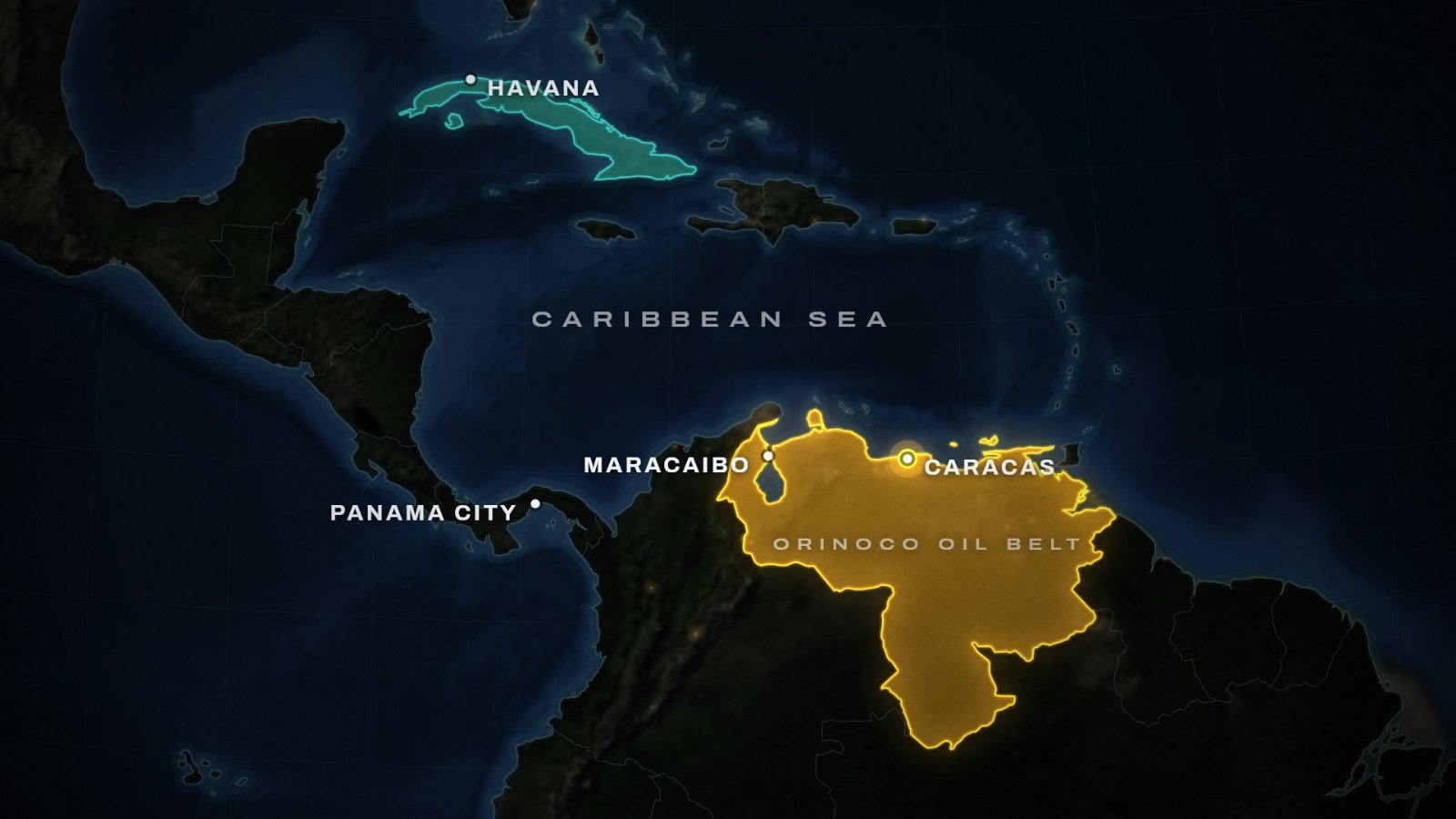
What holds this arrangement together is money. Venezuela has about 303 billion barrels of proven oil reserves, the largest on Earth, according to OPEC’s statistical bulletin. Most of it, though, is extra-heavy crude in the Orinoco belt, says the US Energy Information Administration.
In the late 1990s, Venezuela pumped more than 3 million barrels a day. By June 2020, output had fallen to about 356,000, by OPEC’s count. Caracas blames US sanctions; Washington blames mismanagement. In September 2026, the country pumped about 1.15 million barrels a day, roughly as much as North Dakota.
| Venezuela’s oil | Figure | As of |
|---|---|---|
| Proven reserves | about 303 billion barrels, the world’s largest | OPEC, April 2026 |
| Output at the low point | about 356,000 barrels a day | June 2020 |
| Output now | about 1.15 million barrels a day | September 2026 |
Who sells the oil now?
Since January, the United States has controlled the sale of Venezuela’s oil. Energy Secretary Chris Wright said it would do so “indefinitely”. An executive order of 9 January keeps the proceeds in US Treasury accounts as Venezuelan state property, out of creditors’ reach.
By late July, Trump said more than $13 billion worth had been sold. But there is no full public account. The State Department told Congress in April that about $3 billion had been paid out. In September, Senate Democrats demanded an accounting.
The buyers have changed too. In 2025, about three quarters of Venezuela’s oil exports went to China. In September 2026, the United States took about 629,000 of the 1.08 million barrels a day exported, more than any other buyer. Part of the pull is the war with Iran, which has cut the Gulf’s supply of heavy crude and largely shut the Strait of Hormuz.
Cuba lost its Venezuelan oil: about 26,500 barrels a day in 2025, roughly a third of the island’s needs, Reuters reported.
The hundred-year deal
Washington wants more than the sales. On 28 August, Trump announced a deal: 17 oil fields, with an estimated 65 billion barrels, go to a new US-backed venture on 100-year concessions. The United States gets the right to buy 20% of the output at cost, officials said. A reported 35% stake for a Pentagon investment office remains in dispute, because a Pentagon spokesperson told Reuters the office takes no such stakes.
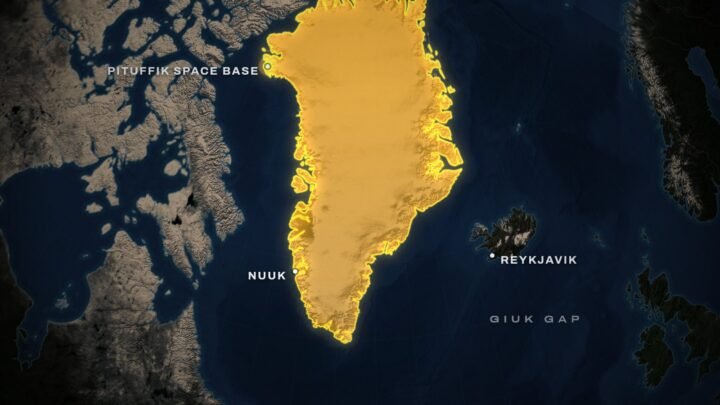
Chinese and Russian companies once held some of those fields, according to Transparencia Venezuela, citing Reuters. The pattern echoes Washington’s approach to Greenland: more access and control, without a change of flag.
What does each side get from the deal?
The arrangement works because each side needs the other.
What Washington wants
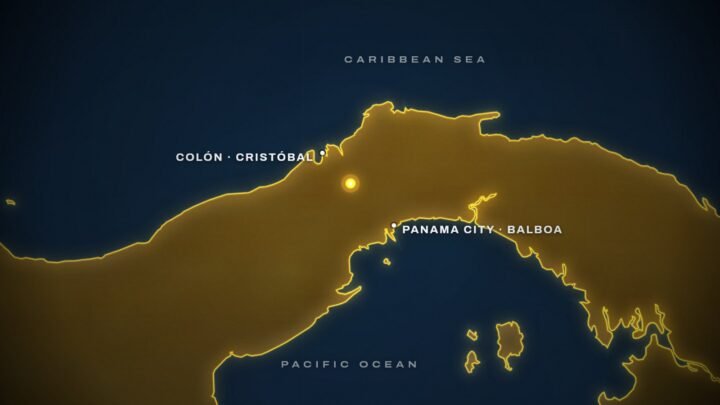
For now, Washington needs someone who can keep order, keep the oil flowing and keep Russia, China and Iran out. In January, it reportedly demanded that Caracas cut its ties with all three, and with Cuba. The same push against China’s footprint in the hemisphere lies behind Trump’s pressure over the Panama Canal.
Washington also says the goal is a real transition. In June, Rubio told Congress that this needs free and fair elections and a new electoral commission, set up “as soon as possible”.
What Caracas gets
Rodríguez gets money and recognition. In March, at a summit at his Doral club in Florida, Trump said the United States formally recognised her government. “She’s doing an excellent job partnering with us,” he said.
Then, name by name, the sanctions came off. The US Treasury took Delcy Rodríguez off its sanctions list on 1 April. On 14 October, it did the same for her brother.
Under US pressure, Caracas has given ground too. On 19 February, the Assembly unanimously passed an amnesty law. It excludes crimes such as murder and drug trafficking, and freed prisoners face gag orders and travel limits. A government commission said in February that more than 3,200 people had been “fully released”, a count that includes people who had been under house arrest. Foro Penal, a rights group, counted 894 releases by mid-June.
Cuban security advisers began to leave in February. In March, the American flag rose again over the US embassy in Caracas, seven years to the day after it came down.
The earthquakes
Then the ground itself moved. On 24 June, two earthquakes, of magnitude 7.2 and 7.5, struck north-central Venezuela about 40 seconds apart. By August, the official death toll had passed 6,000. The World Bank put direct physical damage at $19.6 billion. Rebuilding now competes with the transition for money and attention.
In September, during UN week in New York, Trump and Rodríguez met briefly. She called it “historic”. The partnership holds, but one group has never had a say in it: Venezuela’s voters.
Will Venezuela hold elections?
The disputed 2024 vote
In July 2024, Venezuela held a presidential election. The electoral council declared Maduro the winner with 51.95%, but it never published a detailed count. The tally sheets that opposition witnesses collected at polling stations showed their candidate, Edmundo González, winning about two thirds. Observers from the Carter Center backed those sheets. González now lives in exile in Spain.
Machado’s blocked return
Machado, the opposition’s leader, won the Nobel Peace Prize in 2025. In January, at the White House, she handed her Nobel medal to Trump. The Nobel committee says the prize itself cannot pass to anyone else.
Her team says at least seven attempts to return have failed, three of them from Panama on 21 and 22 September. She blames the government in Caracas, which denies blocking her. The Telegraph and The Washington Post reported that the White House discouraged a June attempt; Rubio denies that Washington stands in her way. On 18 October, Al Jazeera reported that the opposition alliance had renewed its backing for her as leader.
Polls, prisoners and talks
AtlasIntel’s latest online poll for Bloomberg puts Machado at 52% and Rodríguez at 19%. Online polls, however, tend to miss rural, older and poorer voters. In early October, Foro Penal counted 322 political prisoners: 182 civilians and 140 members of the military.
On 14 October, a third round of US-backed talks opened in a Caracas hotel. Jorge Rodríguez leads the government’s side. Dinorah Figuera, who heads the opposition-elected National Assembly of 2015, leads the other. Machado and González are not at the table. On the agenda: new Supreme Court judges, the electoral council and the rules for the next election. By 17 October, no agreement had been reported.
What still has not been set is a date. At the UN in September, Rodríguez promised elections as part of a transition to “full democracy”, but she gave no timetable, Reuters reported. Phil Gunson of the International Crisis Group noted that the constitution sets the next vote for 2030. The government, he added, has not committed to the 2027 vote the opposition wants. Machado and many others, he noted, remain barred from standing.
What to watch next
- The courts. Maduro’s lawyers argue that, as a head of state, he is immune. Judge Hellerstein is due to hear that argument before the trial, which is set for June 2027. In September, Reuters reported a hearing date of 17 November; later reports differ.
- The talks. A new electoral council and an election date would be the first firm steps towards a vote since the disputed election of 2024.
- The men with guns. If the security chiefs feel squeezed out, the deal could crack from the inside.
- The money. Watch for a public account of the oil revenue, and for the restructuring of a debt that S&P Global puts at $150 billion to $200 billion.
Maduro is gone. But in Venezuela after Maduro, the state he built still governs, and the money runs through Washington.
Read more analysis on the Americas.
Frequently asked questions
Who is running Venezuela now?
After Maduro’s capture on 3 January 2026, Delcy Rodríguez, his vice president, became Venezuela’s acting president. She still holds the post. Her brother Jorge leads the National Assembly. Washington recognises her government and controls the sale of Venezuela’s oil. As of 19 October 2026, no date has been set for a presidential election.
Where is Maduro now?
Nicolás Maduro is in jail in New York. US forces captured him and his wife, Cilia Flores, in Caracas on 3 January 2026. Both have pleaded not guilty to the charges, which include narco-terrorism, drug and weapons counts and, since October, conspiracy to commit torture. Their trial is set for June 2027, before Judge Alvin Hellerstein.
Why does the US want Venezuela?
Washington’s stated reasons include the drug case against Maduro, who denies the charges, and pushing Russia, China and Iran out of the country. Oil matters too. Venezuela has about 303 billion barrels of proven reserves, the world’s largest, and the United States has controlled the sale of its oil since January 2026.
When is Maduro’s trial?
The trial in New York is set for June 2027, before Judge Alvin Hellerstein; reports give 1 June or 14 June. Before then, the judge is due to hear the defence’s argument that Maduro is immune from prosecution as a head of state. Maduro and his wife have pleaded not guilty to every charge, and trial dates can still move.
Will Venezuela hold elections?
Acting president Delcy Rodríguez has promised elections but set no date. A third round of US-backed talks with part of the opposition began in Caracas on 14 October 2026, covering the electoral council and the Supreme Court. Under the constitution, the next vote is due in 2030, a Crisis Group analyst notes; the opposition wants one in 2027.
Watch the video
Venezuela After Maduro: Who Runs It Now?
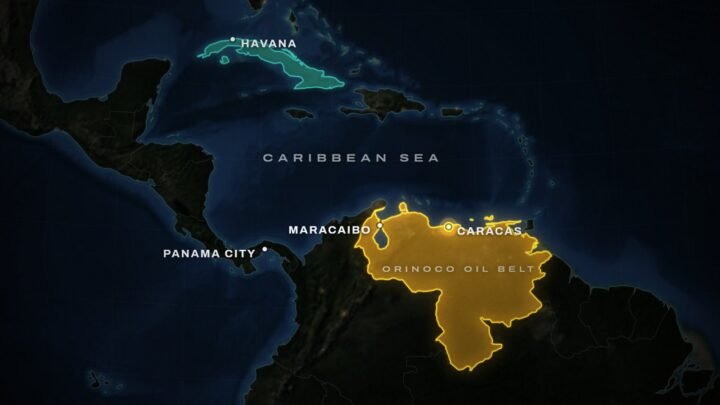
The video loads from YouTube in privacy-enhanced mode, only when you press play.
Sources
- US military operation in Venezuela: details from Gen. Dan Caine
- U.S. officials reveal new details on the covert operation to capture Maduro
- After capture and removal, Venezuela's Maduro is being held in notorious Brooklyn jail (AP)
- Reward of up to $50 million for Nicolás Maduro
- Justice Department unseals superseding indictment in Maduro case
- Timeline: US military ramp-up in the Caribbean culminates in capture of Maduro
- US injuries and casualties in the Venezuela operation
- Death toll from the Maduro raid
Show all 99 sources
- Cuba says 32 Cubans killed during US raids on Venezuela
- Maduro and his wife appear in Manhattan federal court
- Judge Alvin Hellerstein, 92, takes the Maduro case
- Venezuela's Maduro pleads not guilty to US conspiracy to torture charges
- Maduro, wife plead not guilty (Reuters)
- US judge sets June 2027 trial date for Venezuela's Maduro (Reuters)
- Venezuela's Maduro asserts immunity, asks US judge to dismiss charges (Reuters)
- Russia calls US military action in Venezuela 'armed aggression'
- Venezuela, Maduro and Trump: live updates
- Venezuela court orders Rodriguez as interim president
- Maduro capture: Delcy Rodríguez says there is only one president
- Trump's press conference on Venezuela and Maduro (NPR)
- Trump: Nobel laureate Machado doesn't have support or respect to run Venezuela (Reuters)
- Rubio unveils three-phase plan for Venezuela
- Venezuela's Delcy Rodríguez remains acting president after her initial 90-day appointment expired (AP)
- Venezuelans should be talking about elections right now (opinion)
- Hugo Chávez
- Parlamento de Venezuela reelige a Jorge Rodríguez, hermano de la presidenta interina
- El Tesoro de EE.UU. retira sanciones a Jorge Rodríguez
- ¿Sigue la recompensa por Diosdado Cabello? EE. UU. responde
- US keeps Cabello reward
- Venezuela acting president replaces long-time defense minister (Reuters)
- Delcy Rodriguez replaces Venezuela's Defence Minister Vladimir Padrino
- Venezuela's acting president replaces long-time defense minister
- Delcy Rodríguez renews Venezuela's military high command following Padrino's ouster
- Annual Statistical Bulletin 2026
- Venezuela: country analysis
- Venezuelan oil production in the late 1990s
- Venezuela's oil output falls to 356,000 barrels a day in June 2020, per OPEC (Reuters)
- Venezuela oil output in September 2026, per OPEC
- North Dakota oil production up 2,000 bpd in July vs June to 1,157,000 bpd (Reuters)
- US says it will control Venezuelan oil sales 'indefinitely'
- New executive order shields Venezuelan oil revenue in US government custody
- Venezuela oil sales move from Qatar to a US Treasury account, Wright says
- Trump says US has sold more than $13 billion of Venezuela oil
- Trump says U.S. has sold more than $13 billion of Venezuela oil since Maduro's capture (Reuters)
- Where did Venezuela's $13 billion oil money go? Senate Democrats want answers
- Democrats demand to know where Venezuelan oil revenue is going
- Venezuelan oil exports to China set to drop as US blockade limits cargoes (Reuters)
- Venezuela oil exports drop 9%
- Venezuela oil exports fall to 1.08 million bpd in September (Reuters)
- Venezuelan crude fills the feedstock gap left by Middle Eastern disruption
- Clock ticks in Cuba as Trump cuts off Venezuelan oil (Reuters)
- Trump announces deal with Venezuela to secure more than 65 billion barrels of oil reserves
- Trump's Venezuela oil deal
- Relations with China, Russia and Iran 2025-2026: were authoritarian allies driven out of Venezuela?
- Trump's oil demands on Venezuela
- Rubio: a new electoral commission for Venezuela as soon as possible
- 'Cuba will fall very soon,' says Trump as Shield of the Americas alliance created
- Shield of the Americas summit transcript
- US lifts sanctions on Venezuela's president Delcy Rodríguez
- Recent actions, 14 October 2026
- US lifts sanctions on Venezuela's National Assembly head (Reuters)
- Venezuela approves amnesty that may release hundreds detained for political reasons
- Venezuela passes amnesty law for political prisoners
- Venezuela reports over 3,200 people fully released under new amnesty law
- Foro Penal: excarcelaciones de presos políticos
- Cuban security forces exit Venezuela (Reuters)
- Venezuela: Political Transition and U.S. Policy (R49186)
- US embassy in Venezuela reopens as Trump pushes for access to resources
- 2 major earthquakes strike northern Venezuela near Caracas
- Death toll from Venezuela earthquakes passes 6,000
- Venezuela Earthquake Update: Magnitude 7.5 and 7.2 Quakes
- Venezuela quakes caused $19.6 billion in damage, World Bank report shows (Reuters)
- World Bank Group estimates Venezuela earthquakes damage
- UN General Assembly: live news
- UN panel of electoral experts on Venezuela's election (report)
- Elecciones en Venezuela: el comunicado del Centro Carter
- Venezuela opposition data against Maduro's election win
- Crisis venezolana: España y el exilio de Edmundo González
- Venezuela's Machado leaves Oslo after trip to receive Nobel Peace Prize
- Venezuela's María Corina Machado meets Trump at the White House
- Venezuela's Machado blocked from entering the country
- Machado's team says three attempts to return to Venezuela failed in 24 hours
- Chavismo niega que esté impidiendo el regreso de María Corina Machado
- Machado's return blocked: she blames the interim government
- Machado's return from exile thwarted by White House (The Telegraph)
- Rubio rejects claims the US is blocking Machado from returning to Venezuela
- Venezuelans rally for opposition leader's return and presidential elections
- Venezuela opposition renews support for María Corina Machado as leader
- Machado leads poll as talks on Venezuela resume (AtlasIntel)
- María Corina Machado leads Delcy Rodríguez in poll (Bloomberg)
- Delcy's approval is already slipping
- Foro Penal contabiliza 322 presos políticos en Venezuela
- Foro Penal contabiliza 322 presos políticos en Venezuela
- Venezuela government and opposition hold third round of US-sponsored transition talks (AFP)
- Gobierno y oposición de Venezuela retoman el diálogo con las elecciones como tema central
- Oposición venezolana en el diálogo evalúa con abogados la transformación del sistema judicial
- Venezuela's Rodriguez promises elections in transition to 'full democracy' (Reuters)
- Venezuela's Rodriguez promises elections to transition to 'full democracy' (Reuters)
- Venezuela debt restructuring may take years
Facts as of 19 October 2026. Spotted a mistake? Tell us, and we will correct it.