Africa Analysis
Sudan’s War Explained: Who Is Fighting and Why
Since April 2023, Sudan's army and the paramilitary Rapid Support Forces have fought for control of the country. Here is who they are, how the war began, who backs each side and why every truce has failed.

In short
- The war began on 15 April 2023 between the Sudanese Armed Forces under Gen. Abdel Fattah al-Burhan and the Rapid Support Forces (RSF) under Mohamed Hamdan Dagalo, known as Hemedti.
- The army said it retook Khartoum's Republican Palace on 21 March 2025, and on 11 January 2026 the army-backed government announced its return from Port Sudan to Khartoum.
- The RSF took El Fasher, the army's last major stronghold in Darfur, in October 2025; its alliance announced a parallel government in July 2025.
- As of September 2026, IOM counted about 8.6 million people still displaced inside Sudan; UNHCR counted 4.3 million Sudanese refugees in the region in February 2026.
- In January 2025 the US determined that members of the RSF and allied militias had committed genocide; the RSF denies harming civilians.
In this analysis 8 sections
On 15 April 2023, fighting broke out in Khartoum, the capital of Sudan. The national army and the country’s most powerful paramilitary force, partners in power until then, turned their guns on each other. Three years on, the war has spread to Darfur, Kordofan and beyond. The UN refugee agency calls it the world’s largest displacement crisis.
So here is Sudan’s war explained: who is fighting, how a quarrel between two generals became a national war, who backs each side from abroad, and why every truce has failed so far.
Sudan war explained: who is fighting whom?
Two armed forces are at war. On one side stands the Sudanese Armed Forces (SAF), the national army. Its commander, Gen. Abdel Fattah al-Burhan, has been Sudan’s de facto ruler since a coup in October 2021. A government named by the army, under Prime Minister Kamil Idris, runs the areas it holds.
On the other side stands the Rapid Support Forces (RSF), a paramilitary force led by Mohamed Hamdan Dagalo, known as Hemedti. According to a BBC profile, he made his money selling camels and gold. Among his allies is the SPLM-N faction of Abdelaziz al-Hilu, an armed movement.
What does each side say it is fighting for?
The army presents itself as the defender of the Sudanese state. In its account, the RSF attacked Burhan’s residence on 15 April 2023 in a planned bid to seize power.
The RSF tells a different story. Before the war, it wanted to answer to a civilian prime minister rather than to the army’s generals. Since July 2025, it has also set up a rival government of its own. So each side presents itself as Sudan’s rightful authority and the other as the threat.
Why did the war in Sudan start?
From the Janjaweed to the RSF
The roots of the RSF lie in Darfur, in western Sudan. In the early 2000s, Omar al-Bashir’s government armed Arab militias, known as the Janjaweed, to crush a rebellion there. Then, in 2013, Bashir turned these fighters into the RSF, with Hemedti in charge. It became one of several forces he balanced against each other.
Still, some scholars warn against reading the war through the Janjaweed story alone. Writing in The Conversation, one analyst argued that the RSF grew out of a long history of state violence, exclusion and opportunism in Sudan.
Two generals and one army
In 2019, a popular uprising ended Bashir’s 30-year rule, and a transitional government took over. Then, in October 2021, Burhan and Hemedti staged a coup together.
On 5 December 2022, Sudan’s leaders signed a framework agreement. It promised a civilian-led transition and one national army, with the RSF folded into it. However, it left the hardest questions open.
First, how fast should the merger happen? By most accounts, the army wanted it done in about two years, and the RSF in ten. Second, who would command? The army wanted every armed group under its Joint Chiefs of Staff, while the RSF wanted to answer to a civilian prime minister. Rivalry over Sudan’s gold sector added to the strain, analysts say.
Tensions boiled over when the RSF moved forces around the country, including into Khartoum, without the army’s permission. On 15 April 2023, the fighting began in the capital and soon spread.
Sudan war timeline: how has the map changed?
Khartoum and Port Sudan
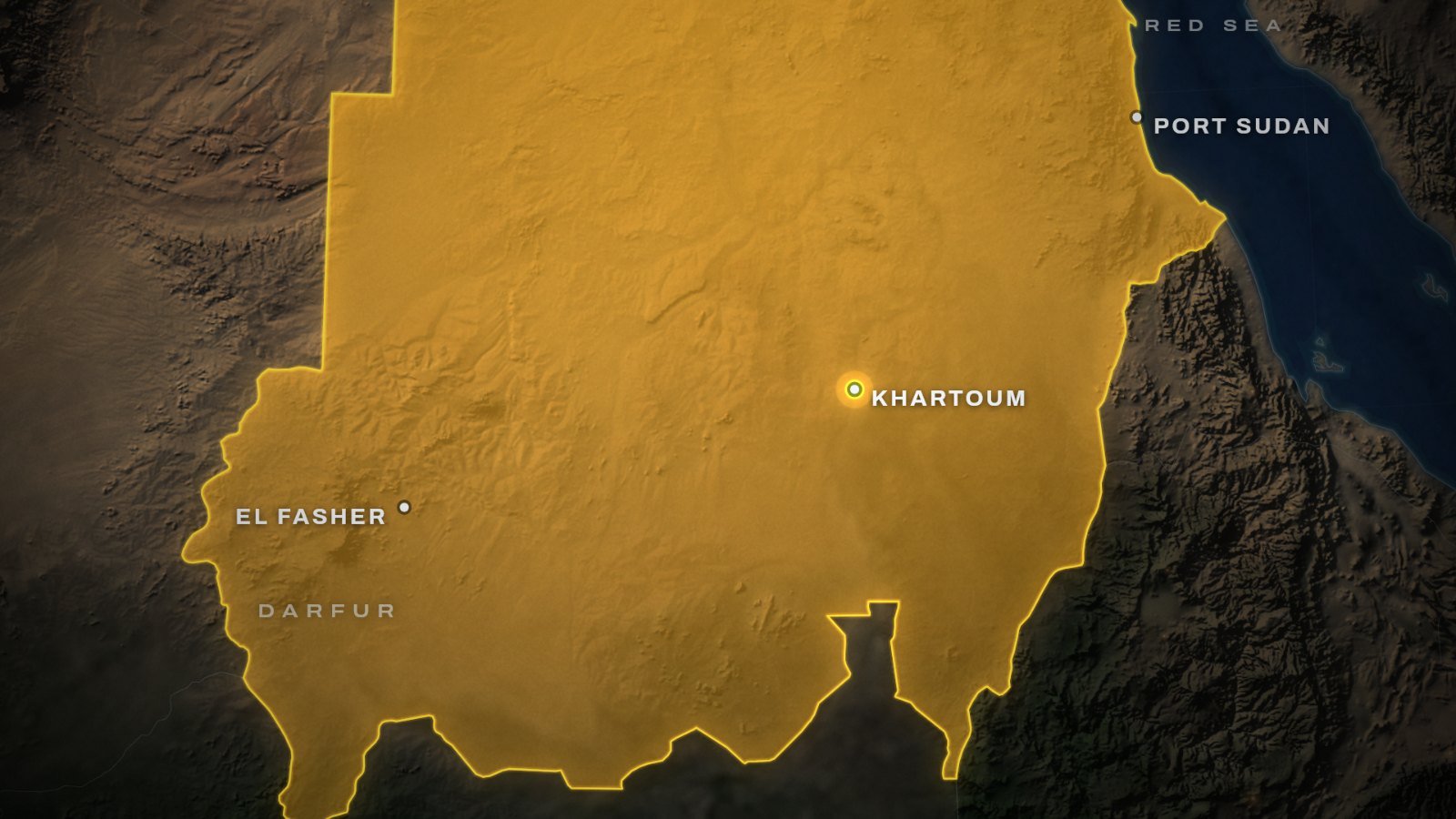
The RSF soon held parts of Khartoum, including the Republican Palace, the seat of government. So the army-backed government moved to Port Sudan, on the Red Sea, which became its wartime capital.
The tide turned in 2025. On 21 March, the army said it had retaken the palace. Then, on 20 May, it declared the whole of Khartoum state, including Omdurman and Khartoum North, free of the RSF. Finally, on 11 January 2026, Prime Minister Kamil Idris announced that his government had returned to Khartoum from Port Sudan.
Darfur and El Fasher
In the west, the balance went the other way. From May 2024, the RSF besieged El Fasher, the capital of North Darfur and the army’s last major foothold in the region.
On 26 October 2025, the RSF said it had taken the army’s base there. Burhan then announced that the army had withdrawn from the city. On 27 October, the UN human rights office said it had received reports of summary executions of civilians trying to flee. The RSF denied killing civilians, Al Jazeera reported.
Two rival governments
Meanwhile, the RSF built a state of its own. On 26 July 2025, its alliance, called Tasis, announced a parallel government from Nyala, in Darfur. Hemedti heads its 15-member presidential council, with al-Hilu as his deputy, and its prime minister is Mohamed Hassan al-Taishi. The UN, the US and the African Union warned that the move could lead to partition.
Kordofan and the latest fighting
Since late 2025, much of the fighting has shifted to Kordofan, east of Darfur. In December 2025, the RSF took Babanusa, in West Kordofan. Then, on 26 January 2026, the army said it had broken the RSF’s siege of Dilling, in South Kordofan.
Now El Obeid, the capital of North Kordofan, is the prize. The army holds the city and the road to Khartoum. In October 2026, Security Council Report described siege-like conditions there, with repeated RSF drone strikes. In August, IOM said fighting had newly displaced more than 200,000 people across Kordofan.
On 4 October 2026, the US senior adviser Massad Boulos and Burhan attended a lunch hosted by Egypt’s President Abdel Fattah al-Sisi in New Alamein. The National called it a rare public encounter, although Boulos did not describe it as a formal meeting. According to AP, the army-led government had resisted a US proposal for a 90-day humanitarian ceasefire, followed by political talks. Sudan says it did not reject the plan but sent comments on it.
| Date | What happened |
|---|---|
| 15 April 2023 | Fighting breaks out in Khartoum between the army and the RSF |
| May 2023 | Both sides sign the Jeddah Declaration, sponsored by the US and Saudi Arabia |
| 21 March 2025 | The army says it has retaken the Republican Palace in Khartoum |
| 20 May 2025 | The army declares Khartoum state free of the RSF |
| 26 July 2025 | The RSF-led Tasis alliance announces a parallel government |
| September 2025 | The Quad (US, Saudi Arabia, UAE, Egypt) proposes a roadmap to peace |
| 26 October 2025 | The RSF takes the army’s base in El Fasher |
| December 2025 | The RSF takes Babanusa in West Kordofan |
| 11 January 2026 | The government announces its return to Khartoum |
| 4 October 2026 | Sudan signs the Alamein Declaration; US adviser Massad Boulos and Burhan meet at a lunch in Egypt |
Who is backing whom in Sudan’s war?
Foreign powers are deeply involved, but most deny any role. So every claim below is attributed.
The UAE and the RSF
The UAE is the most-cited alleged backer of the RSF. According to Reuters, a UN panel of experts found such accusations credible. In January 2025, the US sanctioned seven RSF-owned companies in the UAE over their part in buying weapons. The UAE denies arming the RSF and says it supports neither side.
Sudan’s army-backed government took the UAE to the International Court of Justice, alleging complicity in genocide. On 5 May 2025, the court dismissed the case for lack of jurisdiction, a procedural ruling that did not judge the accusations themselves. That day, a senior UAE official, Reem Ketait, said the ruling showed the case was “utterly baseless”. Sudan said it would pursue other legal routes.
Egypt, Turkey and others on the army’s side
Egypt is the army’s most consistently named ally, and reports also list Saudi Arabia and Turkey among Burhan’s supporters. According to Reuters, satellite images suggest that Turkish-built drones operated from an airport in south-western Egypt. Reuters could not verify the accounts, and neither Egypt nor Turkey commented publicly.
Turkey’s ties with Sudan are older: in 2017, Sudan handed Turkey the old Ottoman port of Suakin to restore, as our article on why Turkey wants Somalia explains. Reports since late 2023 also say the army has used Iranian-made drones. Sudan’s acting foreign minister denied receiving weapons from Iran.
Ethiopia and the Red Sea neighbours
Sudan also accuses Ethiopia of backing the RSF. In March 2026, its government alleged that drone attacks had come “from Ethiopian territory”. Ethiopia denies it and accuses Sudan of backing Tigray’s rebels. Our Ethiopia war explained article shows how that quarrel feeds into Sudan’s war.
On 4 October 2026, Sudan signed the Alamein Declaration with Egypt, Eritrea and Somalia. It says Red Sea security belongs to the coastal states, as our article on why everyone suddenly wants Eritrea explains.
Why has every ceasefire failed?
Jeddah, Geneva and the Quad
Talks began within weeks. In May 2023, the US and Saudi Arabia brought both sides to Jeddah, where they signed a declaration that committed them to protect civilians. A 7-day ceasefire followed on 20 May, but it broke down within a day. In August 2024, talks opened in Geneva, but the army stayed away. It said the Jeddah terms had to come first.
In September 2025, the US, Saudi Arabia, the UAE and Egypt, known as the Quad, set out a roadmap. It called for a humanitarian truce, then a permanent ceasefire and a nine-month transition to civilian-led rule.
On 6 November 2025, the RSF said it accepted the truce. In late November, however, Burhan rejected the latest US-drafted plan, calling it “the worst yet”, according to AP. He accused the UAE of shaping it, which Boulos denied. A day later, Hemedti announced a three-month truce of his own. In February 2026, Boulos said the Quad had a peace document both sides could accept. Still, no ceasefire followed.
Why does each side keep fighting?
Security Council Report points to increasingly entrenched positions, and each side’s strategy helps explain them. The army has momentum in the centre: it holds Khartoum, has brought its government home and is trying to push west. It describes the RSF’s revolt as a bid to seize power, and it objects to the UAE’s seat at the table.
The RSF holds most of Darfur. Its drones strike army-held cities such as El Obeid, and its rival government gives it a political claim. By accepting the Quad’s truce, it cast itself as the side ready to stop, although attacks on army-held cities followed within hours, according to reports.
The mediators disagree too. In October 2026, Security Council Report said Saudi Arabia had objected to what it saw as US favouritism towards the UAE, and to wording that treated the army and the RSF as equals. In short, Sudan’s war is best explained as a deadlock: each side still appears to expect more from fighting than from signing.
How bad is the humanitarian crisis in Sudan?
How many people have died or fled?
Nobody knows how many people have died. ACLED, a conflict monitor, recorded close to 19,000 deaths from direct political violence between April 2023 and April 2024. However, it counts only deaths caused directly by violence, and where reports differ, it takes the lower number. Estimates that also include deaths from hunger and disease, such as one by researchers at the University of California, Berkeley, run much higher.
As of 22 September 2026, IOM counted about 8.6 million people still displaced inside Sudan. More than 5.1 million had gone home, though IOM had warned in April 2026 that returns were at risk. In February 2026, UNHCR counted 4.3 million Sudanese refugees in the region, most of them in Egypt and eastern Chad.
Is there famine in Sudan?
In November 2025, the IPC’s Famine Review Committee confirmed famine in El Fasher and Kadugli. By its count, 21.2 million people, 45% of the population, faced high levels of acute food insecurity in September 2025.
The IPC’s analysis of May 2026 put that figure at 19.5 million, or 41%, for February to May 2026. It found no area in famine at that point, but it judged 14 areas at risk. UN agencies expect 825,000 children under five to suffer severe acute malnutrition in 2026, UN News reported.
What did the US genocide finding say?
On 7 January 2025, the US Secretary of State, Antony Blinken, determined that members of the RSF and allied militias had committed genocide. He cited systematic killings and sexual violence aimed at certain ethnic groups, and the US sanctioned Hemedti. In December 2023, Blinken had already found that both the army and the RSF committed war crimes. The RSF denies harming civilians and blames rogue actors.
| Key numbers | Figure |
|---|---|
| Internally displaced, 22 September 2026 (IOM) | about 8.6 million |
| Returned home, 22 September 2026 (IOM) | more than 5.1 million |
| Sudanese refugees in the region, February 2026 (UNHCR) | 4.3 million |
| Acute food insecurity, September 2025 (IPC) | 21.2 million people (45%) |
| Acute food insecurity, February to May 2026 (IPC) | 19.5 million people (41%) |
| Areas at risk of famine, May 2026 (IPC) | 14 |
| Deaths from direct violence, April 2023 to April 2024 (ACLED) | close to 19,000 (a minimum) |
What to watch next
- El Obeid. If the RSF cuts the city off, the army loses its anchor in Kordofan. If the army holds it, its push west can go on.
- The truce plan. Watch whether Sudan’s comments on the US 90-day plan turn into a yes, and whether Saudi Arabia and the UAE settle their rift inside the Quad.
- Hunger. Only 20% of Sudan’s 2026 aid plan had money by April. The next IPC analysis will show whether famine has returned.
- The neighbours. The quarrel with Ethiopia and the contest for the Red Sea could widen the war. For the Red Sea picture, see why Israel wants a base in Somaliland and more analysis on Africa.
Frequently asked questions
What is the Sudan war, explained simply?
Explained simply, Sudan’s war is a fight for power between two generals. Since 15 April 2023, the national army under Abdel Fattah al-Burhan has fought the Rapid Support Forces under Mohamed Hamdan Dagalo, known as Hemedti. The two seized power together in 2021 but fell out over merging the RSF into the army.
Why is there a war in Sudan?
It grew out of a power struggle. After Omar al-Bashir fell in 2019, a transitional government took over, but in 2021 the army and the RSF staged a coup together. A December 2022 deal promised one national army, but the two sides disagreed on how fast the RSF would merge and who would command it.
Who controls Khartoum now?
The army does. It said it had retaken the Republican Palace on 21 March 2025, and on 20 May 2025 it declared Khartoum state free of the RSF. On 11 January 2026, Prime Minister Kamil Idris announced that the government had returned to Khartoum from Port Sudan. The RSF, meanwhile, holds most of Darfur in the west.
Does the UAE support the RSF?
Sudan’s army-backed government and others accuse the UAE of arming the RSF, and Reuters reported that a UN panel of experts found such accusations credible. The UAE denies arming the RSF and says it supports neither side. In May 2025, the International Court of Justice dismissed Sudan’s case against the UAE for lack of jurisdiction.
Is Sudan’s war about religion or ethnicity?
Not mainly. Analysts describe it as a power struggle between two military leaders over the state, the army and the economy, including gold. Ethnic violence is part of it, above all in Darfur, where the US found that RSF members committed genocide. Even so, scholars warn that ethnicity alone does not explain the war.
How many people have died in Sudan’s war?
Nobody knows the exact number. The conflict monitor ACLED recorded close to 19,000 deaths from direct political violence in the first year, from April 2023 to April 2024. That is a minimum, because ACLED counts only deaths caused directly by violence. Estimates that add deaths from hunger and disease run much higher.
Sources
- US envoy in rare meeting with Sudan's army chief in Egypt
- US envoy holds rare meeting with Sudan's top general in push to seek end to fighting
- Alamein Declaration: Egypt, Eritrea, Sudan and Somalia forge unified front on Red Sea governance
- Sudan, October 2026 Monthly Forecast
- IOM: 5.1 million displaced Sudanese return home
- Over 200,000 people newly displaced in Sudan's Kordofan as fighting rages
- Sudan hunger crisis deepens as UN warns millions face acute food shortages
- Ethiopia rejects Sudan's strike claims, accuses Khartoum of backing Tigray rebels
Show all 41 sources
- 4 million returns to Sudan at risk amid fragile conditions, IOM warns
- Sudan government alleges drone attacks originated 'from Ethiopian territory'
- Sudan crisis: UN agency launches $1.6 billion appeal to support refugees in seven countries
- US advisor says Quad reaches peace deal for Sudan
- Sudanese army breaks RSF siege of Dilling in South Kordofan state
- Sudan PM announces government's return to Khartoum from wartime capital Port Sudan
- After oil-rich Babanusa, what will the Rapid Support Forces target next?
- Sudan's top general rejects US-led ceasefire proposal, calling it 'the worst yet'
- Sudan's RSF announces three-month unilateral humanitarian truce
- UN warns of 'intensified hostilities' in Sudan after RSF backs truce plan
- SUDAN: Famine confirmed in El Fasher and Kadugli towns, 20 other areas at risk of Famine
- He made his money selling camels and gold - now this warlord controls half of Sudan
- Why has Sudan descended into mass slaughter? The answer goes far beyond simple ethnic conflict
- Sudan: UN has 'appalling reports' of summary executions, other serious violations in Sudan
- Sudan army withdraws from Darfur's el-Fasher, UN warns of RSF atrocities
- US, Saudi Arabia, UAE, Egypt propose roadmap for Sudan peace
- Sudan's paramilitaries launch parallel government, deepening the crisis
- Top UN court dismisses Sudan's genocide case against UAE
- UAE says Sudan genocide case at ICJ 'utterly baseless'
- Sudan vows to fight on after ICJ dismisses genocide case against Emirates
- Sudan's army declares Khartoum state 'completely free' of paramilitary RSF
- Sudan's military says it has retaken Khartoum's Republican Palace, seat of country's government
- US determines Sudan's RSF committed genocide, imposes sanctions on leader
- What the stalled Geneva peace talks mean for Sudan's war
- How to interpret ACLED's fatality records in Sudan
- Sudan's civil war has left at least 62,000 dead, by our estimate
- Sudan's difficult peace
- New reports point to foreign drones in Sudan's ongoing war
- Egypt steps up military role in Sudan
- Sudan conflict deepens as al-Burhan, Hemedti's foreign backing soars
- The deadly power struggle between Sudan's rival generals
- Sudan's war: the failure of mediation and the struggle for civilian rule
- Suakin: forgotten Sudanese island becomes focus of Red Sea rivalries
Facts as of 16 October 2026. Spotted a mistake? Tell us, and we will correct it.