Middle East Analysis
Why Are Turkey and Pakistan Sending Troops to Saudi Arabia?
A NATO member and a nuclear-armed state have promised to defend Saudi soil. Here is what the Mecca pact says, why it went live in October 2026, what Turkey and Pakistan will and won't do, and who is watching.

In short
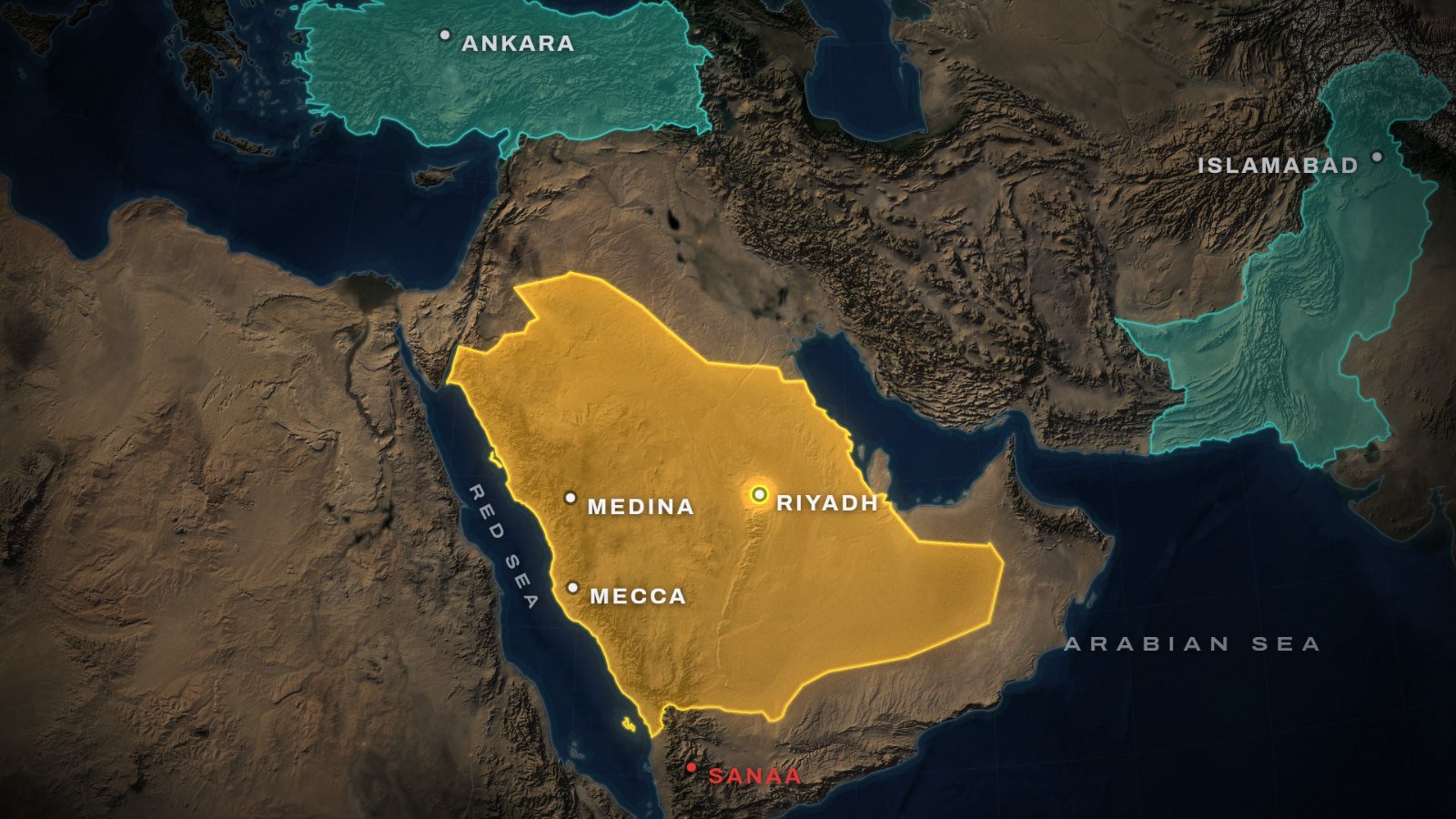
- Saudi Arabia and Pakistan signed a mutual defence pact on 17 September 2025; on 7 August 2026, Turkey joined them in the Mecca Joint Defence Agreement, under which an armed attack on one member is an attack on all.
- On 5 October 2026, after Houthi attacks on Saudi Arabia, the three agreed on a rapid deployment of Turkish and Pakistani forces to the kingdom, the pact's first use, without giving any numbers.
- Pakistan says it has substantial forces in the kingdom, who will not cross into Yemen to attack the Houthis; Turkey says the pact is defensive and it will not send troops to fight them.
- Turkey's Defence Ministry says any deployment needs parliament's approval; by mid-October 2026, the agreement had not yet been submitted to parliament, Turkish media reported.
- Neither agreement's text has been published, and officials have given mixed signals on whether Pakistan's nuclear weapons play any part.
In this analysis 8 sections
- 01What is the Saudi-Pakistan defence pact?
- 02Why did the pact go live in October 2026?
- 03Will Pakistan's troops fight the Houthis?
- 04Turkey, Saudi Arabia and Pakistan: why did Ankara join?
- 05What does Saudi Arabia want from the pact?
- 06How do Iran and India see the pact?
- 07What to watch next
- 08Frequently asked questions
On 5 October 2026, Saudi Arabia, Turkey and Pakistan held an emergency meeting in Riyadh. Afterwards, the three issued a joint statement on the “rapid deployment” of Turkish and Pakistani forces to the kingdom. It followed weeks of Houthi missile and drone attacks on Saudi Arabia. It was the first use of a defence pact they had signed in Mecca two months before.
So why are Turkey and Pakistan sending troops to Saudi Arabia? The story starts with the Saudi-Pakistan defence pact of September 2025, which Turkey joined in August 2026. A NATO member and a nuclear-armed state have now promised to defend Saudi soil. Yet both have also drawn clear lines around what they will do.
What is the Saudi-Pakistan defence pact?
Saudi Arabia and Pakistan signed their Strategic Mutual Defence Agreement in Riyadh on 17 September 2025. Crown Prince Mohammed bin Salman and Pakistan’s prime minister, Shehbaz Sharif, signed it. Its core is one line: an attack on either country counts as an attack on both.
The two armies were not strangers. Since the 1970s, Pakistan has sent sizeable forces to the kingdom, at times more than 10,000 troops, according to the Brookings Institution. In 2025, Brookings cited estimates of more than 1,500 Pakistani personnel there in training and advisory roles.
Then, on 7 August 2026, Turkey joined. At the Al-Safa Palace in Mecca, the crown prince, Sharif and Turkey’s president, Recep Tayyip Erdoğan, signed the Mecca Joint Defence Agreement. Some outlets call it the Makkah pact. The core carries over: an armed attack on one member is an attack on all three. It also sets a framework for wider defence ties.
What it lacks is a public text. Only joint statements have come out. Pakistan calls the pact “purely defensive” and open to other countries. Turkey’s presidency says it targets no particular country.
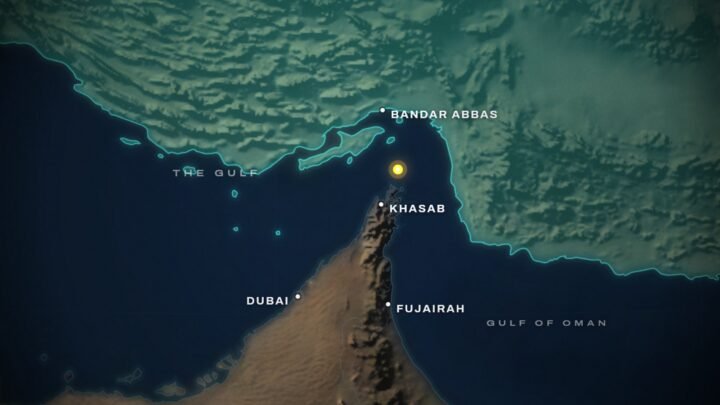
The timing still mattered. Since the US and Israel began striking Iran on 28 February 2026, Iran and its allies have fired on Saudi Arabia and other Gulf states, Reuters noted at the signing. Meanwhile, with the Strait of Hormuz all but closed, Saudi Arabia has sent much of its oil through the Red Sea.
Why did the pact go live in October 2026?
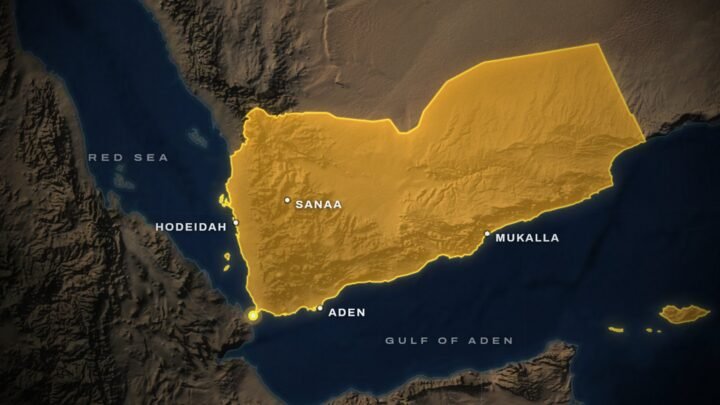
Because the war in Yemen came back to the kingdom. On 4 October, Saudi-backed government forces launched an offensive against the Houthis, the armed movement that holds Yemen’s capital, Sanaa. The Houthis replied by firing missiles and drones at Saudi airports, from Abha, Najran and Jazan to Riyadh.
On 5 October, the day after the offensive began, the three countries’ defence and foreign ministers met in Riyadh. According to Al Jazeera, the joint statement said the three would act at once on their collective defence commitments. Any deployment would follow “approved arrangements” and each country’s laws. The statement condemned recent attacks on the holy cities of Mecca and Medina, without naming the Houthis. It gave no troop numbers and no timetable.
The holy cities explain much of the urgency. Saudi Arabia says it stopped a Houthi drone south of Mecca in September, and it calls the city a “red line”. The Saudi-led coalition also says a Houthi drone hit a power station serving the Prophet’s Mosque in Medina. The Houthis call that “a lie” and say they aim at oil sites and military bases.
The attacks went on. On 10 October, a strike on Riyadh’s King Khalid airport killed 12 people and injured more than 300, Saudi authorities said. The Houthis claimed it the next day. On 15 October, the Houthis fired missiles at the presidential palace complex in Aden, the base of Yemen’s internationally recognised government. Yemen’s health minister put the toll at 5 dead.
The Houthis tell it differently. Their Saba news agency said the Aden strike targeted an operations headquarters run by Saudi officers. By mid-October, their military spokesman, Yahya Saree, claimed well over 1,000 Saudi air strikes since the escalation began. The roots of that war are in why nobody can conquer Yemen.
The pact in dates
| Date | Step |
|---|---|
| 10 April 2015 | Pakistan’s parliament votes to stay out of Yemen’s war, but to stand by Saudi Arabia if its territory or holy sites are threatened |
| 18 July 2023 | Saudi Arabia buys Turkish Akıncı drones, Turkey’s biggest defence export deal (Baykar) |
| 17 September 2025 | Saudi Arabia and Pakistan sign their Strategic Mutual Defence Agreement in Riyadh |
| 18 November 2025 | Saudi Arabia and the US sign a Strategic Defense Agreement |
| 7 August 2026 | Turkey joins: the Mecca Joint Defence Agreement is signed |
| 5 October 2026 | First use: the three agree on a “rapid deployment” to the kingdom |
| 8 October 2026 | Turkey says it will not send troops to fight the Houthis |
| 9 October 2026 | Pakistan says its forces in the kingdom will not cross into Yemen |
| 12 October 2026 | Erdoğan: the pact goes to Turkey’s parliament “in the coming days” |
Will Pakistan’s troops fight the Houthis?
So far, Pakistan’s answer is no. On 7 October, its military spokesman, Lieutenant General Ahmed Sharif Chaudhry, told CNN that “the forces of Pakistan are already there”. He called the numbers classified. Still, the military called Pakistan’s commitment to Saudi security “absolute”.
Two days later, Pakistan’s Foreign Office said the country had substantial forces in the kingdom. “These forces would not cross the border into Yemen to launch attacks against the Houthis,” its spokesperson said. Pakistan has also rejected a New York Times report that its air force jets were being used against the Houthis.
The line Pakistan drew in 2015
This line is not new. In 2015, Saudi Arabia asked Pakistan for fighter jets, warships and ground troops for its war in Yemen, as Pakistan’s defence minister, Khawaja Asif, told parliament. On 10 April that year, Pakistan’s parliament voted unanimously to stay neutral in the Yemen war.
Yet the same resolution promised that Pakistan would stand by the kingdom if anyone threatened its territory or the holy sites. Lawmakers feared that a war in Yemen would stir sectarian tension at home and hurt ties with neighbouring Iran, the Associated Press reported.
Eleven years later, Pakistan’s position follows that resolution closely: guard the kingdom, stay out of Yemen. Islamabad also has its own reasons to keep the line clear. It shares a long border with Iran, and in April 2026 it helped broker a two-week truce between the US and Iran. Asif himself has said the 2025 pact formalised a relationship that had been “a bit transactional”.
Turkey, Saudi Arabia and Pakistan: why did Ankara join?
Not long ago, this alliance would have looked unlikely. Relations between Ankara and Riyadh soured after the murder of the Saudi journalist Jamal Khashoggi in Saudi Arabia’s consulate in Istanbul in 2018.
Then came a long repair. From 2021, Gulf investment helped ease pressure on Turkey’s economy and its currency reserves, Reuters has reported. On 18 July 2023, in Jeddah, Saudi Arabia signed for Turkish Akıncı combat drones. Baykar, the maker, called it the largest defence and aviation export contract in Turkey’s history. It also plans to build part of the drones in Saudi Arabia.
For Ankara, the pact may also extend a pattern. Turkey already keeps troops in Qatar, and it runs its largest overseas training base in Mogadishu, as we explain in why Turkey wants Somalia.
Yet Turkey has set firm limits. On 8 October, Foreign Minister Hakan Fidan said the pact is defensive, not offensive. Turkey, he said, will not send troops to another country to attack its territory, which rules out a role in Yemen. Instead, officials were weighing air defence, electronic warfare and technical support, Reuters reported.
There is a legal step too. Turkey’s Defence Ministry says any deployment to Saudi Arabia needs parliament’s approval. On 12 October, Erdoğan said the agreement would go to parliament “in the coming days”. Days later, the daily Cumhuriyet reported it had still not been submitted.
Erdoğan has also tried to calm Turkey’s neighbours:
It would not be correct to regard this agreement as an alliance created against Iran, Israel, or any third country.
Recep Tayyip Erdoğan, Turkey’s president, September 2026
Even before Turkey joined, Israel’s leaders saw a different picture. In February 2026, Prime Minister Benjamin Netanyahu warned of what he called “the emerging radical Sunni axis”. That rivalry is the subject of Israel vs Turkey.
What does Saudi Arabia want from the pact?
For Riyadh, the pact is about who comes when the kingdom is hit. In September 2026, Crown Prince Mohammed bin Salman twice asked Donald Trump for US strikes on the Houthis, and Trump said no, Axios reported. After the airport attack of 10 October, Trump said the US was “going to look at” joining Saudi strikes. By mid-October, he had announced no decision.
So Saudi Arabia is adding partners, not swapping them. It still leans on Washington. On 18 November 2025, it signed a Strategic Defense Agreement with the US, and Trump named it a major non-NATO ally. In September 2026, the State Department approved a possible sale of 48 F-35 fighter jets worth $24.3 billion.
The Mecca pact adds something else. Two partners with large armies are now bound in writing to treat an attack on the kingdom as an attack on themselves. In short, Riyadh is building a second guarantee that does not run through Washington. Not everyone is impressed: one analysis in Modern Diplomacy, on 18 October, argued that Saudi Arabia is “buying allies, not an alliance”.
What can troops do against missiles?
On their own, not much. The threat to the kingdom comes by air, from missiles and drones fired from Yemen. Sanaa lies about 1,070 km from Riyadh and about 820 km from Mecca. Turkey’s possible help, as Reuters described it, centres on air defence and electronic warfare, the tools that find and stop such weapons. Ground troops could guard bases and the holy cities, freeing Saudi units for other tasks.
The pact’s main weight may be the signal. Any group that strikes the kingdom now risks a wider response, at least on paper. But the members have also said what they won’t do. As a result, the pact is, for now, a shield rather than a sword.
What about nuclear weapons?
Pakistan is the only Muslim-majority country with nuclear weapons, so the question keeps coming up. The answers from officials have been mixed. In September 2025, a senior Saudi official told Reuters that the bilateral agreement “encompasses all military means”.
Asif first said on Pakistani television that Pakistan’s capabilities would be available under the pact. He later told Reuters that nuclear weapons were “not on the radar”. Without a published text, outsiders cannot tell what the pact means for nuclear weapons.
How do Iran and India see the pact?
Iran’s foreign ministry first struck a calm note. In August, its spokesman, Esmaeil Baqaei, said there was “no reason to worry that this treaty will be against Iran”. He called it “a sign of a change in the perception” of the United States in the region.
Not every Iranian voice agreed. Ebrahim Rezaei, a member of parliament’s national security committee, wrote that “a paper agreement with Turkey and Pakistan does not bring them security”. After the pact went live, Baqaei warned that any intervention in Yemen could have undesirable consequences, according to Iran International, a Persian-language channel based outside Iran. One MP argued that Pakistan should no longer count as a mediator.
India watches for a different reason. India and Pakistan are rivals, and the Saudi-Pakistan defence pact ties Pakistan more closely to a country India calls a strategic partner. In September 2025, India’s foreign ministry said it would “study the implications” for its national security and for regional and global stability. On 11 August, after Turkey joined, its spokesman, Randhir Jaiswal, said India was examining the pact’s implications. India would take all necessary measures to protect its interests, he added.
What to watch next
Four things will decide whether the pact stays a shield or becomes something more.
- Turkey’s parliament. Will it ratify the agreement itself, or vote only on a deployment? Until then, Turkish officials say, any help is largely bilateral.
- Numbers and roles. No member has published troop numbers. The test is whether the forces stay inside the kingdom, as Ankara and Islamabad say.
- Washington. If the US joins Saudi strikes on the Houthis, the pact matters less. If it stays out, the pact matters more.
- Iran and the talks. Pakistan sits in the pact and also talks to Tehran. A wider US-Iran deal would change the threat behind the pact.
For more analysis on the Middle East, see our region page.
Frequently asked questions
What is the Saudi-Pakistan defence pact?
It is the Strategic Mutual Defence Agreement that Saudi Arabia and Pakistan signed in Riyadh on 17 September 2025. Under it, an attack on either country counts as an attack on both. On 7 August 2026, Turkey joined the two in a wider deal, the Mecca Joint Defence Agreement. Neither text is public.
Is Turkey part of the Saudi-Pakistan defence pact?
Yes, through the Mecca Joint Defence Agreement, signed with Saudi Arabia and Pakistan on 7 August 2026. But Turkey’s Defence Ministry says any deployment needs parliament’s approval. On 12 October 2026, Erdoğan said the pact would go to parliament soon. By mid-October, Turkish media reported it had not yet been submitted.
Will Pakistan fight the Houthis?
Pakistan says no. On 9 October 2026, its Foreign Office said Pakistan’s forces in Saudi Arabia would not cross the border into Yemen to attack the Houthis. It denies a report that its jets are striking them. In 2015, Pakistan’s parliament also voted to stay out of Yemen’s war.
Does the pact give Saudi Arabia a nuclear umbrella?
No published text says so. In 2025, a senior Saudi official said the bilateral pact “encompasses all military means”. Pakistan’s defence minister first suggested its capabilities would be available, then said nuclear weapons were “not on the radar”. With both texts unpublished, the answer is not public.
Is the Mecca pact an “Islamic NATO”?
“Islamic NATO” is a media label, not the pact’s name. Like NATO, the pact treats an attack on one member as an attack on all. Unlike NATO’s treaty, its text is unpublished. Turkey and Pakistan have also ruled out offensive roles, and the members have shared few details of how forces are commanded.
Sources
- Saudi Arabia is buying allies, not an alliance
- 'Birkaç gün içinde Meclis'e gelecek' denmişti: Mekke Anlaşması ortada yok
- At least 5 killed in Houthi attack on Yemen's presidential palace in Aden
- Houthis attack presidential palace complex in Yemen's Aden, PM unharmed, officials say (Reuters)
- Erdoğan says Turkey will submit Mecca defense pact to parliament in the coming days
- Turkey to send Mecca agreement to parliament soon, Erdogan says
- Mecca alliance pact headed to parliament within days, ruling AK Party says
- Mecca defense pact to go before Turkish parliament
Show all 61 sources
- Saudi-Pakistan pact set for Turkish parliament: Fidan
- Türkiye awaits Saudi needs, Parliament approval for military assistance
- Pakistan rejects New York Times report claiming air force jets being used against Yemen's Houthis
- Saudi Arabia says 1 dead, 11 injured in latest attack on Riyadh airport
- Houthis claim responsibility for Riyadh airport attack on Saturday
- Trump says he is 'going to look at' joining Saudi Arabia in the fight against Iran-backed Houthis after deadly airport strike
- Yemen fighting expands as Houthis attack Saudi airport: what to know
- 'Terrible thing': Trump on Riyadh airport attack, says US may join Saudi strikes against Yemen's Houthis
- 12 dead, over 300 hurt in Riyadh airport attack as Trump weighs US action against Houthis
- FO quashes speculation over Yemen combat role
- Pakistan has substantial forces deployed in Saudi Arabia: foreign ministry
- Pakistan says troop deployments under Makkah pact to depend on Saudi security needs
- Pakistan military confirms deployment of forces to Saudi Arabia under Makkah pact
- Iran criticises the Mecca pact and Pakistan's role after its activation
- Iran warns against Yemen intervention, targets Pakistan as Saudi defence pact takes effect
- Turkey's foreign minister says Ankara weighing Saudi defense support, rules out offensive role (Reuters)
- Turkey says will not send troops to fight Yemen's Houthis (AFP)
- Pakistan confirms it has troops in Saudi as conflict with Yemen's Houthi rebels escalates
- Pakistan, Türkiye and Saudi deterrence against Houthis: what that means
- Turkey and Pakistan to send troops to Saudi Arabia under defence pact
- Türkiye, Pakistan agree Saudi Arabia military deployment under Mecca pact
- Pakistan, Turkey agree to rapid deployment of forces in Saudi Arabia under Makkah pact
- Turkey, Pakistan to deploy forces to Saudi amid Houthi attacks: joint statement
- Houthis deny Saudi accusations of targeting Medina's holy sites
- Saudi-led coalition says power station attacked in Medina, blames Houthis
- Türkiye rejects east-west divide, says Mecca defense pact not aimed at Iran or Israel
- Exclusive: Erdogan warns Israel over 'misguided narrative' of Turkey threat
- Trump refused Saudi crown prince's requests for strikes on the Houthis
- Saudi Arabia, Mecca and the Houthi drone
- State Department approves sale of 48 F-35s to Saudi Arabia
- US clears $24B F-35 sale for Saudi Arabia
- India examining security, regional implications of Saudi-Turkey-Pakistan defence pact, says MEA
- Examining implications: India reacts to Pakistan-Saudi-Turkey defence pact (ANI)
- Iran says Saudi-Pakistan-Turkey deal shows 'change in perception' towards US
- Iranian official warns Saudis 'paper pact' on defence with Turkey, Pakistan is a dud
- Saudi Arabia, Turkey and Pakistan sign key defence agreement (PA)
- Saudi Arabia, Turkey and Pakistan sign Mecca Joint Defence Agreement
- Türkiye, Saudi Arabia, Pakistan sign joint defence agreement: what's in it?
- Pakistan says new defense pact with Saudi Arabia and Turkey is purely defensive and open to others
- US-Iran ceasefire deal: what are the terms, and what's next?
- Saudi Arabia, US sign agreements to deepen strategic partnership
- New US-Saudi security deal raises questions
- Defence minister skirts nukes question, says defence pact has formalised relationship between KSA, Pakistan
- Defence minister's contradictory take fuels conjecture over nuclear angle in Saudi pact
- Saudi Arabia signs a mutual defence pact with nuclear-armed Pakistan (Reuters)
- Will study implications for our national security, regional, global stability: MEA on Saudi-Pak defence pact
- Expect strategic partnership will keep in mind mutual interests, sensitivities: MEA responds to Saudi-Pakistan defence pact
- The signal and substance of the new Saudi-Pakistan defense pact
- Turkey signs biggest defence deal as Saudi Arabia buys drones (Reuters)
- Saudi Arabia signs major deal with Turkey to acquire Baykar drones
- Turkish drone-maker Baykar signs major export deal with Saudi Arabia
- Pakistan parliament backs neutrality in Yemen conflict
- Pakistani lawmakers vote to stay out of Yemen conflict (AP)
Facts as of 19 October 2026. Spotted a mistake? Tell us, and we will correct it.